Positioning Business Services: 7 Essential Tools
How do you achieve a distinctive positioning in business services? Regular B2B companies, for example, have a unique product, distribution method, or cost price that allows them to stand out—a luxury that business service providers often lack. Business service providers differentiate themselves solely based on reputation, knowledge, and experience. This causes many positionings to start looking alike. So how does a business service provider stand out?
In this article, we discuss the value of a distinctive positioning in business services and some possible building blocks for it.
The value of a distinctive positioning in business services
We are confronted daily with an abundance of marketing messages, somewhere between 300 and 700 according to various(1). As a result, we have become very good at quickly placing all these messages. We don’t want to be buried under them.
Does a message or brand look like another? Even better, it goes straight into the big pile. Two seconds later, we have completely forgotten it.
This is how we deal not only with detergent commercials but also with business marketing messages. Especially in business services, where the difference often lies in the nuance, this is killing. Clients literally can’t see the forest for the trees, and it becomes a fight over price. A shame.
A distinctive positioning ensures that the customer assigns your brand a unique place in their mind.
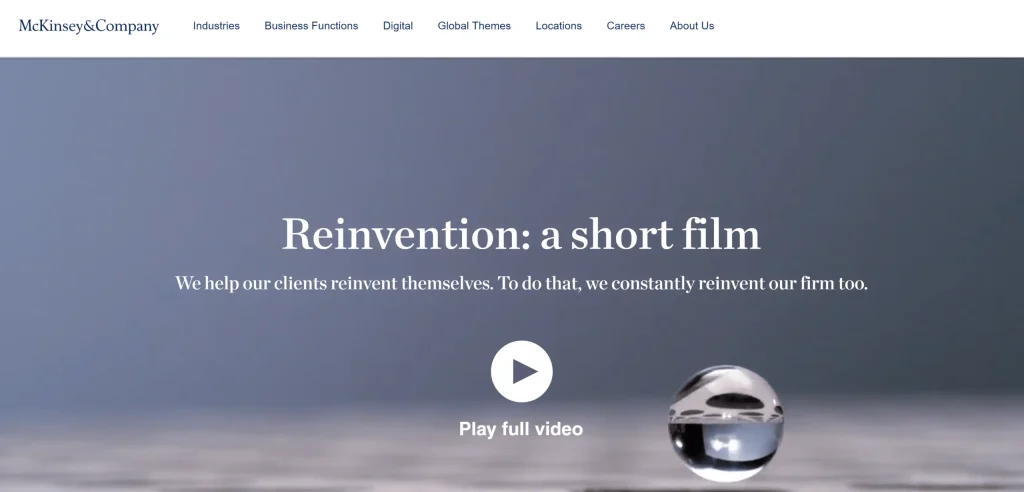
McKinsey is clearly positioned
The challenge of business service providers
The father of positioning, Al Ries, had the following to say about positioning a business service provider:
The problem is that owners of business service providers think all their services are so important that they cannot focus on one characteristic. They want to be experts in everything.
Let’s say for convenience that most companies focus their attention on things like, What are we, What are we good at, What experience do we have, etc. In other words: everything is about their organization and people.
Positioning is something else. You look into the minds of your customers and see if you can find an ‘open’ spot. Then you adjust your organization to fill that spot.
Internal positioning for business service providers
We don’t always pay enough attention to this because the situation differs per organization, but especially in business services, internal positioning is important. Instead of focusing on customers, the positioning simply targets colleagues.
A business service provider mainly sells knowledge and expertise, not a tangible product. Partners or sales managers sell advisory services and projects based on their own knowledge/network and internal capacity. How can your department be sold if you don’t take a clear position? Internal positioning must ensure that the department is indeed deployed on projects.
Internal politics is another common reason to pay attention to internal positioning. For example, after announcing a reorganization or during the annual budget round.
Tools for a distinctive positioning of business service providers
But what makes a positioning distinctive? What can a business service provider use to make their brand stand out?
Positioning is the sum of many factors, yet there are several interesting topics to mention with which a business service provider can distinguish themselves well. Let’s go through a few:
Brand identity: color as an essential part of positioning
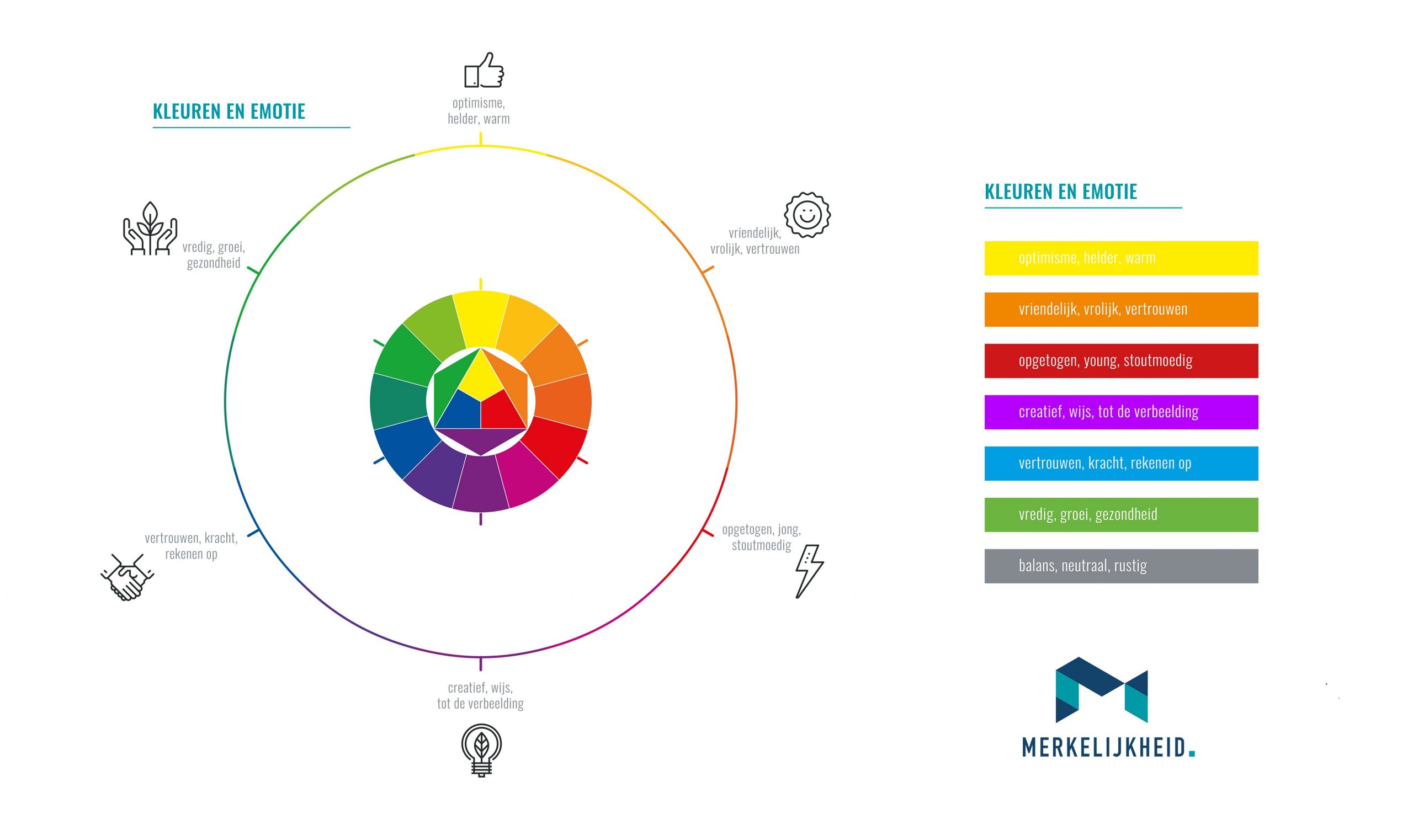
Color is an important source of information, but its importance is often underestimated. The study “Impact of color on marketing” by Satyendra Singh shows that 62-90 percent of our first reaction to a product or presentation is determined by color. Good use of color not only contributes to distinctiveness but even determines a mood or evokes feelings.
What exactly a color evokes remains personal, but generally, some statements about color associations can be made:
The most important thing is this:
It is essential that a brand chooses colors that ensure distinctiveness compared to the main competitor(s). Within this framework, choose a color that fits the (mood of your) positioning.
In accountancy, the colors blue (by far #1) and red dominate. A green-gray brand identity probably contributes much more to your distinctiveness in this market than you would think.
Read more about Brand identity and color
Make clear choices (and let go of certain potential clients)
You are looking for a lawyer to represent you in an IP dispute with a supplier, who do you choose:
- Berck Lawyers: boutique specialized in intellectual property law on recommendation of an industry peer
- Davids Lawyers: largest regional law firm on recommendation of an acquaintance.
Almost everyone in such a scenario chooses the specialist. This is due to the way people choose a business service provider, with the following facts foremost:
- It is especially painful when things go completely wrong
- They don’t seek the best result but a good result
- You cannot try before you buy. Experience, reputation, and expertise are the main indicators.
- Price is important but not all-encompassing because you are ultimately looking for a good result.
Stated like this, it seems obvious, but most business service providers simultaneously adopt a ‘for everyone’ positioning.
Therefore, choose as large a niche as possible in which you can still be the main player. Clooney’s law firm from Up in the Air is the most imaginative example: the best at firing people.
Choose the specialization, market, client group, niche, etc., that best fits your organization and make it central to your positioning. By the way, this makes marketing much easier!
Tell a story
We are made to remember and tell stories. Harari even states in Sapiens that this was instrumental for our development as humanity. For example, fairy tales originated as a way to teach our children important lessons (Little Red Riding Hood: don’t talk to strangers).
Our preference for stories also carries through in marketing. In an Adweek article, Hill Holliday’s consumer research branch Origin shares the results of a fascinating study showing that people develop a preference for artwork, wine, or hotel rooms if a story is told and pay at least 6% more!
We are not only willing to pay more for a story, 74% of people cite word-of-mouth as the most important influence on purchasing decisions. The recommendation of someone you trust weighs more than anything else, even in business services.
The most important lesson should be clear: Put a compelling story with which the customer can identify at the center of your positioning.
Guarantees or promises
One (or more) guarantee or promise makes a proposition rock solid. A brand makes crystal clear what you buy or get, think of FedEx’s promise: “Your package will get there overnight. Guaranteed.” Even better is when, like Jumbo (free groceries) or Domino’s (free pizza), a reward is attached if things go wrong.
A reward upon failure will be too far for most business service providers because it implies that it happens, but the promise is a valuable source of distinctiveness. What can you promise and prove?
McKinsey, for example, has built a complete positioning around a brand promise: “The best management consultants.”
Unique pricing model strengthens business services positioning
In business services, hourly billing remains the norm. It is also difficult to break away from this, so difficult that Ignition Consulting Group has been able to build its positioning around ‘pricing strategy.’ Read, for example, their recent blog about pricing model instead of price as a source of distinctiveness.
An alternative pricing model is, regardless of everything, at least noteworthy. This nicely ties in with the earlier point about storytelling.
Which pricing models are possible and which fit best with/in your positioning?
Courage
Standing out and distinctiveness go hand in hand with a bit of courage. You have to dare to do it differently. That means making choices but also that you will offend some people. A nice piece of storytelling, courage, and offending people is the Diks car rental commercial with the slogan ‘Chicks love Diks.’
I still smile when I see one of those dull blue and yellow cars driving around. Does this scare some people off? Of course, but we think this small club has indeed managed to distinguish itself from market leader Hertz with this ad. The opposite is also true, a certain group will feel even more connected to your brand. The better you know your customer, the easier it is to show courage in the right way.
Back to FedEx. Their biggest competitor could also guarantee next-day delivery, but it was FedEx who won by claiming it. Was next-day delivery a core competence at that time? No, but they were not deterred by that.
Experts or familiar faces
We do business with people, not companies. This statement is a cliché in B2B and is supported by many studies and publications. For example, Harvard Business Review headlines ‘An emotional connection matters more than customer satisfaction‘.
But building a personal relationship takes time, and there is limited time in the process from first contact to quotation. The solution is to pay attention to personality much earlier in the customer journey by profiling one or more people in your organization as experts.
We once worked for a law firm where one of the lawyers was known as the specialist in divorces. He was never short of work.
From an industrial environment, the wear plate specialist is a good example. This company delivers much more than wear plates but chose to position a colleague as an expert and claim this niche.
Americans generally feel more comfortable with this than Europeans, but it certainly works.
Other tools for positioning business services
Of course, there are many other tools to mention; content marketing, findability/SEO, social media, reference strategy, and so on. In this article, we have limited ourselves to a few compelling examples. Do you have an example that we must add? Let us know.
 Almost everyone in such a scenario chooses the specialist. This is due to the way people choose a business service provider, with the following facts foremost: