Brand Strategy in Practice: Examples and Practical Models
What does a good brand strategy deliver? Like many marketing terms, brand strategy also takes on a life of its own. For some, it is the same as positioning, for others it is much more abstract. In this article, we share the definition, explain what brand strategy means, and alongside two brand strategy models, also share interesting examples of brand strategy in B2B and consumer marketing.
After reading this article, you can take your first steps towards a successful brand strategy.
What is brand strategy
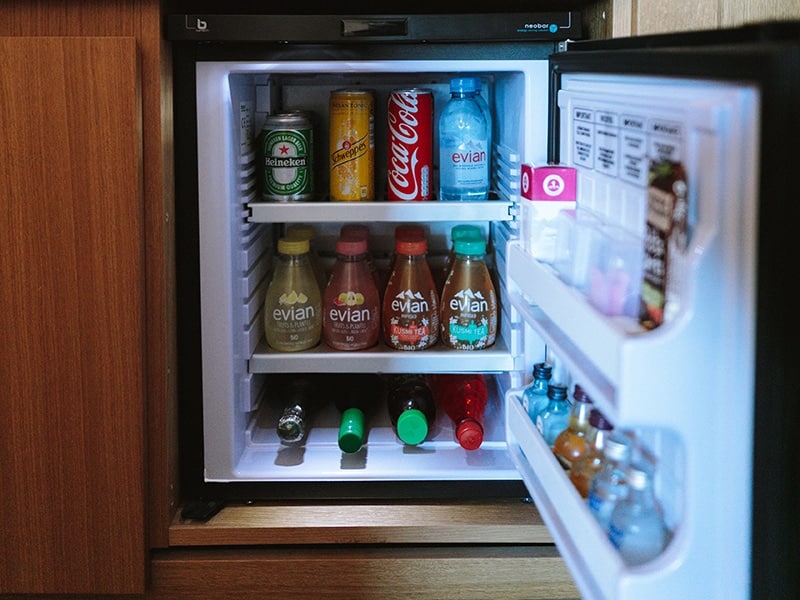
How much shelf space does one company take here?
Brand strategy is the way a brand (or brands) is used to achieve the (business) objectives. The brand strategy, for example, outlines who the target audience is, what their needs are, how the brand relates to the business strategy or which aspects of it should be reflected, how success is determined, and what the goal of the brand is.
Unilever’s brand strategy, for example, is to take a leading position in quite diverse categories with unique, standalone brands. This contrasts with Coca-Cola’s brand strategy; the soft drink manufacturer promotes one brand name in one category with a number of variants. The Coca-Cola company, on the other hand, has many other brands in its portfolio.
Brand strategy in practice
For many companies, the company name and the product or brand name are the same. Take, for example, a law firm; this firm probably has a name, and this name is the brand that needs to be positioned in the market. The brand strategy is obvious: to establish one clearly recognizable brand in the market to improve business results. This is the case for many companies, and then it makes little sense to spend too much time on the brand strategy.
It only becomes interesting if the same law firm discovers that a certain activity has a lot of potential but the target audience does not sufficiently connect with the existing brand. What do you do then? This is a question where brand strategy comes into play: how to tackle this challenge?
Prefer to call in an expert right away? Merkelijkheid has been helping companies with diverse brand strategy issues for over 10 years. From setting up a central brand (portfolio) in a buy & build strategy to creating a new brand or relaunching an established name. Our knowledge and experience allow us to quickly make brand progress. Contact us and we will gladly tell you about our approach.
Brand strategy definition
The definition of brand strategy is:
The long-term plan to achieve specific, predetermined goals with a brand or brands.
Brand strategy meaning
This is a broad definition, but that is intentional; strategy should be broad. It is the way (how) we will achieve our goal (what), and there must be enough room for a unique approach. With a clear brand strategy and implementing it in all aspects of the organization, companies like Unilever and P&G have been the undisputed market leaders for years.
But because of this breadth, brand strategy (how we will achieve our goal) is sometimes confused with positioning (how we differentiate ourselves). This makes it difficult to choose a good positioning or prevents the necessary attention being paid to the brand strategy. Dove and Magnum differentiate themselves in completely different ways but within the framework of the brand strategy of parent company Unilever. By the way, Unilever’s brand strategy is called the 5C Framework (source). Ideally, brand strategy is an important part of the strategic framework for positioning.
Determining brand strategy
How do you start determining your brand strategy? In practice, there is always a reason to look at the brand strategy. Exploring that reason and the various causes or factors can often be a big step in the right direction. But sometimes it is better to map the situation using a model and explore the possibilities.
Brand strategy model: Ansoff matrix
A model that provides direction in brand strategy is the Ansoff matrix. Developed in 1957, this model weighs new or existing products in new or existing markets and assigns a strategy to each quadrant. A new product in an existing market means product development; a new product in a new market means diversification. How do you translate this into a brand strategy?
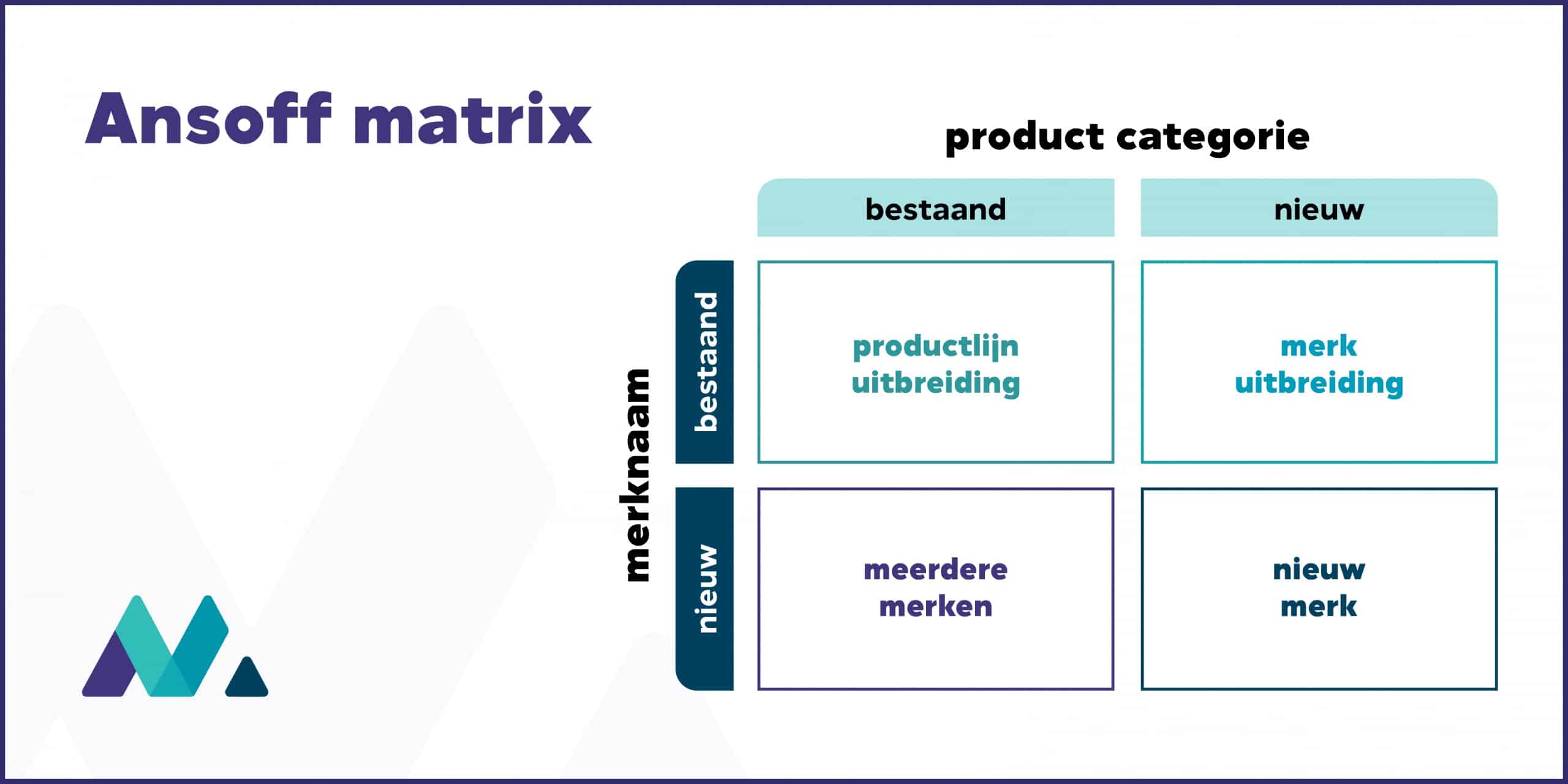
The Ansoff matrix has been adapted into a matrix that tells you which brand strategy best fits your approach per quadrant:
Line Extension
This strategy uses an existing brand name to gain a larger market share in the same category. In the case of products, a new size, shape, or flavor is launched, while a service is composed around a different proposition. A recognizable example comes from Coca-Cola Zero, launched as ‘Diet Coke for men.’
Brand Extension
If your existing brand name enters a new category, this is called a brand extension. It is important that there is a logical connection between the existing and the new category. This prevents the brand’s credibility from being damaged in both.
This happens more often than people think. Take the clothing market, for example; almost every clothing brand eventually releases a perfume under the same brand name. But this also happens often in B2B, our client Apex Dynamics once expanded its program with racks and pinions alongside their existing range of backlash-free gearboxes. The market is still that of drive technology, but the category is new for the brand.
Multibrand

What is the right brand strategy to get more shelf space in the supermarket?
An approach with multiple brands in the same category is called a multibrand strategy in English. One organization or manufacturer is active with multiple brands in the same category or market. This is very common in consumer marketing; a manufacturer, for example, has multiple diaper brands, cornflakes, or car brands.
In B2B, this is significantly less common. An example is when an industrial manufacturer launches another brand to categorize its more economical or high-end products. AkzoNobel, for example, has different paint brands to reach different market segments, one brand aimed at B2B and the other at consumers.
New brand
When a company enters a new market with a new product, it is often wise to launch a completely new brand. This is often the strategy of a startup that has no existing brand to leverage or a company entering a completely unrelated market.
Payment processor Adyen is no longer a startup with about 700 million euros in revenue and 1,750 employees, but their name means ‘to start again.’ The brand has grown rapidly since its founding in 2006 and has built a likable brand around the idea of easy (online) payments without all the hassle and baggage of traditional banks. The fact that they run on technology developed by banks makes it all the more interesting.
Brand strategy: brand portfolio
Through acquisitions or as a result of the followed strategy, companies sometimes find themselves in a situation where they have built up a whole portfolio of brands. In many cases, this has developed gradually, and the company is not set up to assess the portfolio as a whole. This simply does not happen, while there are certainly opportunities.
P&G analyzed its portfolio as a whole for the first time in the 1950s. It turned out that the company had many underperforming brands due to the traditional hierarchy. Employees preferred to spend time on successful brands, and as a result, the status of these brands never improved. When P&G decided to organize around individual brands, performance immediately improved.
One way to look at a brand portfolio is called brand architecture; how is your portfolio of brands structured.
Types of brand strategy: brand architecture
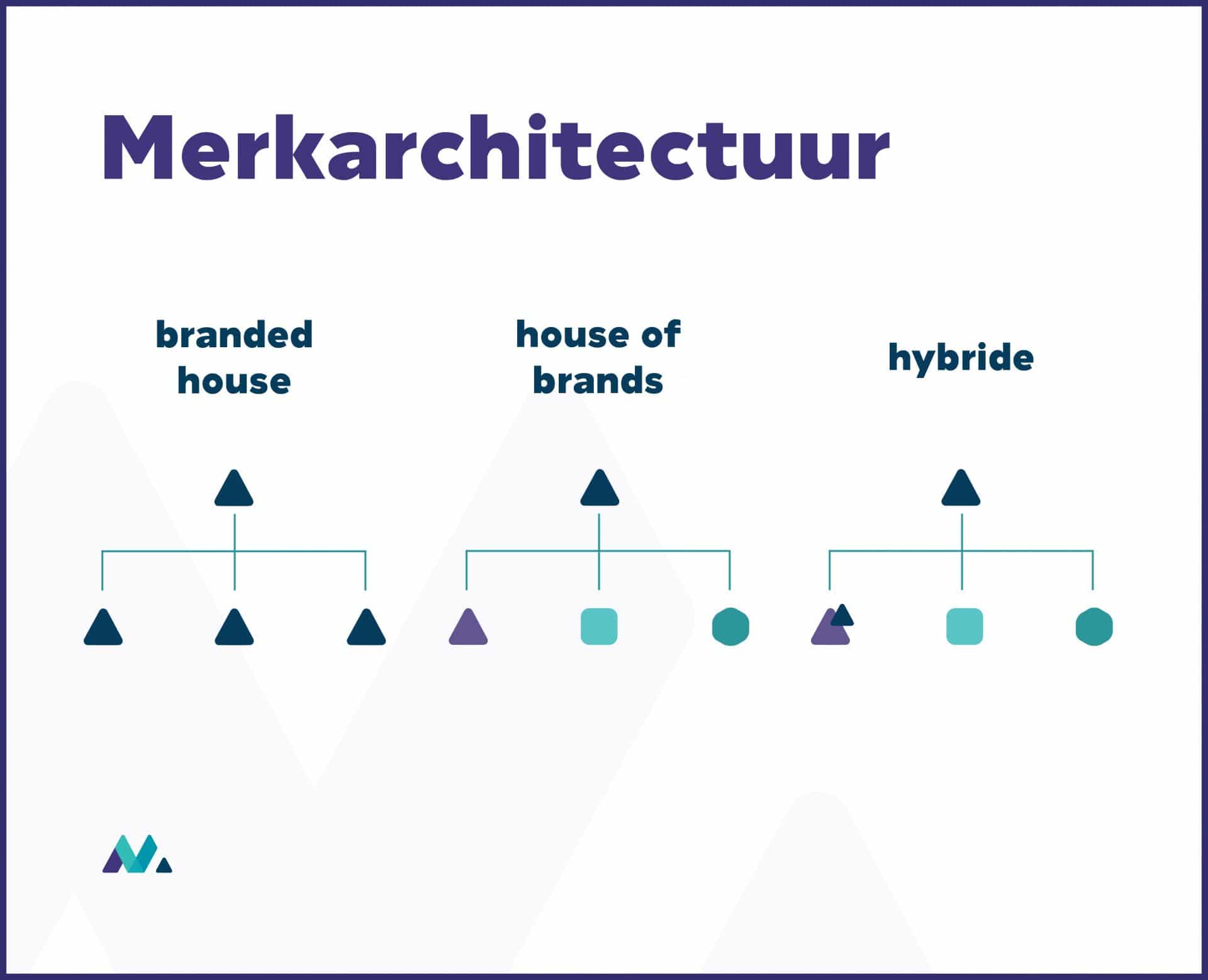
There are roughly 3 ways to look at your brand or brands:
- Monolithic
- Hybrid
- Standalone
Monolithic brand architecture – Branded House
 There are many names for this brand architecture. In English, it is usually called Branded House, while in Dutch it is also called umbrella brand or family brand. In this structure, one brand is used to denote all products, activities, and services. Consumer brands Samsung, Heinz, and McDonald’s are good examples, but Aalberts, IBM, and Siemens also use this architecture.
These brands put all their marketing power into building and promoting one brand in the market, and that is also the greatest strength of this tactic: no dilution of resources. Every investment contributes to the brand’s awareness, loyalty, and trust.
Hybrid brand architecture
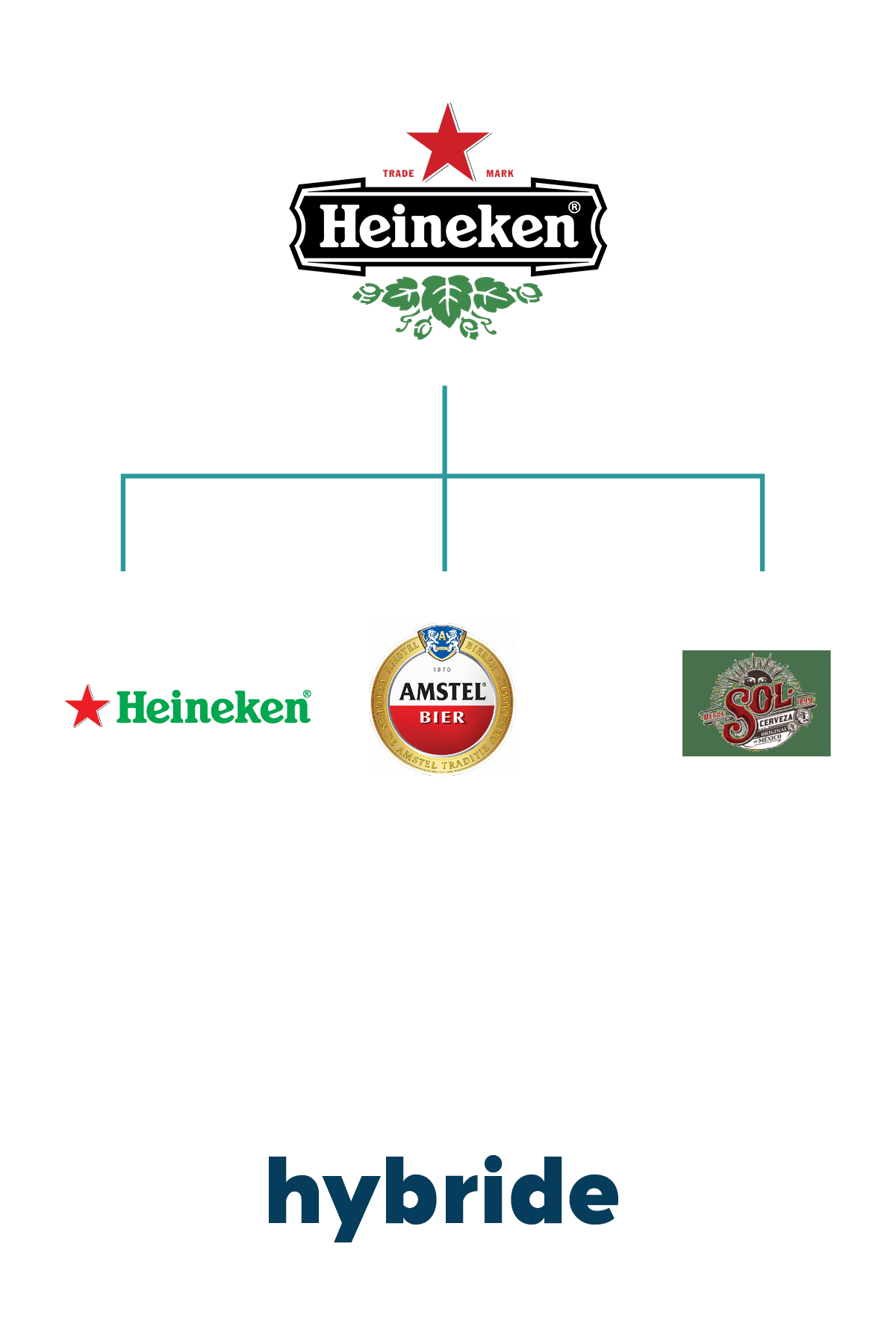 Another globally known brand, Coca-Cola, chooses the hybrid brand architecture. The Coca-Cola brand name appears on all variants and flavors of cola, but the company has standalone brands for other categories such as Fanta, Sprite, and sports drink Aquarius. The Volkswagen group uses the same tactic; the Volkswagen car brand carries the same name as the parent company but has a wide variety of sister brands.
Resources are divided, but the parent brand is still used significantly as a lever for brand awareness.
This tactic is often a result of an acquisition strategy; a company acquires other market players and wants to preserve and monetize the goodwill of the acquired brands. The original monolithic brand architecture remains, but some brands are kept standalone.
Standalone brand architecture – House of Brands
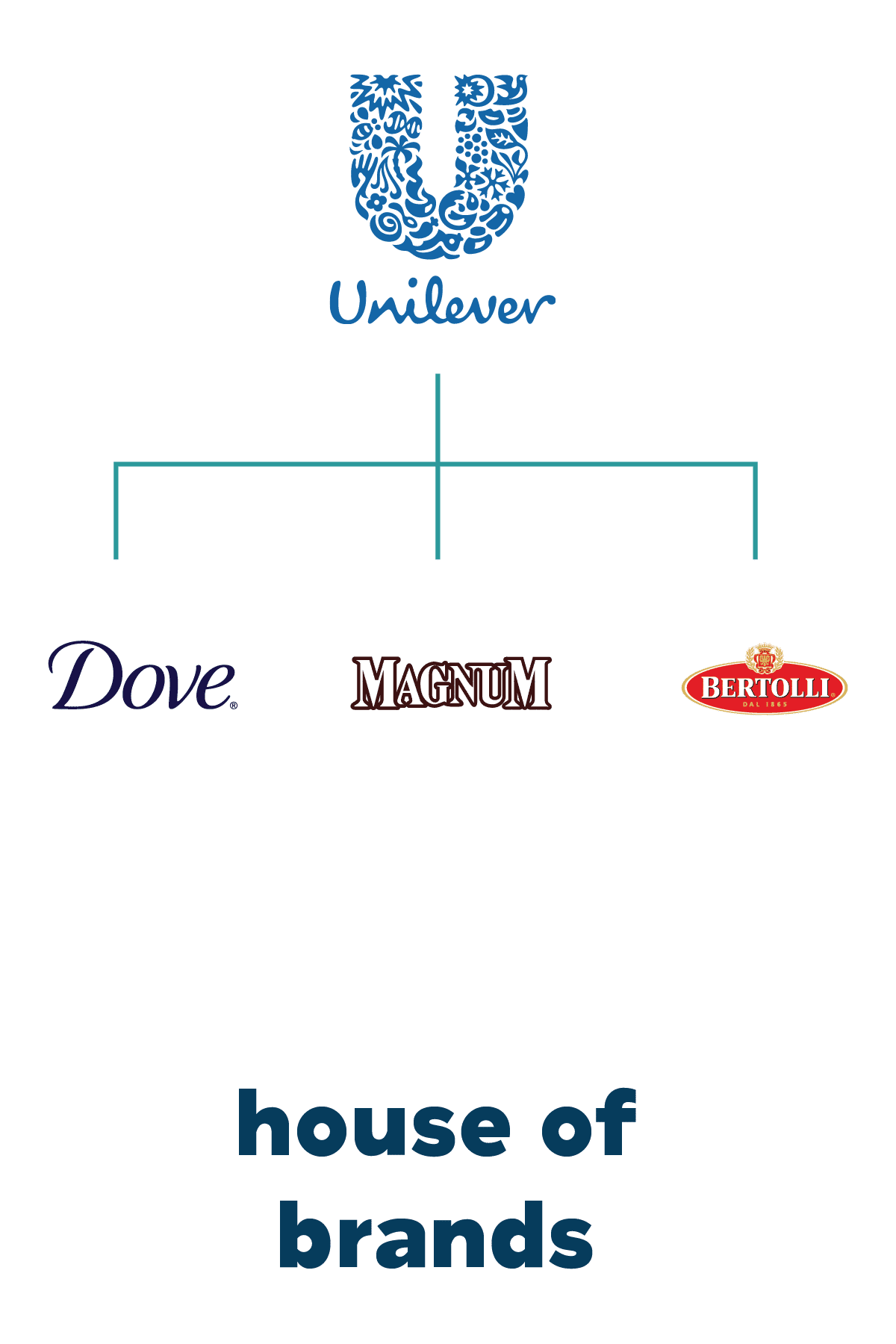 The descriptive English name for this tactic is House of Brands, a (often large) variety of brands under the relatively unknown brand name of the parent company. The previously mentioned P&G and Unilever are companies that literally invented this tactic and implemented it successfully for years.
The big advantage of this tactic is that it makes it possible to establish leading brands in a wide variety of categories. It is difficult to make the best refrigerator and the best beer with one brand at the same time. Or to position a paint brand so that both consumers and professionals choose it. That is why AKZO Nobel also chooses a standalone brand architecture.
This division into 3 types of brand architecture may be somewhat simplistic for some. Although it is sufficient for the vast majority of clients, in some cases it makes sense to look more deeply. There are multiple gradations possible of the possibilities outlined here. Read more about brand architecture.

The logo is GE’s ‘mark of quality’
Brand strategy example: GE
Industrial conglomerate GE (General Electric) is one of the most well-known industrial companies in the world. Founded in 1892, the brand has always been close to various aspects of life and was always one of the largest American companies. Today, the brand has lost some of its shine, it is no longer part of the Dow Jones Industrial index, dropped from the Fortune 500 top 10 to number 21, and has sold many of its businesses.

‘Building a world that works’ is the new slogan after ‘Imagination at work’ (GE website)
Today, the company focuses on activities in: energy, healthcare, capital, aviation, additive, and digital and tries, according to Lawrence Culp, Jr., “.. to return GE to a position of strength..”
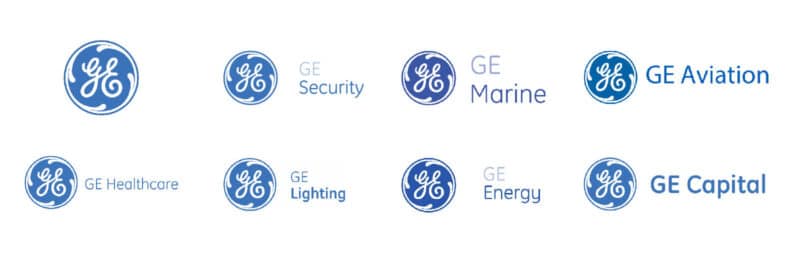
Very diverse business units all carry the same GE brand; several of the above brands have since been divested
GE’s brand strategy is a major reason why the company has stayed afloat. GE is the prime example of a successful monolithic brand/Branded House; all activities and divisions have always carried the GE brand, and the conglomerate has built on that brand year after year. The Interbrand ranking placed GE 29th in 2020 with a brand value of nearly $18 billion, which is 15.4% of the company’s total value!

Hospital, industry, and aviation side by side under one brand, GE is a textbook example of a Branded House. The above image is from their Instagram
Brand strategy model: Brand Key Model Unilever
The best-known brand strategy model is Unilever’s Brand Key Model. Developed to manage all brands worldwide in the same way, this model helps you present the foundation of each brand on one A4 page.
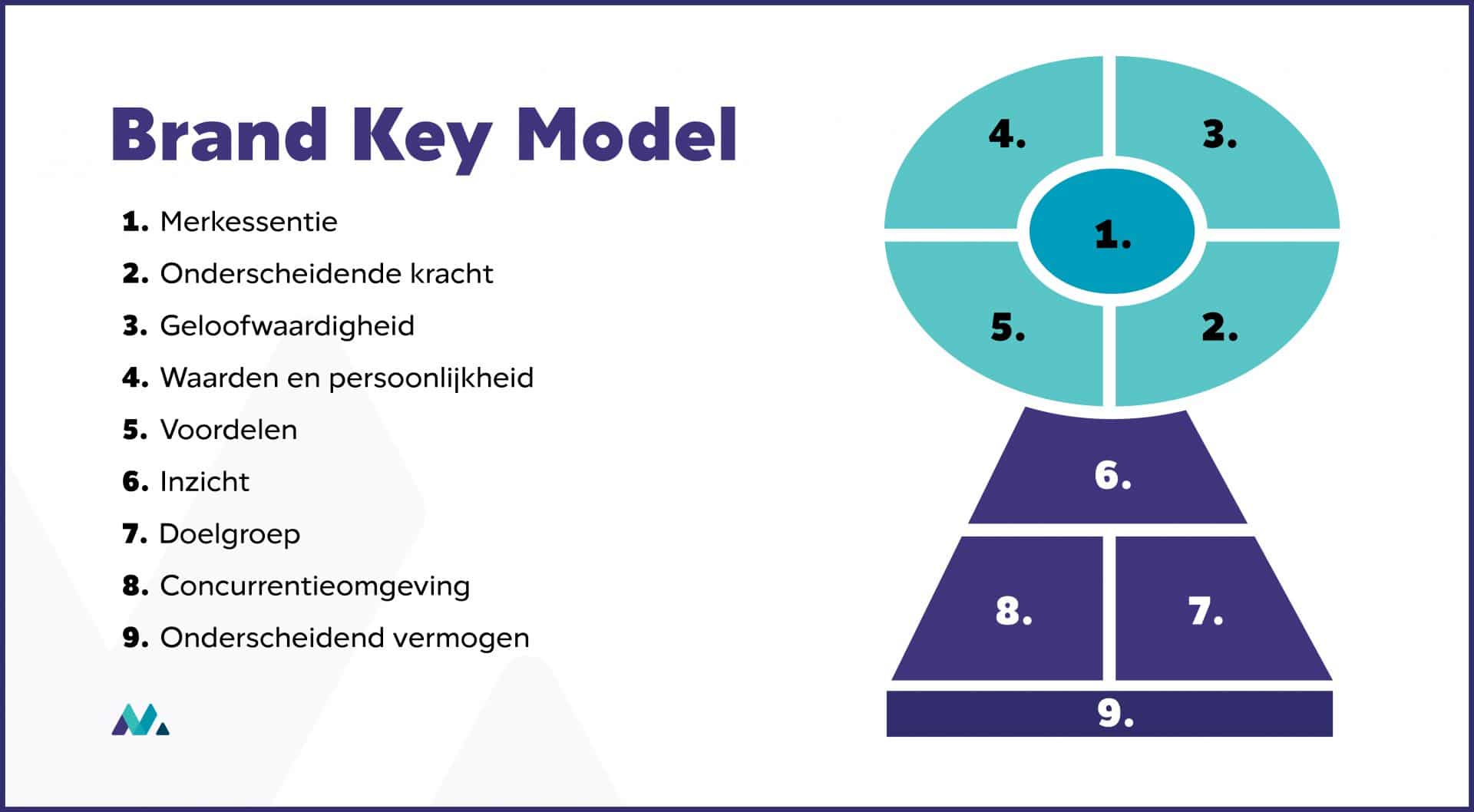
From the 5th point, it is about positioning summarized in a concise and easy-to-understand story, the brand essence. The downside of the Brand Key Model is that it does not really provide practical tools for realizing a distinctive brand strategy; it only leads to its elaboration.
Brand strategy agency
Merkelijkheid works – often for years – with its clients on a clear and distinctive brand strategy and positioning. Positioning and brand strategy are the foundation of our approach, which leads to effective and efficient marketing and communication. We are happy to tell you how that could look for your brand.