Brand positioning, the source of differentiation
Brand positioning determines the success of brands and companies. Brand positioning is the framework for distinctiveness and helps with strong, consistent marketing and communication. However, this is not straightforward for every brand. What exactly is brand positioning, and are there good examples? In this article, we start with a definition, share brand positioning models, and guide you through a step-by-step plan to develop a unique brand positioning yourself. We even share some inspiring books!
‘What is the brand positioning of brand x?’ is a frequently asked question and probably what the word brand positioning evokes for you. But when you work on the brand positioning of your brand, we often mean something else: the process of arriving at a strong, distinctive brand positioning.
In this article, we explore both aspects.
Brand positioning definition
The definition of brand positioning is:
Brand positioning is the unique place of a brand in the mind of the customer, relative to competing brands, and the factors on which this distinction is based.
So if someone is interested in the brand positioning of a company, we talk about the characteristics, values, and proposition that make the brand recognizable. In rare cases – if it is truly remarkable – we also discuss the strategy with which this brand positioning was achieved.
But the question how the brand arrived at this brand positioning is less often discussed. While we also call this process brand positioning.

What is brand positioning
Brand positioning is the strategic process by which a brand determines which remarkable and valuable position it wants to acquire in the perception of the target audience, relative to the competition, and which communication and marketing strategy will be followed to make this known to the market.
Funny, isn’t it, how one word can mean both the creation process and the end result. That’s why we’d like to explain what brand positioning means in practice.
Brand positioning meaning
During brand positioning, you at least identify which unique combination of features, values, and characteristics will distinguish the brand from its competitors. Then you determine how to use marketing and communication to inform the market, potential customers, about this. The goal of brand positioning is for the market to have a specific image of the brand and thus a strong, recognizable identity. It ensures the brand is presented consistently in all marketing expressions, such as advertisements, product packaging, and online presence.
Do you do this well? Then it creates brand loyalty, allegiance, and of course a strong market position. Successful brands use this, for example, to achieve higher margins or market share, or a higher return on their advertising budget. For the owner, building brand positioning is interesting; at a sale, a strong brand yields substantially more.
As positioning specialists, we sometimes use the terms interchangeably: positioning and brand positioning. While, of course, you don’t only position brands. You also position products, people, departments, organizations, and so on. But even if you want to position something other than a brand, it makes sense to dive deeper into the brand positioning process. The similarities are greater than the differences, as you will see in the rest of this article.
Purpose of brand positioning
The purpose of brand positioning is simple and is at the forefront of the definition: to occupy a unique place in the mind of the customer. A unique place means that the customer recognizes your brand as a brand with its own identity. The goal of the strategic process is therefore to determine the desired position, in line with your goals, and to develop a strategy to communicate this optimally to the market.
Brand positioning agency
Brand positioning agency Merkelijkheid was founded in 2011 and annually helps dozens of companies with their brand positioning. We always do this together with our clients. Our approach revolves around three workshops in which we step by step draw conclusions and determine starting points. The final positioning is therefore often not a surprise, but rather a moment of recognition: ‘Hey, yes, that’s us!’.
Curious how we achieve this? We’d love to tell you in a short meeting all about our approach. In 20 minutes, you’ll know enough to decide if we are a good match for you.

Brand positioning example
What does a strong brand positioning look like, what is the best brand positioning example?
Our piece about the brand positioning of Red Bull is one of our most read articles. The Austrian/Thai brand gives you a ‘boost’ and has centered this concept in their brand positioning around the slogan ‘Gives you wings’. The company highlights one characteristic of their product, and their entire marketing strategy is aligned with it.
Wakeboarding behind a drone in an infinity pool, then base jumping off the huge building via a ramp? These kinds of stunts are tailor-made for Red Bull:
Besides these extreme stunts, the company is also known for the Formula 1 team, various football clubs, e-sports, and of course sponsoring individual athletes such as footballer Neymar or cricketer K.L. Rahul. If you drink Red Bull, you too can achieve exceptional performances, the company promises. And with a turnover of nearly €10 billion, it seems we all believe it.
Red Bull has chosen a clear brand positioning from the start and certainly reaps the benefits.
Brand positioning model
Which brand positioning model should you use? That depends on your challenge and wishes; there are various brand positioning models that can be used as a basis for brand positioning. From Unilever’s Brand Key model to our own competition matrix, choosing one of the available models is an important step in brand positioning.
It’s good to ask yourself a few questions:
- Do you want to position market-oriented or mainly based on your own strengths?
- Do I know what a complete brand positioning should look like for me?
- Do I still need to convince colleagues or managers of the necessity to start positioning?
The answers to these questions help you choose from these models. We definitely recommend not using all models, as this causes confusion and prevents making one clear choice.
Handy step-by-step plan
The brand positioning process can be captured in a handy brand positioning step-by-step plan. We leave out the communication and marketing strategy here, as it is difficult to formulate generally. We simply call it implementation, which requires an approach tailored to your issue.
The 10 steps are:
- Burning platform
If not everyone is convinced of the necessity to work on your brand positioning, the project is doomed to fail. What happens if you do nothing? Sketch the burning platform and ensure everyone is willing to change. - (Market) research
What is your starting point, how is the competition positioned? What important trends and developments are there? These greatly influence brand positioning and must be mapped out. - Strategic framework
Use models to get as objective a view of the situation as possible. Avoid fixating on competitors or overlooking major opportunities. - Ambitions and (brand) values
What exactly do you want to achieve and what do you find important? This is not a creative exercise but must follow from the culture and identity of the organization. Research this well as it is an important milestone for brand positioning. - Distinctiveness
The brand is probably distinctive in multiple ways, but which factors are unique compared to the competition? Agree on what should be central in the positioning. This is a process of making choices, kill your darlings. - Positioning pitches
Create various positioning pitches in which you clearly explain, through an appealing ‘story’, why a customer should choose your brand. - Positioning story
Develop the best fitting pitch into a full positioning of about 300 words. It is important that this story also provides a perspective for action: what does this mean for the behavior of colleagues. - Determine proposition and core values
Distill from your positioning (pitch) the proposition that convinces your customer to buy on the spot and the core values that ensure your people remember the essence of your positioning. - Compile positioning document
Summarize the research, outcomes, key considerations, choices made, and the positioning in one document. The purpose of the document is future evaluation or adjustment. Or to brief a new colleague. - Implementation
The last step naturally differs per brand and brand positioning. Determine the marketing strategy, then set short- and long-term goals per department and decide which concrete actions will ensure the positioning is applied.
We also wrote an extensive article about this positioning step-by-step plan, if you want to follow it, we definitely recommend that article.
Brand positioning book
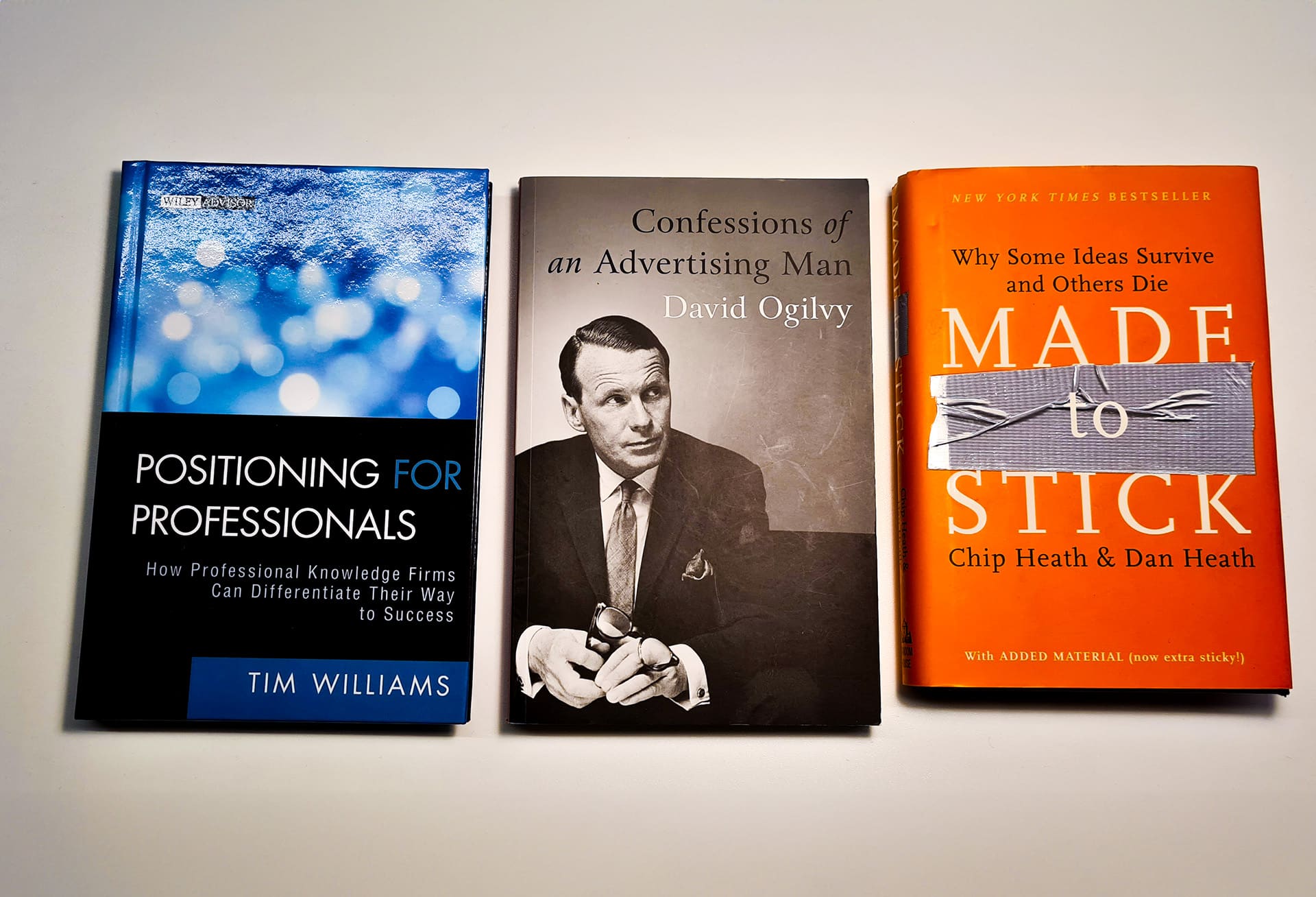
A brand positioning book is an important tool for some people. But which book should you choose? A quick search yields dozens of books with roughly the same title. Fortunately, we have read quite a few and would like to recommend some top picks:
- Positioning: The Battle For Your Mind
Perhaps the first book about positioning and thus an excellent foundation. Examples are no longer current, of course, but it provides excellent insight into positioning and what it entails. - Positioning for Professionals: How Professional Knowledge Firms Can Differentiate Their Way to Success
Our favorite for positioning business service providers and companies that position themselves around knowledge. A very practical book that gives very concrete, practical insights you can immediately work with. - Crossing the Chasm: Marketing and Selling High-Tech Products to Mainstream Customers
More and more companies sell what we call high-tech products. Innovation is increasingly an important source of distinctiveness. This book talks about different customer groups and how to convince them. Practical and engaging! - Shoe Dog: A Memoir by the Creator of Nike
One of the best-positioned brands in the world, Nike, fortunately also documented how the company arrived at this brand positioning. An interesting and fun book that will surely inspire you! - Made to Stick: Why Some Ideas Take Hold and Others Come Unstuck
Why do you remember some ideas immediately, while others you forget even after hearing them three times? This book explains how to make sure your brand positioning sticks. - Confessions of an Advertising Man, David Ogilvy
One of the most famous copywriters in the world, for just that bit of inspiration to look differently at your own product or service. And to come up with a distinctive message!
As you can see, three of the five books are not directly about brand positioning. The reason is that brand positioning is only partly an exercise with models and frameworks. The process must lead to an insight, a slogan, or proposition that you place centrally in a brand. And these books help with that.
Help with brand positioning
Do you need help with brand positioning? Or could you just use some support? Merkelijkheid has done this many times before. We work with marketing teams and management on a strong, distinctive brand positioning for your brand. We have a fun, practical methodology that ensures you are in the driver’s seat; we mainly bring the inspiration, guidance, and creativity needed to make the project a success.
You can read more about our approach on our page about positioning, but it’s even better to just get in touch right away. Merkelijkheid founders Tal and Ties will gladly tell you more about our approach, results, and especially what it’s like to work with us. Will you get in touch?