B2B Advertising: The Benefits of LinkedIn Advertising
What is the most efficient way for a B2B company to reach the decision-makers in your target audience? LinkedIn may not be the social media platform we wake up thinking about in the morning, but it is the leading business social media platform in the Netherlands. Your target audience goes to LinkedIn looking for inspiration and information. If you want to succeed with B2B online marketing, LinkedIn should definitely be part of your plans. In this article, we share the five main advantages of advertising on LinkedIn. Of course, we are not blind to LinkedIn’s shortcomings, so we also discuss the biggest disadvantage of LinkedIn.
Many companies are already active on LinkedIn but are not yet using all its possibilities
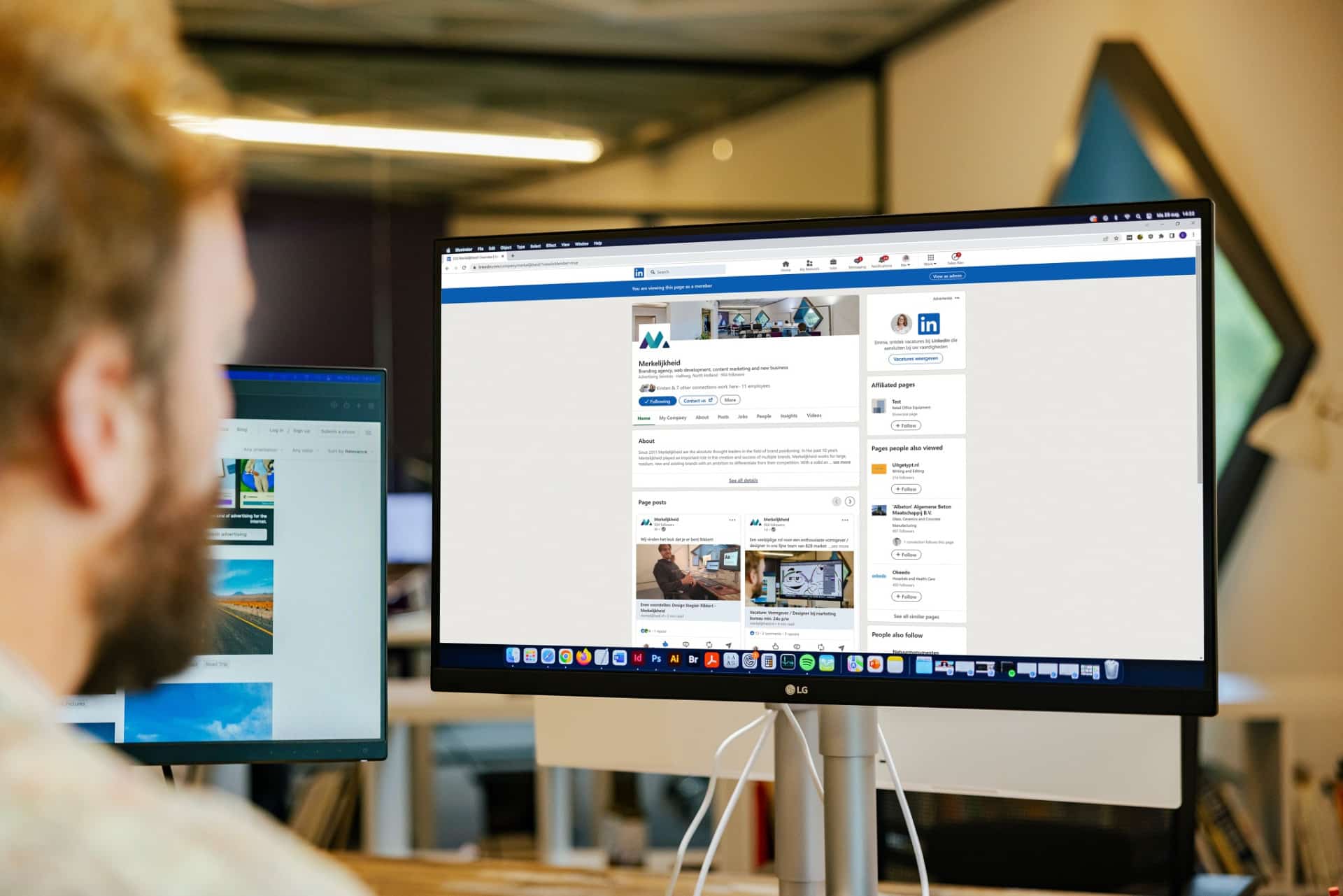
Many organizations are organically active on LinkedIn; they have a company page, share content there, and may already actively encourage their colleagues to share and like this content. But with this, they only reach a limited audience; people who don’t know them yet do not see this content. This is where LinkedIn Advertising comes into play.
Five Advantages of LinkedIn Advertising
The main reasons to allocate budget for LinkedIn Advertising in 2023 are:
- LinkedIn is the largest business social media platform
- Your competitors are not yet using LinkedIn Advertising
- LinkedIn advertising offers a unique opportunity: measurable outbound marketing
- Advertising on LinkedIn is very cost-efficient
- Reach exactly the right target audience and get to know them better
Advantages of LinkedIn: The Largest Business Social Media Platform
Worldwide, LinkedIn has over 850 million members, and that number grows every year. Most of these members come from the United States. Outside of that, LinkedIn is especially popular in several Asian countries and Europe; for example, in the Netherlands, 11 million people are active on LinkedIn.
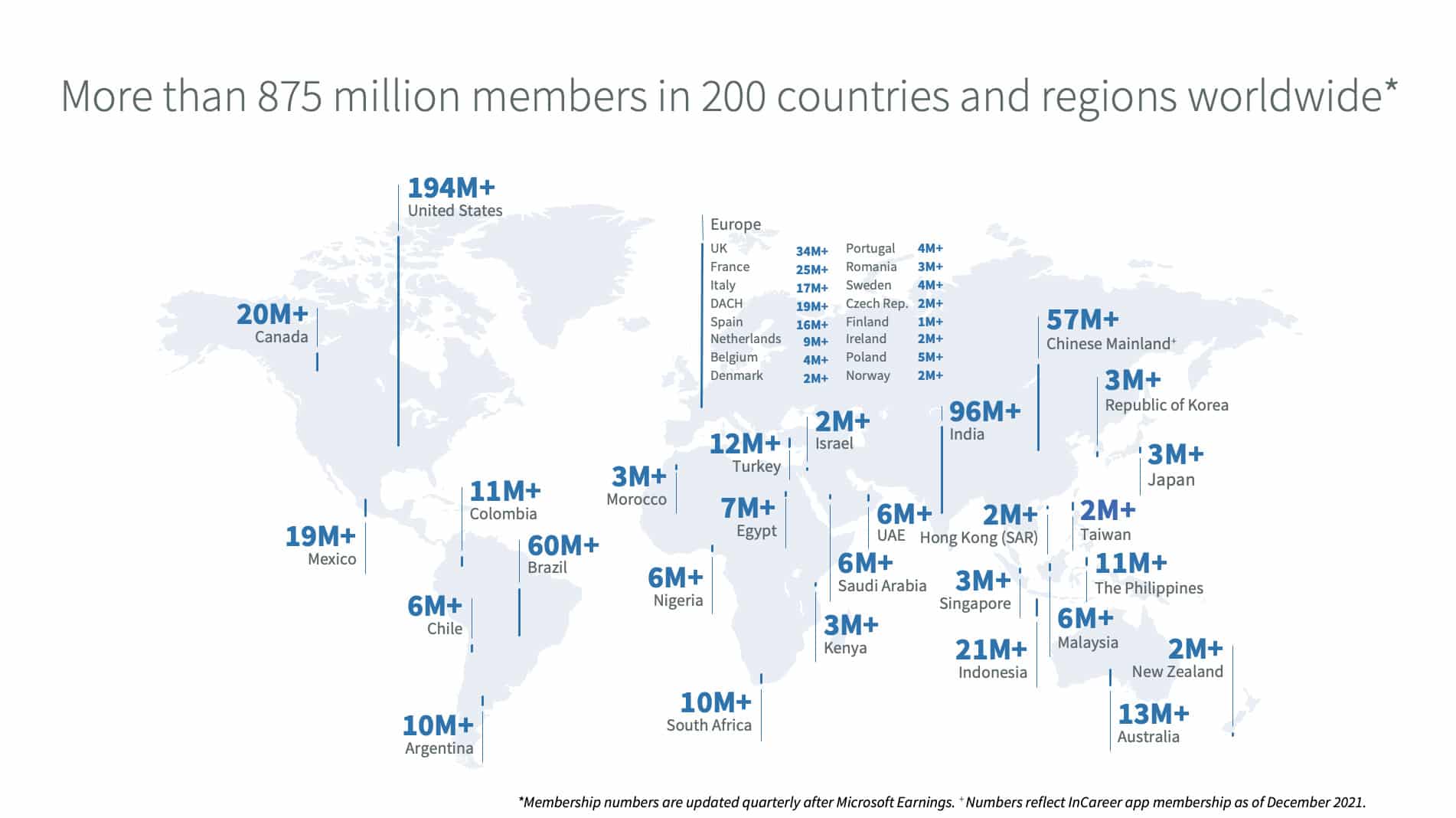
Source: Statistics page LinkedIn
What makes LinkedIn unique in the social media landscape is its business focus. Almost every member is linked to an organization or education, has their job title on their profile, and can even be linked to skills.
This is the platform where your decision-makers and potential customers look for business inspiration and information and where you can actively approach them before they start googling for a product, solution, or service.
Your Competitors Are Not Yet Using LinkedIn Advertising
Although advertising on LinkedIn is certainly not new, relatively few companies advertise on LinkedIn. Mainly larger, international organizations already advertise on LinkedIn. But precisely the niche for which LinkedIn can be so effectively used has not yet discovered the platform or does not yet know how to use it. This makes LinkedIn uncharted territory where you can still easily gain an advantage over your competitors.
Curious if your competitors advertise on LinkedIn? You can see which ads any company page is using. Go to the company page and look under “posts” in the “ads” section.
Unique Opportunity: Measurable Outbound Marketing
Which marketing opportunities are you already using online? Almost every organization has a website and is active on several social media channels. Additionally, newsletters, content, and Google Ads are the well-known pillars in almost every solid online marketing strategy. And rightly so! Each of these tools adds visibility to your brand and attracts people to your website. But advertising on LinkedIn offers you a unique opportunity.
With newsletters and content on social media, you send information to known contacts and (potential) clients. With a solid SEO strategy and well-set Google Ads campaigns, you attract people to your website who are looking for a solution, service, or product you offer. But in reality, that is just the tip of the iceberg. What lies beneath? Which companies do not yet know about your brand? You probably don’t know many potential clients yet.
Advertising on LinkedIn gives you the chance to approach your target audience yourself before they start searching for information. Of course, this is not entirely new; you can also advertise via Facebook, attend a trade fair, or place an article in a trade magazine. But none of these channels offer you the possibility to run such an accurate outbound marketing campaign.
This makes advertising on LinkedIn a unique opportunity. On no other platform can you compose a target audience based on job title, company name, years of experience, etc. Only LinkedIn has this information because everyone uses it as a CV. The accuracy of the targeting makes advertising on LinkedIn, in our opinion, the best platform to reach your business target audience precisely with outbound marketing.
Why Advertising on LinkedIn Is Very Cost-Efficient
How much do you pay for an ad in a (online) trade magazine or a spot at a trade fair? In our experience, these costs (CPM or even total campaign costs) are at least comparable but often many times higher than a targeted LinkedIn campaign. The main difference? On LinkedIn, you decide who you want to reach and set up the campaign so that only those people see your campaign. So you use your budget efficiently.
Depending on your goal and target audience size, you can expect a Cost Per Mille of €7 to €45 for campaigns focused on brand awareness, video views, and traffic. For lead campaigns, this can rise to €80. If you are considering advertising on LinkedIn, goal, target audience size, the number of campaign phases, and the entire duration are important factors to consider. Additionally, a minimum budget of €10 per day applies.
Certain knowledge and experience are, of course, necessary to get the most out of your campaigns. You probably don’t have that knowledge in-house. Of course, you can build it yourself, but you can also ask an expert. Like Merkelijkheid. Our team knows everything about LinkedIn and helps you determine the optimal target audience and set up a good campaign. We then closely monitor the campaign and keep you informed with regular updates. That way, you stay in control. Want to know how that works in practice? Contact us.
Advantages of LinkedIn: Reach Exactly the Right Target Audience and Get to Know Them Better
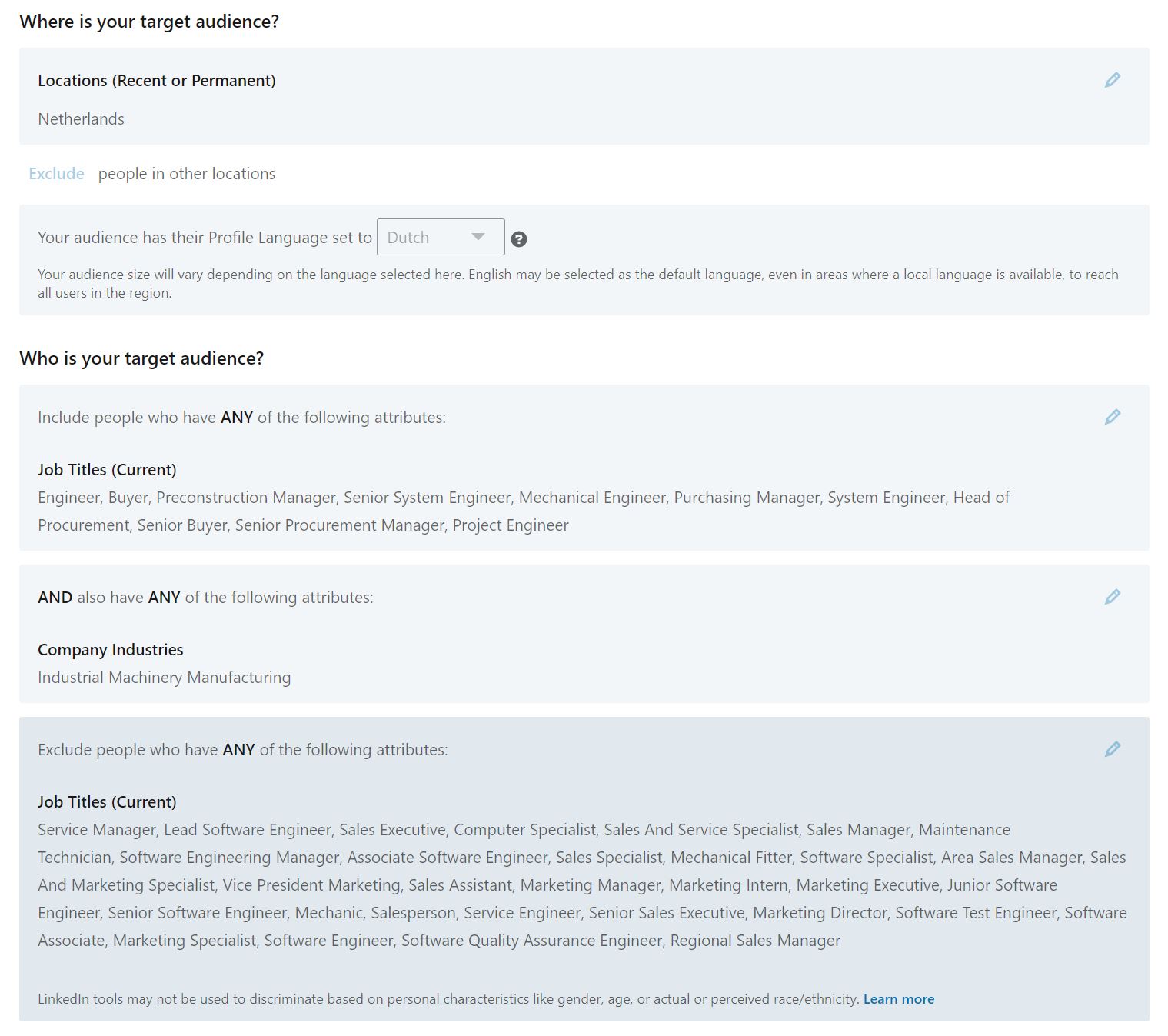
LinkedIn thus offers unique possibilities for composing your target audience. LinkedIn is also the platform where your target audience should be as specific as possible. This ensures that your campaign is only brought to the attention of relevant people, you can steer the campaign, and tailor your campaign message as well as possible to the needs of the target audience. A too large target audience is costly and makes it difficult to steer. But how exactly can or do you want to define the target audience?
The answer to this question strongly depends on the campaign goal. For example, we set up campaigns to increase brand awareness in one specific industry at companies with up to 200 employees; in the Netherlands, this means a target audience of about a thousand people. But we also set up target audiences and campaigns for our clients focused on one specific company in multiple countries; in that case, we sometimes talk about a target audience of thousands of people.
In broad terms, you can compose your target audience based on:
- Company
- Demographic data
- Education
- Experience
- Interests and characteristics
Each category has subcategories. What we like about LinkedIn is that we and our clients learn something new about the target audience from every campaign. The campaign results provide insight into industries, companies, and job profiles: even if it is just one extra company you didn’t know existed. We find this information very valuable and see it as one of the main advantages of LinkedIn.
The Biggest Disadvantage of LinkedIn
It should be clear, we see many advantages to advertising on LinkedIn and are fans of the platform. That does not mean we are blind to the disadvantages. By far the biggest disadvantage of LinkedIn is the transparency of results.
When your campaign runs on LinkedIn, you get very valuable insights into industries, companies, functions, etc. But LinkedIn limits this in the campaign manager to 25 rows. This means you actually only see the top 25 results based on impressions or clicks, while your campaign may have been shown to hundreds of companies. Additionally, LinkedIn is very focused on protecting members’ privacy, which is of course very good and desirable for individuals, but for your campaign, this means you cannot always trace where the clicks on your ad come from.
We see this as a major disadvantage because you need this information to set up and steer campaigns. There are ways to get a bit more information from LinkedIn. For example, you can view results per day. You then get a bit more information, but the results will still be dominated by the largest companies, job titles, etc., in your target audience.
Access to All LinkedIn Data
A good way to really get more data from LinkedIn is the tool we developed ourselves to extract data from campaigns. With this, we do see all companies and can steer even more accurately. Curious how this looks or what it would mean for your brand? We are happy to tell you more in a personal conversation.
Are you (not yet) convinced of the possibilities on LinkedIn? We are happy to talk with you and show you based on data and our experiences that you really should allocate advertising budget for LinkedIn in 2023. Want to know more? Then read more about LinkedIn advertising.