Lead generation success: how do I measure that?
Lead generation success, how do I measure it? How do I ensure that my marketing efforts yield maximum results? In this article, we discuss the crucial role of ‘measuring’ in lead generation. Discover how accurate measurements and analyses can help you maximize your ROI, refine your tactics, and achieve your ultimate sales and profit goals. Explore the art and science of effective lead generation with us.”
What is lead generation?
Lead generation is the crucial step in the sales process that initiates the transformation of an unknown visitor into an interested prospect, ready to take the next step in the sales ‘funnel’.
That funnel has simply evolved for many companies, a product of the past, but with a good lead generation strategy, much more can be achieved. A solid approach ensures a growing number of leads and subsequently sales.
Lead generation strategy
A clear lead generation strategy is often the backbone of a company’s success. A well-defined strategy enables a company to work purposefully instead of taking random actions. It helps identify the most effective channels and tactics to reach potential customers, align with their needs, and guide them throughout the customer journey. This results in more efficient use of resources and a higher return on investment (ROI).
In addition, a solid lead generation strategy ensures consistency and continuity in a company’s marketing efforts. It provides a clear path to follow, regardless of changes in the team or market conditions. This creates stability and predictability in the company’s approach, making it easier to measure successes, identify bottlenecks, and adjust the strategy if necessary. Without such a strategy, companies risk their marketing efforts becoming fragmented and less effective.
How should you approach this? Merkelijkheid is happy to show you concrete examples of what lead generation success looks like. We explain the key strategies and tell you about the most efficient tactics to actually generate leads. Working with Merkelijkheid means you can quickly get started with lead generation. Click here to make an appointment.
Lead generation success
Measuring the effectiveness of a lead generation strategy is crucial to determine the return on investment (ROI), compare the performance of different marketing tactics, and make adjustments where necessary. By continuously monitoring key indicators such as conversion rate, cost per lead, and the quality of generated leads, companies can gain insight into what works and what doesn’t. This enables them to refine their strategy, use resources more efficiently, and ultimately achieve their sales and profit goals.
But how do I do that?
1. Understanding key performance indicators (KPIs)
KPIs form the backbone of any measurement strategy. These quantifiable metrics are used to evaluate the performance of your lead generation efforts. KPIs can vary depending on your specific goals, but some common examples include the number of leads generated, the conversion rate, and the cost per lead.
To use KPIs effectively, it is important to select them based on your goals and monitor them regularly. This helps you track your progress, gain insight into what works and what doesn’t, and make adjustments where necessary.
2. Using Analytics tools
Analytics tools are essential to measure the effectiveness of your lead generation strategy. These tools can provide a wealth of information about how visitors interact with your website, from which pages they visit to how long they stay on your site and where they come from.
Google Analytics is one of the most popular and powerful analytics tools available. It offers extensive information about your website traffic, user interaction, and conversions. Other tools such as HubSpot and Salesforce also provide valuable insights, especially if you focus on inbound marketing and lead nurturing.
3. Conducting A/B testing
A/B testing is a great way to measure the effectiveness of different elements of your lead generation strategy. It involves creating two different versions of the same element (for example, a landing page or an email) and testing which version performs better.
The beauty of A/B testing is that it not only tells you what works but also why. By testing different versions and analyzing the results, you can gain insight into what your audience finds appealing and use this to inform and improve your future efforts.
4. Collecting customer feedback
While quantitative data is crucial, the value of qualitative feedback should not be underestimated. Collecting feedback from your leads and customers can provide valuable insights into the effectiveness of your lead generation strategy.
There are many ways to collect feedback, from conducting customer satisfaction surveys to speaking directly with customers through interviews or focus groups. This feedback can help you better understand what your audience values and expects, and how you can adjust your strategy to better meet these needs.
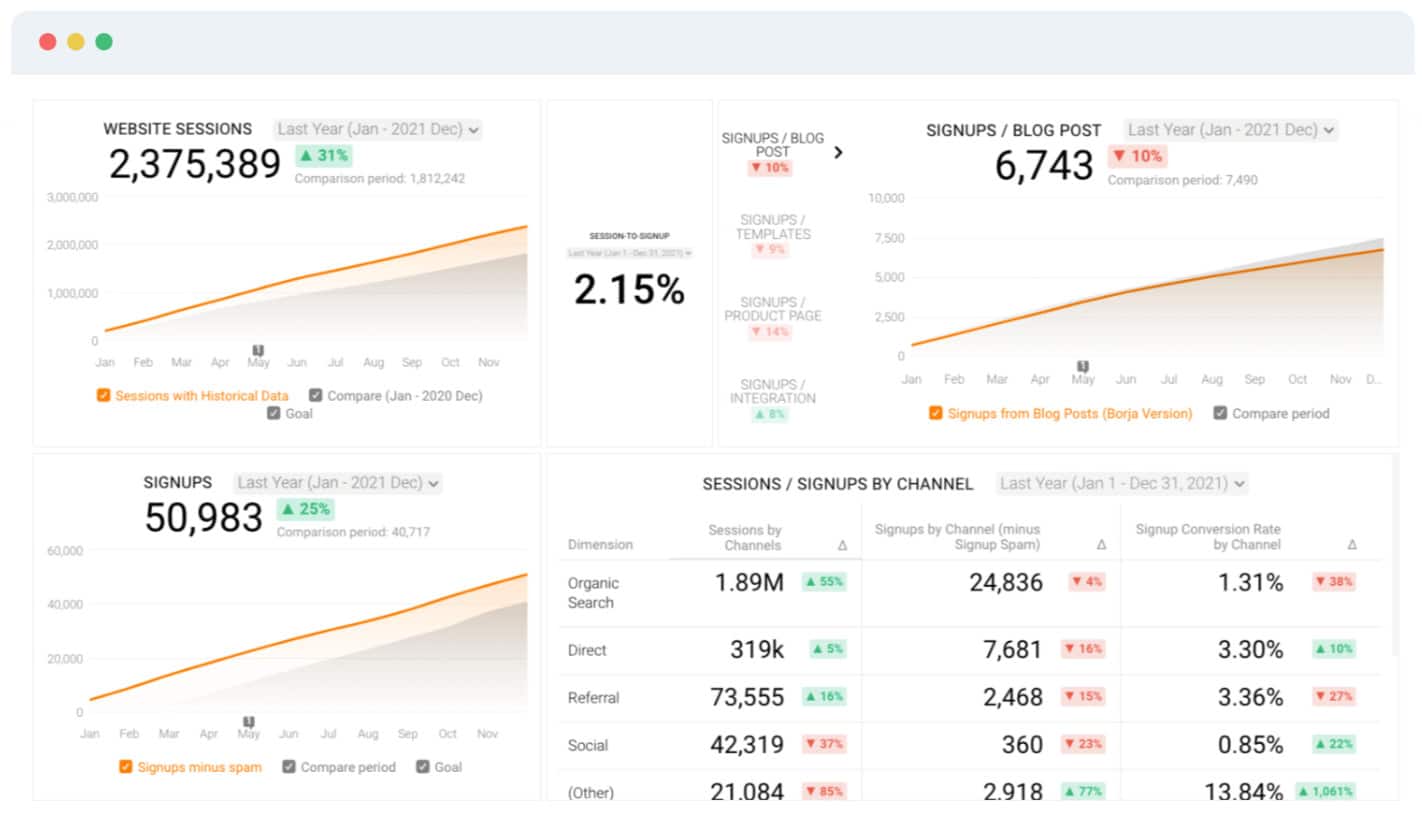
A clear dashboard helps maximize the ROI of your lead generation
Lead generation dashboard
In practice, it works well to summarize the key performance indicators (KPIs) of your lead generation strategy in a clear dashboard. Instead of having to sift through complex reports and data sheets, you and your team can see the status and trends of your lead generation at a glance. This also makes it much easier to make adjustments and implement improvements. It helps you quickly identify problem areas or new opportunities, so you can respond faster and more effectively to changes in the market or your audience’s behavior.
Together with Merkelijkheid
Merkelijkheid has been working for years with companies in many different markets on structural lead generation. And the results speak for themselves. Would you like to go through some dashboards with us and see how we achieve certain results? Make an appointment for an introduction.