Lead generation companies: an indispensable building block for growth
Lead generation companies face many challenges. Especially traditional sales companies hesitate or simply find it ‘far from their reality’. Understandable, but the purchasing process has permanently changed, making lead generation more important. In this article, we explain why and what the best way is to handle this.
Lead generation companies
Lead generation companies are becoming increasingly important. Over the past 10 years, we have seen that the target audience of many companies has changed. More and more often, the shortlist is created based on online research instead of a trade fair visit, a look in a catalog, or a salesperson who happens to drive by one day. The role of Sales is not less important, don’t get me wrong, but it has changed.
Where thousands of salespeople used to get in their cars daily to ‘work the market’, salespeople are now increasingly the first point of contact for potential customers who are ready for the next step in their purchasing process. We see it as follows:
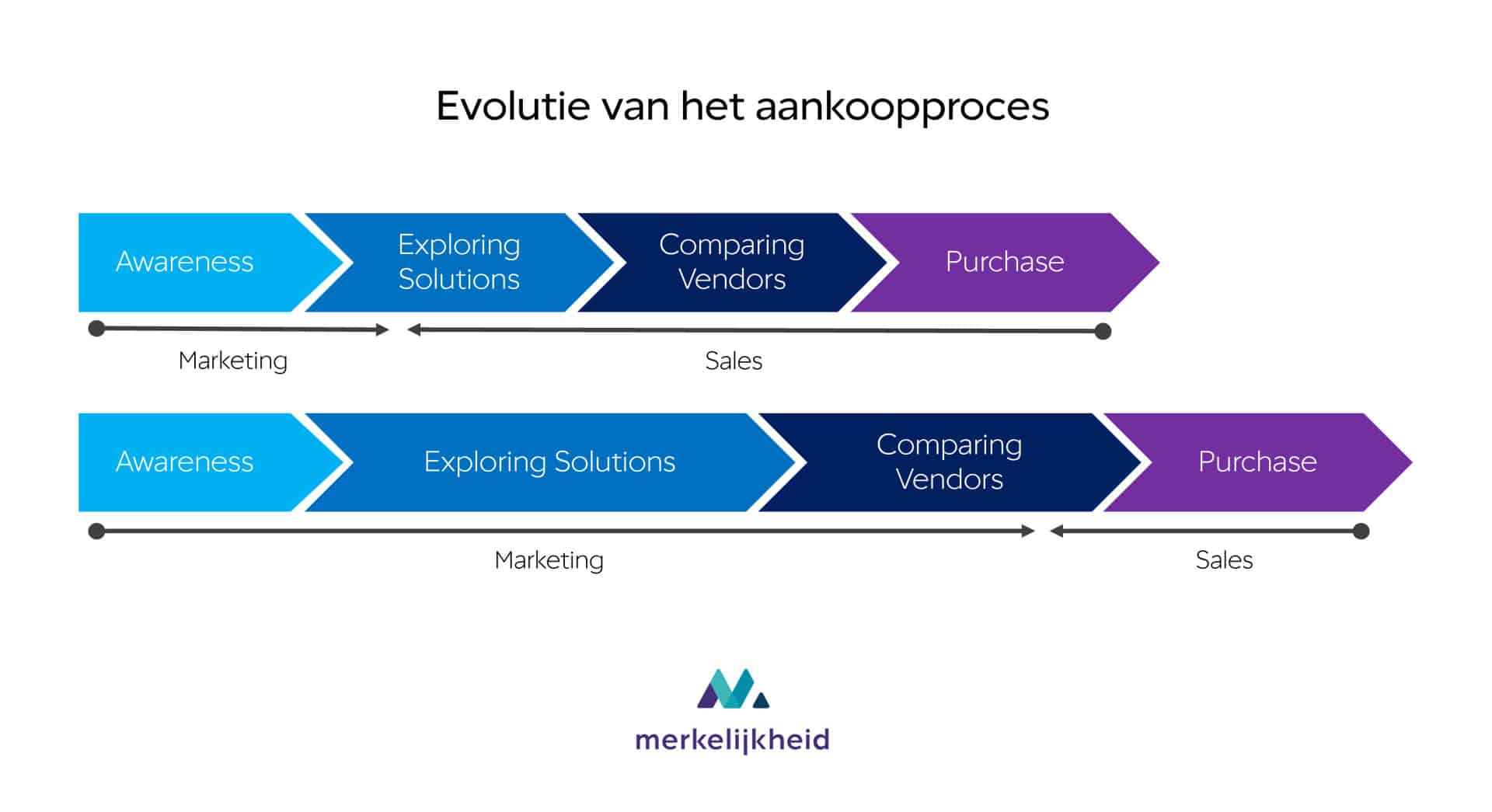
The position and role of sales in the purchasing process has changed, making lead generation more important
Companies without lead generation could always compensate well by gaining attention during the exploration and comparison phase. But nowadays, that attitude simply means you miss potential customers: you do not (or only very limitedly) appear during the vast majority of their search process. Even if you come into play in the final phases, you have a clear disadvantage compared to brands that have already highlighted their unique selling points multiple times.
Lead generation
Lead generation means that as a company you create a certain (initial) interest among people in your target group and persuade them to take a certain action.
The most well-known form is, of course, a phone call, where the potential customer picks up the phone to call you. Perfect! But for many people, that step is too big. They are (often online) orienting themselves and are not waiting for a sales conversation. You can probably imagine that, right?
Fortunately, there are several other methods to generate leads. Methods that feel less intense for many people and therefore have a higher chance of success. Filling out a contact form, for example, but also subscribing to a newsletter, downloading a whitepaper, or signing up for a free webinar are ways to generate leads.
The core of lead generation is that you have an appropriate offer for every moment in the customer journey that can help the potential customer move forward. To receive the offer, the potential customer shares certain contact details that you can use to follow up.
Sounds good, but how do you ensure that people see your offer?
Approach to lead generation
There are plenty of customer journey models. In our article about the customer journey, we share 4, but there are surely many more. The principle is:
The potential customer must encounter your brand in a relevant way during every phase of the customer journey.
That means you must identify what the customer is looking for, what they need to take the next step in the customer journey, and offer that. If we follow the AIDA model, the first step is Attention, attention for your brand and/or offer. A fun video, infographic, or LinkedIn post are all examples of ways to draw attention to your brand. Got the attention? Then the biggest challenge is to hold it and ensure the potential customer also sees your future communications.
That means you not only have to think about communications that get attention but also about holding that attention. This is often the first step in lead generation, ensuring your visibility increases by (for example) gaining newsletter subscribers, followers of your LinkedIn page, or something similar. That is the only way to ensure people also see your next message.
Lead generation companies: Conversion & CTAs
Staying close to home, I can easily give you an example of how we ourselves generate leads. We score well on articles about, for example, lead generation or positioning. Are you interested in the positioning of a well-known brand or looking for a positioning model? Chances are you end up on our website. And somewhere around 30% into the article, you see the following:
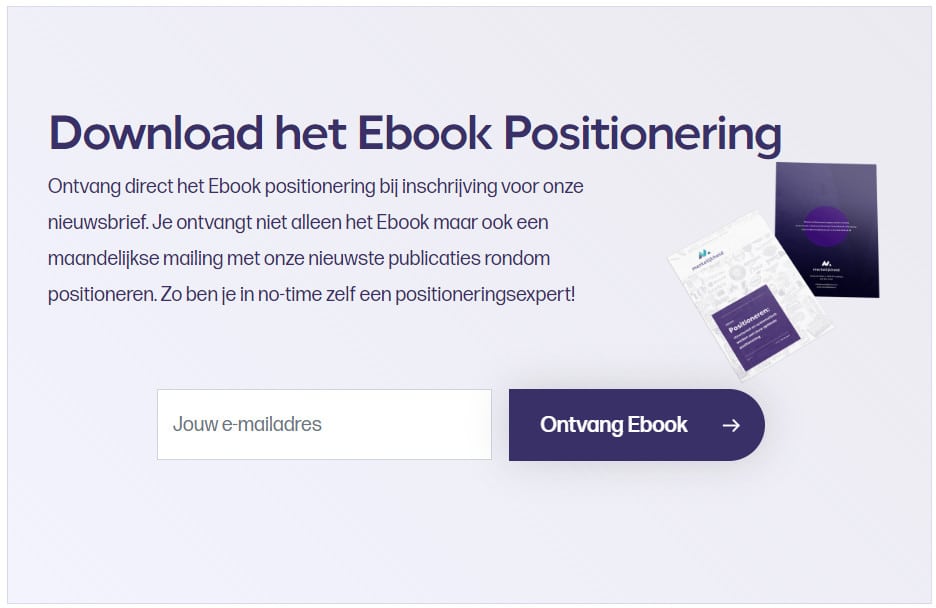
A conversion focused on collecting email addresses
If you are researching positioning, chances are you are also curious about an ebook with even more information about positioning. We have bundled this nicely and offer it in exchange for your contact details. You get the book and then a monthly mailing with new articles, podcasts, and information about Merkelijkheid. Dozens of people use this offer monthly.
The next step is to provide more information that can help the potential customer further in the customer journey. Think of case studies, customer references, whitepapers, reports, webinars, and so on. By offering this to the collected interested parties, you ensure you stay on their radar and they build a positive image of your brand. Handy when they have to create a shortlist later.
Lead generation company
Starting with lead generation companies is, as you can see, quite straightforward, but you probably don’t have all the expertise in-house to set this up in the short term. Merkelijkheid can help with that. See our team of specialists as an outboard motor that supports you and ensures you can make quick progress. Do you already have a LinkedIn expert on your team? Then that is expertise we simply don’t need to deploy. We adapt to your needs. Together, we form a complete team that will deliver results.
That of course starts with an introduction. We share some practical examples without obligation, the expected results based on our benchmark, and of course tell you about our approach. In 30 minutes, you will know exactly what you’re dealing with and can make a decision. When do you have time? We’d be happy to make an appointment.