Font and brand identity, the psychology behind your ‘font’
How to choose a font for your brand? This often requires more thought than you might expect. There is a psychology behind it, called the ‘psychology of fonts’ by Americans. How does this psychology work and what factors come into play when choosing a font? We list all the aspects.
Different font styles often subconsciously evoke certain associations in the reader’s mind. The font style is therefore an important but often overlooked factor in aligning with the brand identity positioning. A brand becomes stronger when the font style logically fits the positioning. Of course, a font not only influences your customer’s feelings, it is also an important factor for the readability of your texts. More on that later.
A font can be bold or thin, loose or connected, simple or complex, large or small, serif or sans serif. In this article, we delve deeper into the most important of these characteristics.
Serif or Sans Serif font
A letter with or without a serif, in English serif and sans serif, applies to all fonts.

Letters with serifs are characterized by the strokes at the end of each letter. This makes the letters seem to flow into each other.

Letters without serifs do not have these strokes. These letters appear simpler and calmer.
Fonts therefore belong to the serif family or the sans serif family. Let’s take a closer look at both:
Serif font
Serif fonts are characterized by a somewhat more elegant appearance. It is also called a Roman font. Beauty and tradition are often associated with this type of font. Examples of brands that use a serif font are the Italian jewelry brand Ti Sento and car brand Mercedes.


Famous serif fonts are:
- Times New Roman
- Georgia
- Garamond
Sans Serif
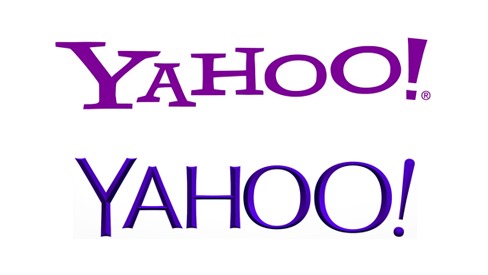
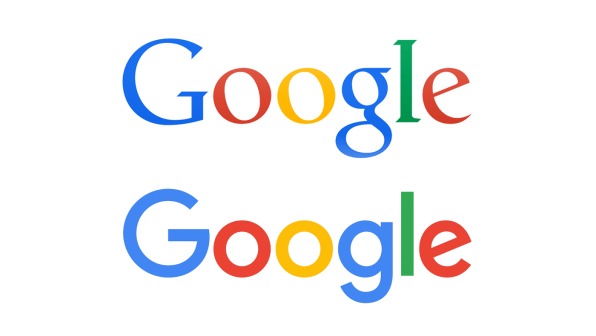
Sans serif fonts have a more informal and modern look compared to serif. This type looks minimalist, powerful, and gives a no-nonsense feeling. In recent years, this font has become increasingly popular among brands. Both Google and Yahoo! have therefore replaced their original serif logos with a cleaner sans serif design. Another well-known example of a sans serif logo is Facebook.

Famous sans serif fonts are:
- Verdana
- Arial
- Helvetica
Bold or thin font for brand identity
Another consideration when determining your font is the thickness and size of your text. Light fonts are often used by brands with a ‘softer’, more feminine appearance where design and style are more important. Bold fonts give a strong impression and are mainly associated with strength and masculinity.
Examples of brands with thin fonts are Jimmy Choo and Hunkemoller. These brands emphasize the femininity of their products. In contrast, Diesel and Levi’s come across as more masculine and tough.


Uppercase or lowercase letters
We see countless letters daily. The majority of the letters we see are – logically – lowercase. This again affects how our brains respond to lowercase and uppercase letters. Because we are so used to lowercase letters, this creates a feeling of involvement. Lowercase letters therefore radiate trust and friendliness.
When something is written in uppercase, it is usually to attract attention, give a warning, or convey a certain authority. Using uppercase letters in your brand identity creates an influential, dominant appearance.
There are plenty of examples of well-known brands that use lowercase letters as their logo: amazon, ebay, facebook, and bp are some examples of large companies that want to convey an accessible and familiar feeling to their customers with lowercase letters in their logo.
Other brands choose a large, strong presence in the market with logos often in bold uppercase letters. Some examples of these logos are: DIESEL, IKEA, Calvin Klein, and Nescafe.


Fonts and cognition
Another crucial factor when choosing your font is the effect on your cognition. This includes the readability and reading speed of a text. Not only the font affects this but also the line length, letter spacing, and color contrasts in your communication.
We list them below:
Font size
Recent research has shown that font size affects the readability of texts. This is especially applicable to website texts and to a lesser extent to logos. A study by M. Bayer, W. Sommer, and A. Schacht from 2012 (see sources) shows that a larger font creates a stronger emotional bond with the target audience. Many websites use a smaller font size like 10pt-12pt; try experimenting with this. You will notice that 16pt or 18pt reads more comfortably and faster.
Letter spacing (kerning)
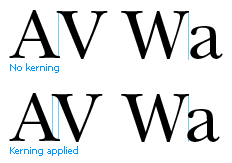
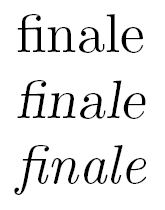
Kerning is the English term for the white space between individual letters. Most fonts have a standard kerning and are therefore always readable. Are you a designer and want to develop your own font? Always consider the spacing between letters. Certain letters tend to flow into each other when they are too close. This is not conducive to the readability of the text.
An exception to this rule is the use of ligatures. This is a stylistic solution where letters that do not look good next to each other are connected. This improves readability. A ligature often occurs with the letters f and i. In the example, you see the merging of these letters.
Line length of text
Another factor that affects readability is the line length in your text. This means the number of characters on each line. Ideally, a line consists of 50 to 75 characters. When a sentence is broken too early, the reader’s reading rhythm is disturbed because they have to return to the beginning of a sentence too quickly. This is tiring and causes a reader to read a text less efficiently.
A nice, comfortably readable text has a varied rhythm. Long sentences (>80 characters) occur only sporadically, as do short sentences (<40 characters); the main body is the ideal line length. Yet it is the variation that makes a text comfortably readable. There are various tests to assess the readability of a text, such as:
- English: Hemingway text writing tool (http://www.hemingwayapp.com/)
- Dutch: Accessibility Reading Level Tool (https://www.accessibility.nl/kennisbank/tools/leesniveau-tool)
The popular WordPress plugin Yoast SEO includes a readability tool.
Contrast
Another important tip for readability on your website is to use sufficient contrast between the text and background. You want to prevent older people, visually impaired, or colorblind individuals from barely being able to read your texts and thus dropping out. Don’t be mistaken, one in twelve men is colorblind and probably won’t be happy with yellow text on a white background. Also, do not use busy images as the background of your text. Ensure a solid background with texts that sufficiently contrast with each other.
The positioning of your brand is a determining factor in the choice of a font and must be central to the brand identity. A font that matches the character of your brand makes your brand even stronger. Think carefully about this before you launch your brand in the market!
Sources: