Positioning Tesla: winning strategy for electric car sales?
How has Tesla managed to position itself as the Apple of car brands? According to Elon Musk, the whole world will soon be driving electric cars (powered by solar energy). And although Tesla has come close to bankruptcy several times, the company has also managed to build a growing group of loyal fans. What influence does Musk’s vision have on Tesla’s success and positioning as an innovator in the automotive industry? We outline the life story of the still young Tesla and its unique positioning.
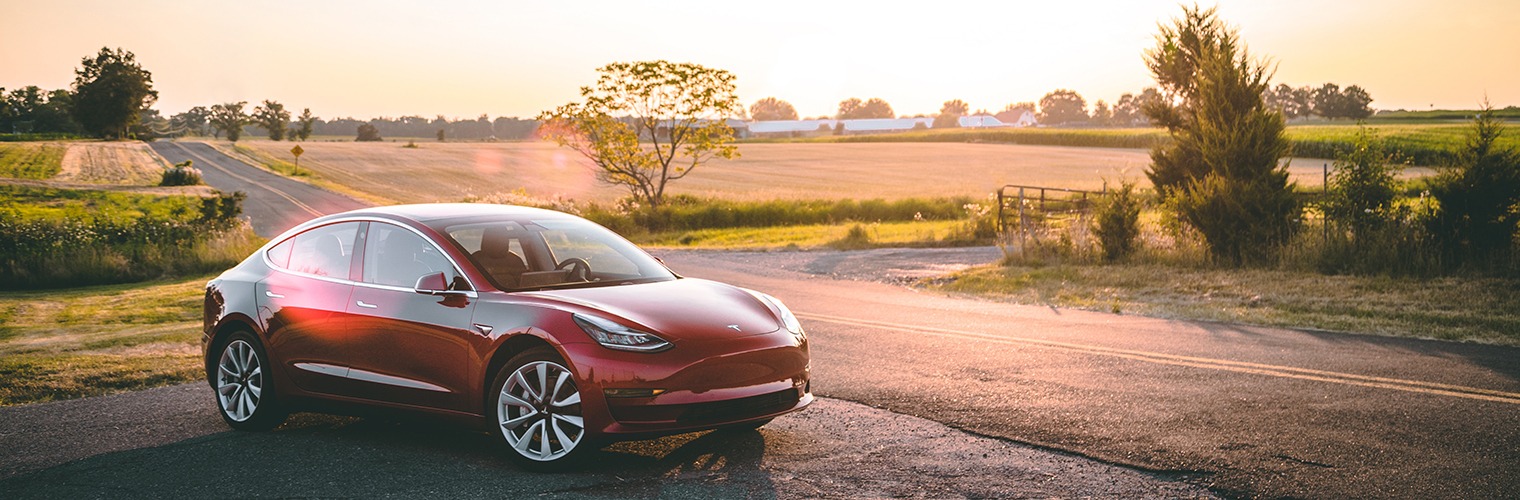
Tesla’s Model 3
The automotive industry and electric driving
How has newcomer Tesla successfully positioned itself in the automotive industry? Except for Ford, founded in 1903, every American car manufacturer has either gone bankrupt or been saved from bankruptcy by the government. When Tesla wanted to enter the automotive industry 16 years ago with an innovative product, everyone said just one thing: No chance!
The challenge: electric driving
Electric driving is known by most people as a recent innovation, but in reality it dates back to the early 19th century. At the beginning of the twentieth century, the electric car was even extremely popular, yet it disappeared from the streets and we switched en masse to combustion engines.
The founding of Tesla is directly linked to the demise of another electric car: the EV1 from General Motors. This car was produced between 1996 and 1999 and was taken off the road in 2002 because General Motors could not make the car profitable. Less than a year later, in July 2003, Tesla Motors was founded by Martin Eberhard and Marc Tarpenning. The goal: to prove that electric cars can be better, faster, and more fun than oil-powered cars. Early 2004, Elon Musk joined Eberhard and Tarpenning as an investor.
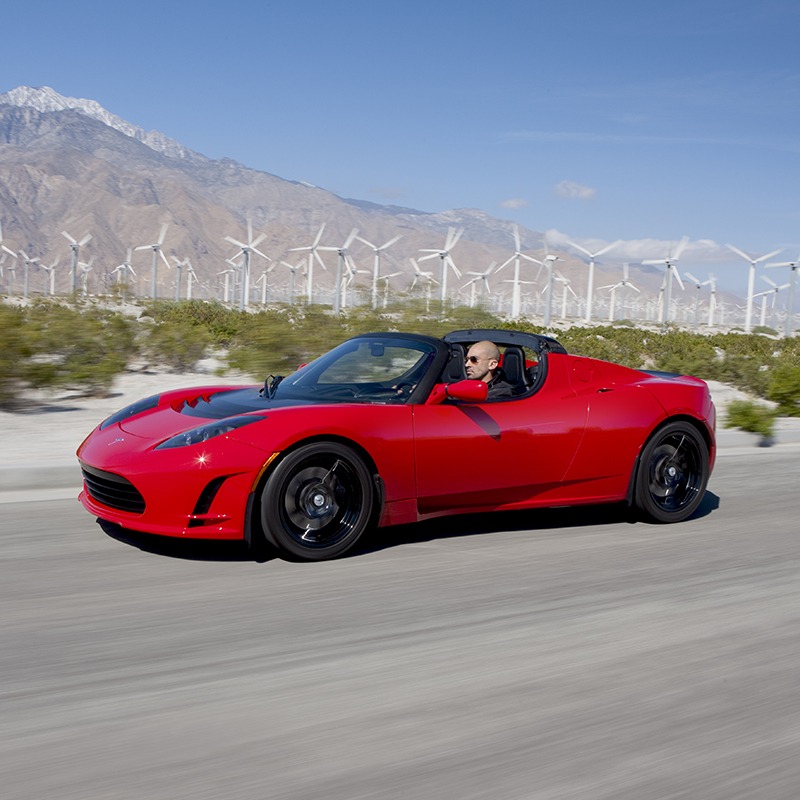
The first Tesla: the Roadster
The introduction of the Tesla Roadster
Tesla Motors’ first product was presented on July 19, 2006: the Tesla Roadster. A fully electric sports car that combined speed with a battery suitable for long distances, unprecedented for electric cars until then.
Martin Eberhard, then CEO of Tesla, said about this: “The Tesla Roadster delivers sports car performance without using any gasoline. This is what we hoped to achieve when we started the company three years ago, to build a car with zero emissions that people would love to drive.”
Mission, vision and strategy Tesla
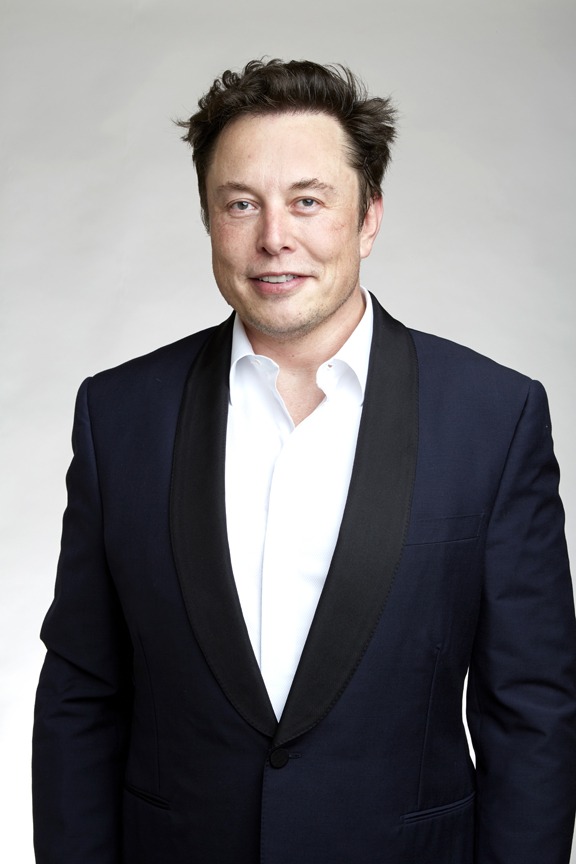
Visionary Elon Musk
With the launch of the Roadster, the goal of proving that electric cars are better and more fun to drive than oil-powered cars seemed achieved. Or was it not? Elon Musk had a very different goal with Tesla from the start. Shortly after the presentation of the Tesla Roadster, Musk wrote a blog, The Secret Tesla Motors Master Plan. Musk wants Tesla to accelerate the transition from the current economy, based on extracting and burning hydrocarbons, to an economy based on solar energy.
To achieve this, a fully electric car that people can drive without sacrificing convenience and pleasure is necessary. This is formulated in Tesla’s mission: to accelerate the transition to sustainable transport. How? By producing electric cars for the mass market as quickly as possible and working on emission-free energy sources.
A luxury sports car does not seem the most logical way to supply the mass market with electric cars, but Musk explains this in his blog. Developing new technologies is expensive. Tesla uses this development phase to create a luxury sports car that people are willing to pay a lot of money for, a relatively small market segment that can yield high returns. With the money Tesla earns from the Roadster, it can apply the developed technologies to a lower-priced car suitable for a larger market segment. Then follows another lower-priced car for an even larger market segment.
Tesla Motors becomes Tesla Inc.
By mid-2016, Tesla seems to shift course, from transport to energy: Tesla’s mission is to accelerate the transition to sustainable energy. In reality, this is a bigger change than it appears at first glance.
Tesla will focus more on producing solar energy sources. Besides producing batteries and ‘supercharger’ charging stations for Teslas, the company also aims to supply walls and roofs that generate and store solar energy in the short term. To this end, Tesla acquired SolarCity in 2016 and changed its name from Tesla Motors to Tesla Inc. in 2017.
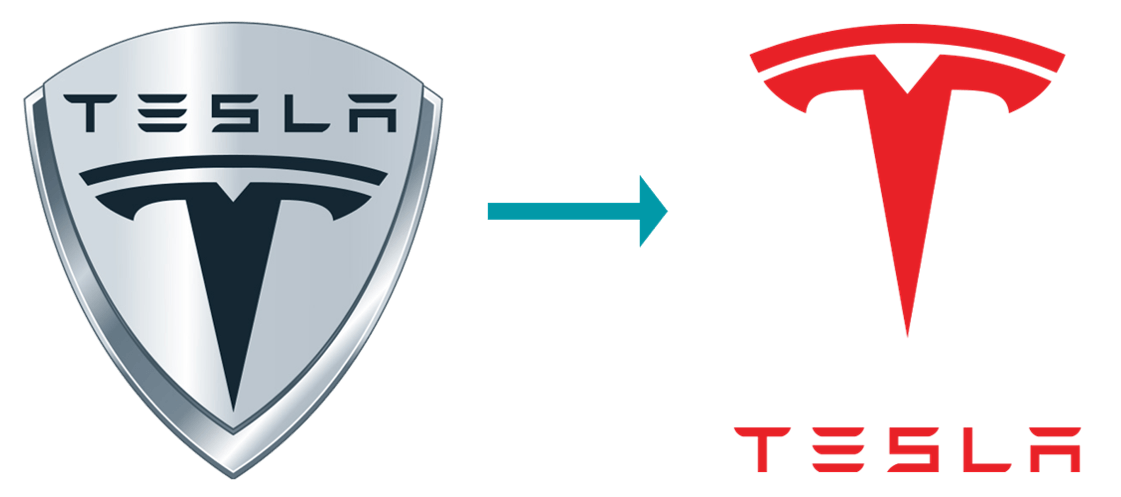
From Tesla Motors to Tesla Inc. also required a new logo
It seems as if the logo has always consisted of a large T. In reality, the logo is based on the cross-section of an electric motor, which remained unchanged with the name change.
Positioning on innovation in a conservative market
With the Roadster, Tesla deliberately targeted potential customers willing to spend a lot of money on an exclusive, innovative, and environmentally conscious sports car. We can also describe the strategy with which the Tesla Roadster was brought to market using the same characteristics.
Only 350 invitees were allowed to attend the prototype presentation in 2006, including potential customers and people from the tech industry. From that moment on, it was possible to buy a Tesla, meaning: to make a down payment in exchange for a spot on the waiting list. Due to the very limited production of the Tesla Roadster, the waiting time could extend to several years. After the presentation, it took 3 years before the first Roadster came off the production line, after which approximately 2,450 units were produced between February 2009 and December 2012.
Unlike any other car manufacturer, Tesla did not launch an expensive marketing campaign for the Roadster. In fact, Tesla never advertised the Roadster. The level of innovation and word-of-mouth from (famous) fans was enough advertising for Tesla to get the Roadster on the road.
Tesla conquers the market as an innovator
Tesla follows the path set by Musk and introduces more practical, affordable models. This does not make the cars less innovative but less exclusive. Is this also reflected in Tesla’s strategy? Not entirely. Innovation and exclusivity remain important pillars in Tesla’s strategy. However, Tesla increasingly focuses on safety and online presence is an important part of the strategy.
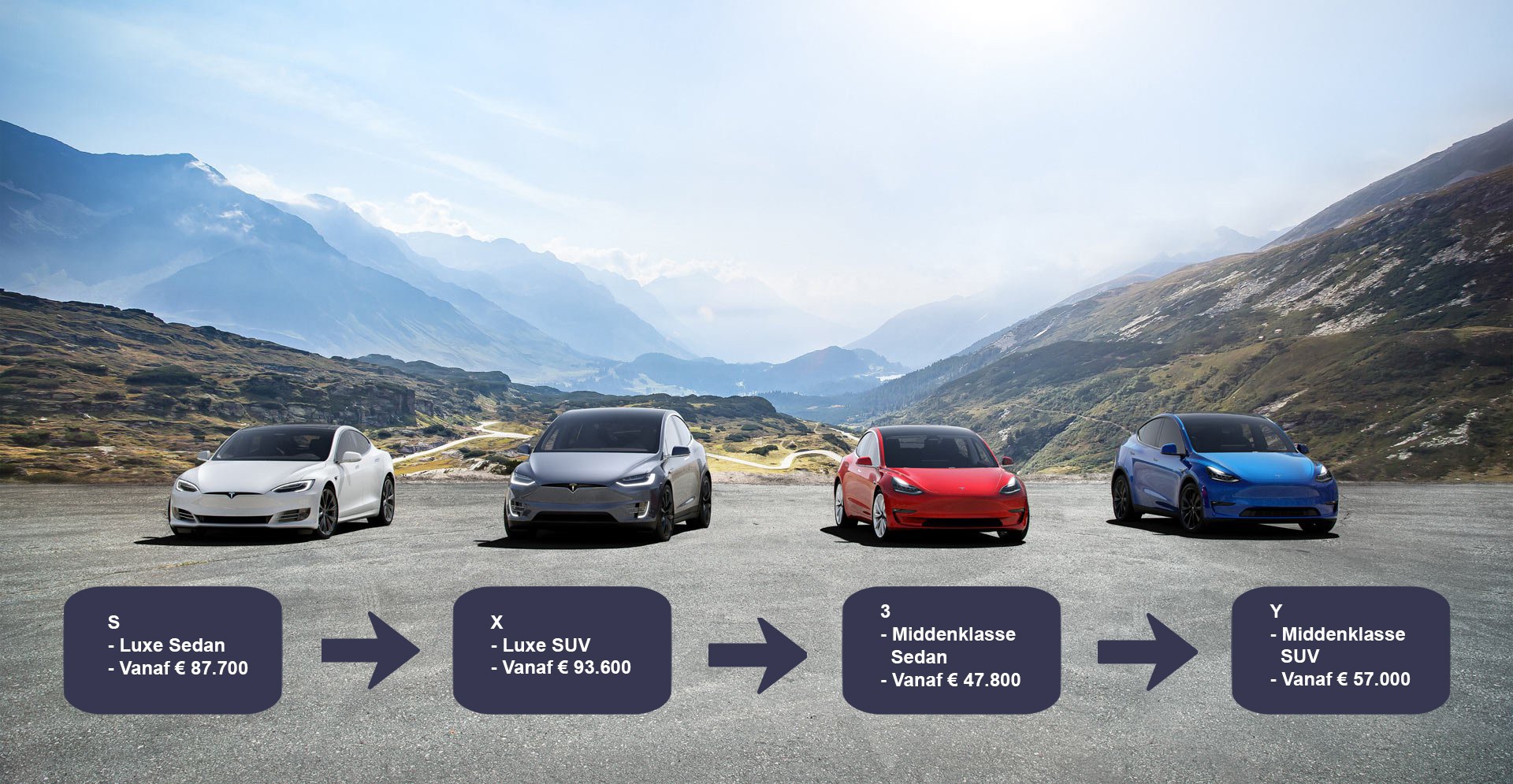
Tesla’s passenger cars in a row, with slight modifications the designations read: S3XY
Tesla’s positioning
Tesla stands for accessible innovation. The company pushes the boundaries of driving and makes new technologies and a better world available to the masses. This is also what the company offers its customers: When you buy a Tesla, you are a pioneer and contribute to the innovation of the automotive industry and the improvement of the world. After electric driving, Tesla is now working on groundbreaking innovations in solar energy, further strengthening its position as an innovator. The second pillar in Tesla’s positioning is safety. Tesla claims not only to make the safest cars in the world but also to make driving and the world safer with its innovations in electric and autonomous driving.
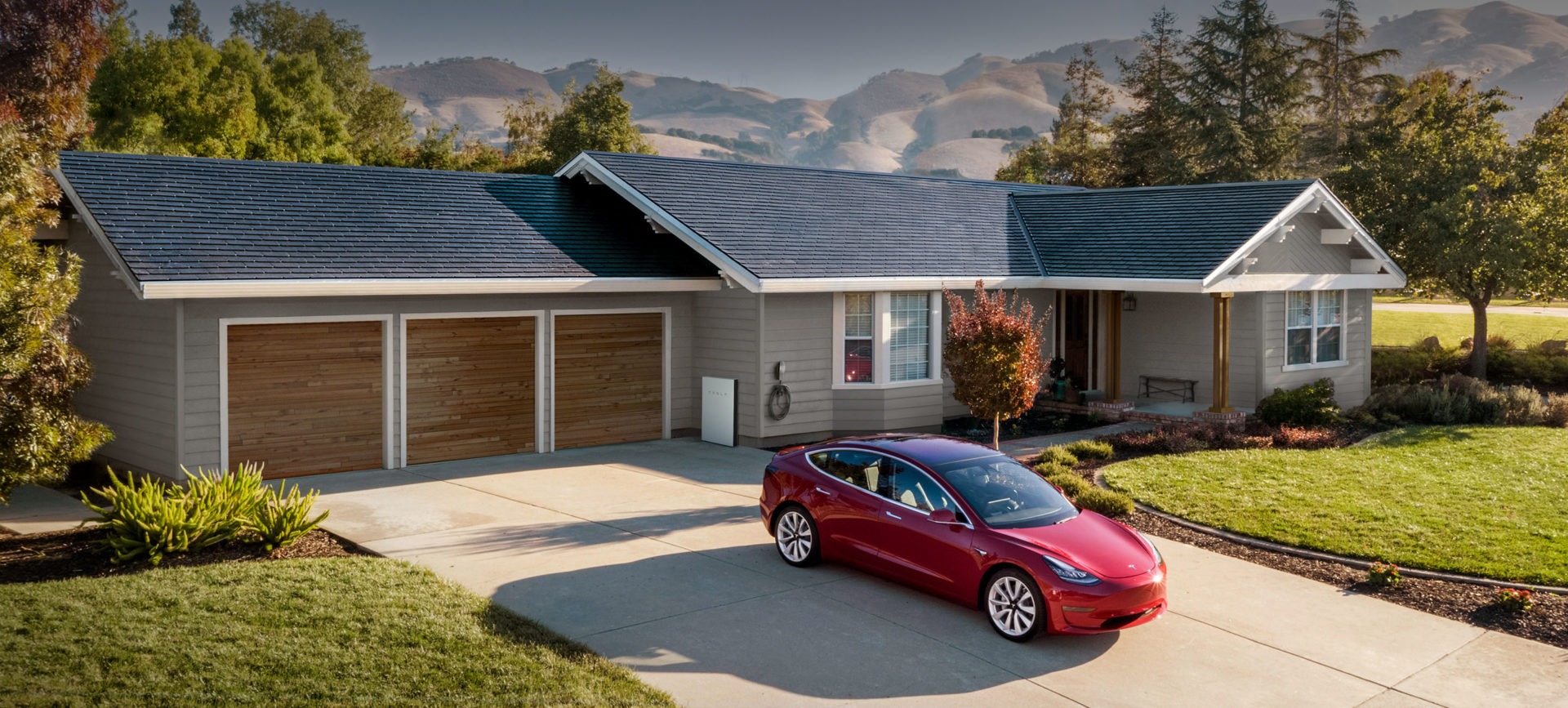
Tesla’s solar panel roofs are said to be even cheaper than regular roof tiles (credit)
Building blocks of Tesla’s positioning
Exclusivity
Over the years, Tesla has made a name for itself and gained many followers and fans, but still presents new models to a small audience. The presentation of new models is accompanied by weeks of speculation about new models and new features, as we also see in the tech industry. The highlight for fans follows when Elon Musk presents the new Tesla in an almost Apple-like manner.
 Tesla’s exclusivity is also still reflected in the availability of its cars. Unlike traditional car manufacturers, Tesla does not work with a network of car dealers but offers its cars exclusively in Tesla brand stores. Tesla is almost like a club you want to belong to; the brand cleverly plays on this with its referral program, rewarding existing customers for attracting new customers. For years, Tesla has reached the rest of the market through early adopters in this way; in 2019, the company announced it would stop the program due to rising costs. Tesla still works with waiting lists because it cannot keep up with demand despite increased production capacity. If you order the newest Tesla immediately after the presentation, it may still take a few years before you can drive your new Tesla. The Tesla 3 is the first model delivered within 2 years after the presentation.
Innovation
Paying a higher price for luxury and innovation was an important part of the strategy with the Roadster. On the other hand, the more affordable Teslas are introduced to make innovation available on a large scale. Innovation remains the most important part of the strategy. With every model, the focus is on what Tesla makes possible first, whether it is the first fully electric sedan with a long range or the first fully electric car with autopilot. When you buy a Tesla, you buy innovation that not only improves the world but also contributes to further innovation, not only at Tesla but in the entire automotive industry. Even after purchase, Tesla surprises its customers with surprising technical features; the cars are known to be full of Easter Eggs, special hidden functions. For example, it is possible to change the road in the navigation system into a rainbow road, the car doors dance, and you can place a digital whoopee cushion on the passenger seat.
Online
Whether it concerns product presentation, marketing, or sales, Tesla focuses on online. Without losing the exclusive atmosphere of its product presentations, Tesla manages to reach its growing fan base; online, followers from all over the world can watch the presentation live.
We have already established that Tesla does not do expensive promotional campaigns but relies on word-of-mouth advertising from many Tesla fans. This starts during the presentation; fans go wild at the unveiling of the new Tesla. Photos and videos go online immediately, and thus fans and attending media promote the new Tesla. Tesla builds on this with testimonials from happy customers.
Unique in the automotive industry is that you can simply order a new Tesla online. Early 2019, Tesla even decided to close all its stores and offer its cars only online to save costs. Although they have since reversed this, Tesla sees online as the most important sales channel for the future.
‘the Best service is no service’ according to Tesla. For maintenance on your Tesla, you usually don’t need to go to a garage. The software is continuously improved and updated remotely. With the Tesla app, the status of your car and its parts is visible at any time.
Safety
Since Tesla has focused more on the mid-segment, safety has become an important factor in positioning. According to Tesla, electric driving is safer because it emits no hazardous substances and does not require fire-hazardous gas stations. Tesla also regularly claims to make the safest cars on the road. Safety was even central in the development of the most recently delivered Model 3. But Tesla goes further: in the future, driving will be safer with the fully self-driving car. Tesla already offers autopilot, but this is not yet safe enough for fully autonomous driving. Autopilot is a major innovation in the automotive industry and Tesla’s second focus.
Success story or loss-making dreamer?
At Tesla’s founding, there was hardly a market for electric cars; that is different nowadays. Mercedes, BMW, Volkswagen, and Nissan all compete with Tesla. We have already established that Tesla cannot meet demand with its current production capacity; sales are going well, yet Tesla rarely makes a profit. Is Tesla a success story changing the market, or a dream of Elon Musk that mostly loses money?
Financially, Tesla has been on the brink of collapse more than once, but Musk always managed to find financing somewhere. In the 16 years Tesla has existed, the company has made a profit in only 4 quarters. Financially, the company is therefore not yet a success; according to Musk, this will change in the short term. The cheaper version of the Tesla Model 3 has been on the market since early 2019 and is supposed to provide the company with economies of scale and financial stability.
Apart from the financial result, Tesla is certainly a success. Although Tesla’s cars have faced more competition, there is no other electric car that can cover as many kilometers on one full battery as a Tesla. There is also criticism; for example, claims that Tesla makes the fastest and safest cars are regularly contradicted. The autopilot function also receives regular criticism, as it is not yet safe enough and cannot yet function as fully self-driving. Still, Tesla wins in sales figures over its competition; in the US, Tesla sold more cars in 2018 than its 3 biggest competitors combined. Tesla is also doing well in the Netherlands; in the first half of 2019, the Model 3 was sold over 6,000 times. Only the Ford Focus and Volkswagen Polo were sold more often.
Is Tesla’s positioning future-proof?
Tesla has successfully positioned itself as an innovative brand and company. With this positioning, Tesla has distinguished itself from the rest of the market and gained a large group of loyal customers. However, Tesla has not yet been able to convert this unique market position into a positive business result. The question is whether Tesla can maintain its market position now that more and more car brands are venturing into electric cars?
We think so. If Tesla continues to impress with its innovations while tapping into increasingly larger markets, Tesla’s market share is expected to keep growing. If Tesla also succeeds in translating innovations in the energy industry to the mass market, this will, in our opinion, positively contribute to Tesla Inc.’s position as an innovator. The sticking point remains whether the Apple of car brands can actually meet the enormous demand. If this stagnates, they could lose momentum.