Positioning Models: which positioning model do you use?
In this article, we present the 6 positioning models that we use most frequently in practice. Every positioning process is different and therefore requires different models, although we must honestly admit that we do have favorites. We briefly discuss each model and explain why we like to use it in practice. We then summarize this in a number of use cases that explain which model is best to use in different situations. After reading this article, you will have a clear understanding of the various positioning models plus the pros and cons of each.
Positioning Models
In this article, we cover the following positioning models:
- MCD model
- McKinsey Brand Driver model
- Unilever Brand Key model
- Positioning matrix
- Golden Circle model
- Competition matrix
Positioning Model: MCD Model
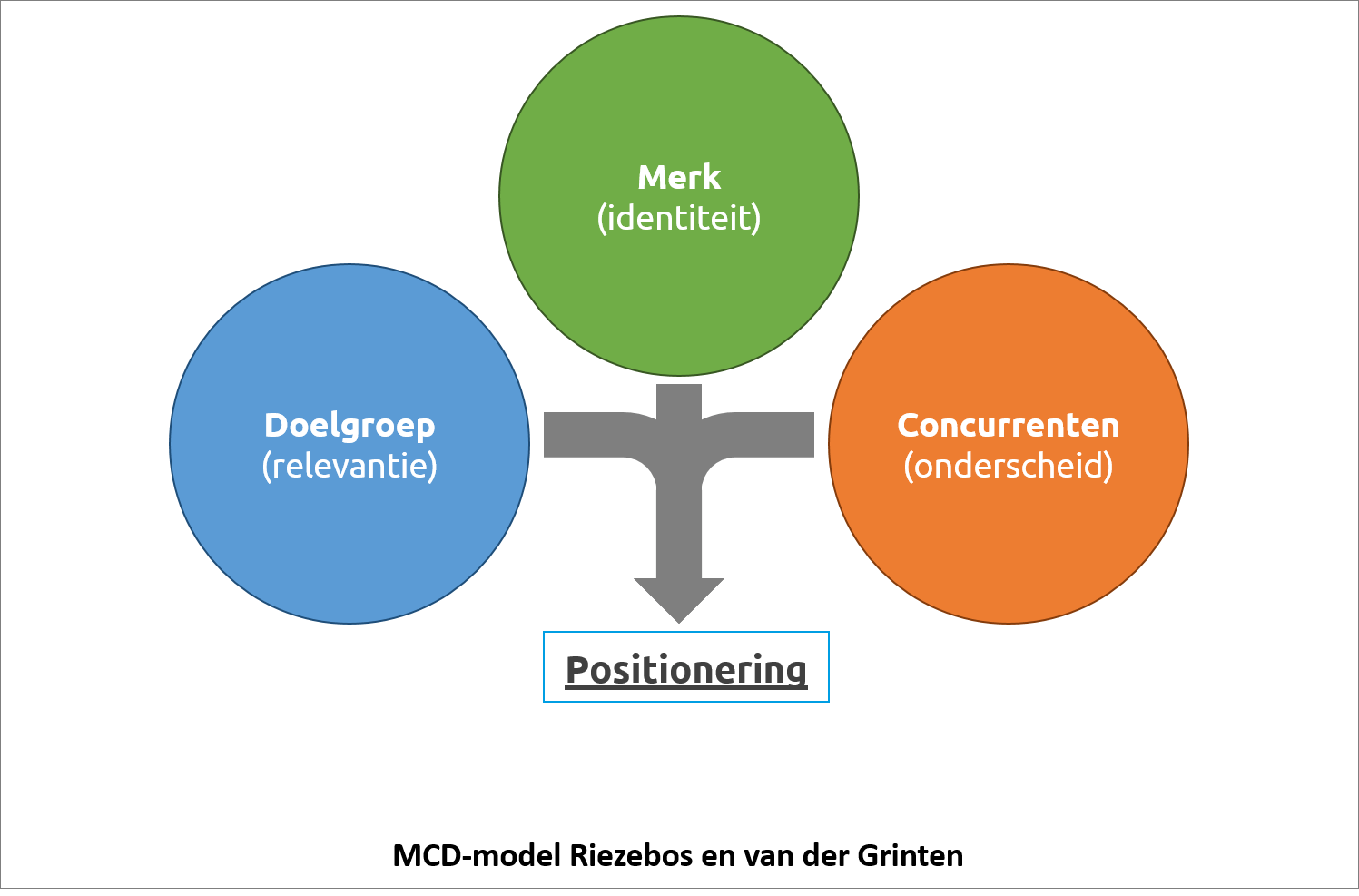 This model shows which sub-areas need to be analyzed to arrive at a good framework for positioning. This model is very basic but clearly shows the main influences on positioning. When we use this model in practice, we also include some internal factors, which come from below. The model you see here is the original.
Positioning Model: McKinsey’s Brand Driver Model
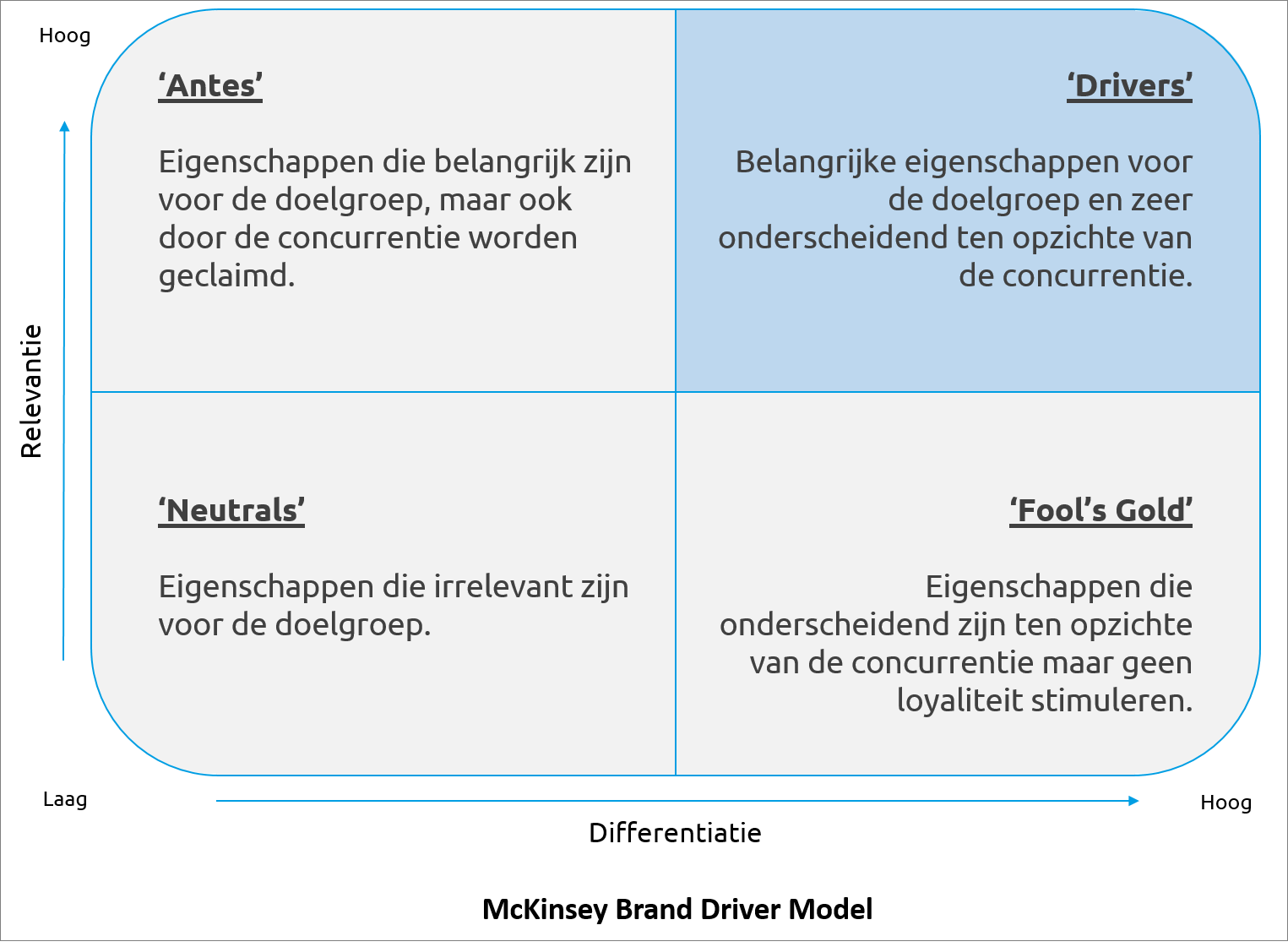 This model helps you evaluate and put into perspective the characteristics of a company, brand, or product. In the original article, the researchers emphasize the ‘drivers,’ but in practice, we also pay a lot of attention to the ‘antes.’ These are the characteristics that serve as basic requirements for entering a market. You will be surprised how many companies have included various ‘antes’ in their list of USPs. There is also a pitfall in the Fool’s Gold segment because markets have indeed been conquered based on characteristics previously labeled as such.
Read the article where McKinsey explains the model.
Positioning Model: Unilever’s Brand Key Model
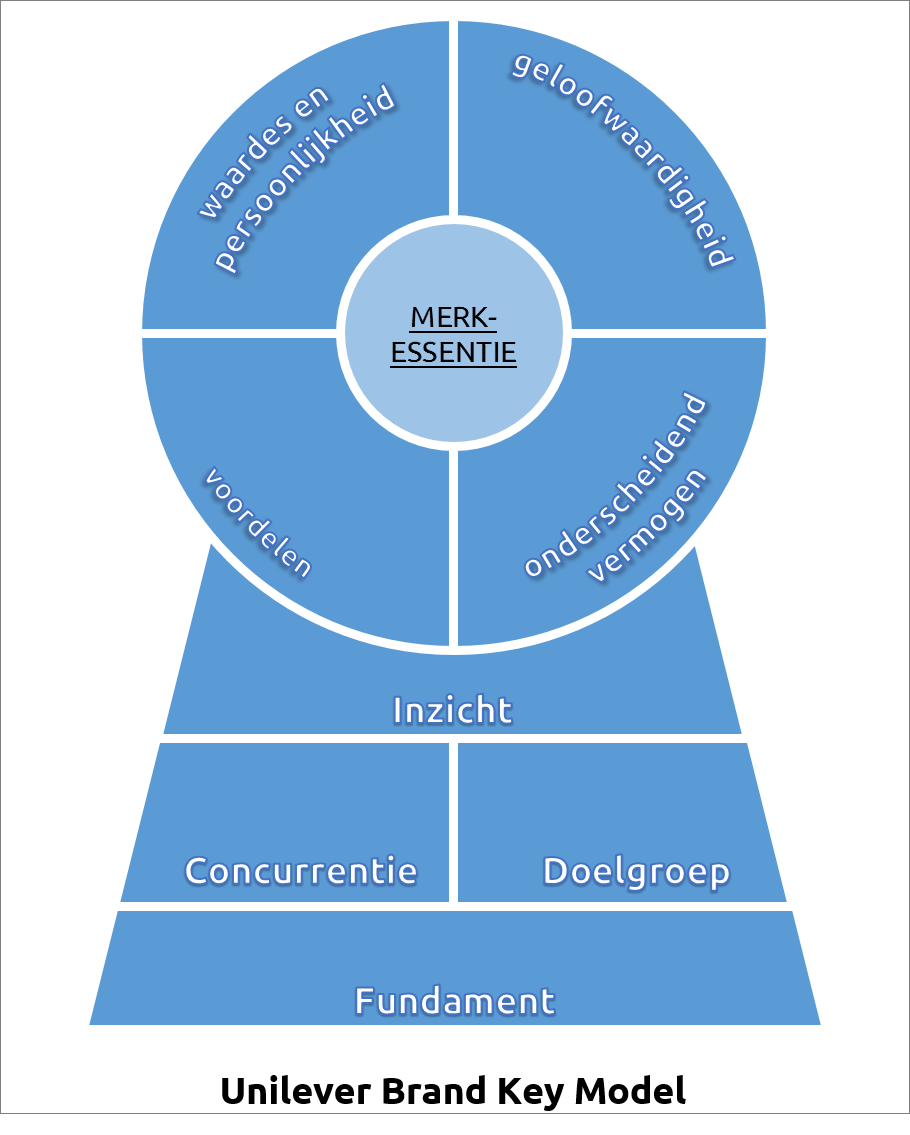 Unilever developed the Brand Key Model within its Marketing Academy to manage all brands worldwide in the same way. The model serves as a guide to represent the foundation of each brand on one A4 page. This model is useful for breaking down an existing brand and, together with a team or client, analyzing the individual components. The original model lacks the foundation, the raison d’être, and the core characteristics of a company or brand; these have been added in the model shown here.
Google is the best source for more information about this model.
Positioning Model: Merkelijkheid Positioning Matrix
In many cases, the positioning of a company or brand has ‘grown’ over the years. If a company then experiences declining sales or a decrease in generated leads, they often do not look for the solution to their problem in positioning. We developed this model to provide insight into the trade-off between the company’s (desired) identity and the perception of it by the target audience. A brand is only in the open playing field when brand identity and perception match, and by evaluating this using this model, you come to surprising insights. In any case, you can clearly explain to colleagues, management, or the board why you believe work needs to be done!
Read more about the Merkelijkheid Positioning Matrix
Positioning Model: Sinek’s Golden Circle
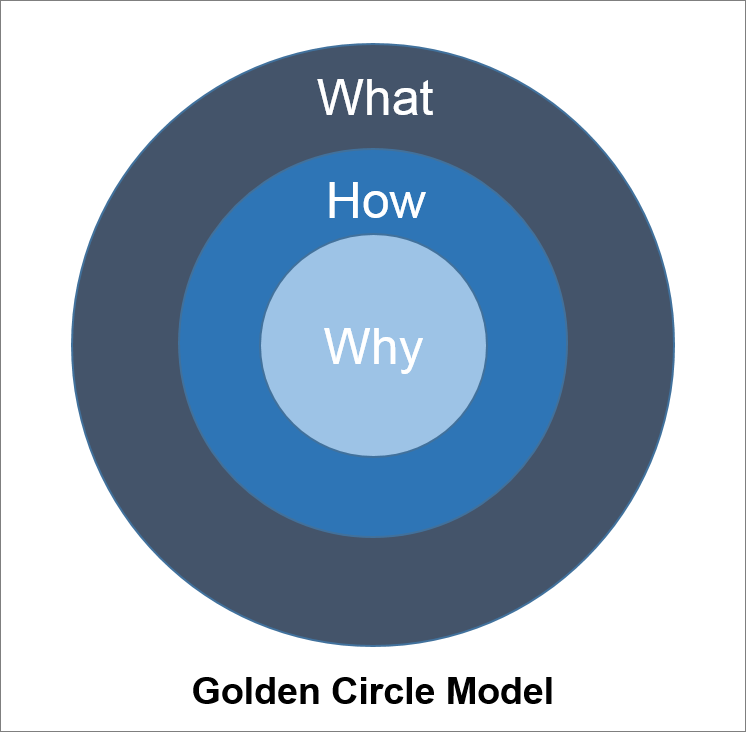 Many companies sell the drill, not the hole. If you already know that saying, it sounds like a huge open door, just like this model. This thinking model was developed by Simon Sinek and stems from his research into the most successful leaders and companies, which showed that successful brands, unlike others, use an ‘inside-out’ approach. They first address the ‘why,’ then the ‘how,’ and finally the ‘what.’ You use this model with companies and brands where it can lead to confronting insights if you start from the other side.
What? Radiators. How? Factory and installers. Why? We want to provide people with a pleasant living and working environment. If you start with the last, do you end up selling radiators again?
Positioning Model: Merkelijkheid Competition Matrix
In practice, it turned out that a major pitfall in positioning was the non-objective view companies had of their competition. “But they are not green at all.” Or “They are not innovative at all, we are!” are of course discussions that don’t help anyone. By evaluating only the message, means, and channels during positioning, we could keep it objective and create a market view everyone agreed on. Horizontally is the progressiveness of means and channels, vertically how social the message is. By using this model well, you get a lot of practical tools for actually positioning your brand or organization.
Read more about the Merkelijkheid Competition Matrix
Which positioning models do you use?
Now that we have listed the various positioning models, we can discuss which model we would use in which situation.
Situation 1: Convincing that positioning needs attention
You know the positioning leaves much to be desired, but your colleagues think that refreshing the corporate identity will turn the tide. Which positioning models do you use to convince them?
- Positioning matrix – discuss with each other what your desired identity actually is. This often already leads to realization, but if you then ask some customers how they see you, it becomes even clearer.
- McKinsey Brand Driver model – Which characteristics can we actually attribute to your company or brand? Are these drivers, antes, or neither? All characteristics that competitors also claim are no longer a source of differentiation; are there many left?
Situation 2: Market-oriented positioning
The core of your identity is clear, but which aspects lead to the most differentiation? By structurally discussing the possibilities and comparing them to competitors, you get clarity. Use:
- Competition matrix – Positioning is not only about characteristics; it largely concerns behavior. With what message does the competition enter the market, which means and channels do they use? The result is a clear market overview showing where there is room.
- McKinsey Brand Driver model – Which characteristics does your competition actually use to differentiate themselves? What are the basic characteristics that every player possesses? Which characteristics does no one have or claim?
Situation 3: Positioning on your own strength
There are plenty of markets where ‘in the land of the blind, the one-eyed man is king,’ but the blind are not a healthy basis for future-proof positioning. Dive deep into your own strength and differentiation and see what you come up with. The following positioning models are useful for this:
- Golden Circle model – This model requires an open mind, but if you start with the ‘why,’ what are the logical consequences for the ‘how’ and ‘what’?
- Brand Key model – By completely breaking down your own brand using these 9 factors and looking at all components separately, you will undoubtedly gain fascinating insights into where your strength actually lies.
- Positioning matrix – How do customers actually see your brand or company? And how do you see yourself? It is rare that these two match 100%; what are the main factors?
Positioning models: is that all?
 Of course, there are many other positioning models that address one or more aspects of positioning. Unfortunately, those models are often mainly process-oriented and variations of the Brand Key Model. They tell you what to research and in what order, but not how to use the research results to make a difference. The models we discussed here do help you with that, we are sure of that. Which positioning model appeals to you most after reading this article?
It is also quite possible that we do not know your favorite model at all. Scandalous, of course, and we hope you will quickly send us an email or message to inform us of our mistake.
Want to know more about positioning and how you can get started yourself? Read our page positioning and find, besides in-depth articles, dozens of examples and models for every possible positioning challenge.