How an unclear positioning is holding The Society Shop back
Huge billboards along the highway and in the city: “2 pairs of shoes for €199.50”. Sounds too good to be true, but even if these are indeed good quality shoes, we find it confusing. The AEX price stunt, where you buy certain suits for the closing price of the AEX index, also creates a certain price and/or quality perception. This “AEX” promotion naturally fits the target audience well, as the stock market is quickly associated with the business suit. But then you visit their website and find blazers priced at €1,500, and you quickly get the suspicion that you misunderstood it. To answer the central positioning question, we compare the positioning of The Society Shop with two other well-known men’s stores.
Positioning The Society Shop
 The Society Shop started in 1936 as a shirt store in Amsterdam, grew rapidly after the war, and had 40 branches in the Netherlands in the 1980s. In the 1990s, turnover declined sharply, and in 1995 the current owner bought the company through a management buy-out. Under the new owner, the company tried many things, but while Wikipedia still mentions 24 locations in 2008, there are now only 14 listed on the website, the same number as in 1997. The name change to Soc13ty was also not very successful. The company promoted the ‘13 secrets’ of its tailored clothing with this and still uses that story, but the name change was reversed after just 2 years!
Former commercial director of The Society Shop, Oger Lusink, opened his own fashion store in Amsterdam in 1990 and gained national recognition over the years as a supplier of exclusive suits. Oger knows how to position himself excellently in the higher segment and emphasizes the exclusive collection he offers in his communication. Oger stands in stark contrast to Fokke de Jong’s Suit Supply, which mainly focuses on speed and convenience with affordable Italian suits. Oger and Suit Supply therefore position themselves directly opposite each other: exclusivity versus affordable quality. The brands do make excursions – Oger’s entry-level suits under Red Suit and Suit Supply’s tailoring under the name Suit Up – but they know well that their distinctive strength does not lie there and therefore maintain a healthy focus in their communication.
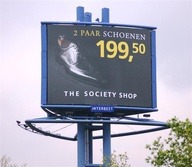 And so we come back to The Society Shop. The brand focuses on tailoring, preserves the 13 secrets, styles itself as a host, and talks about ambiance, but their communication talks about suits and shoes on sale. They claim a position in the market that is not supported by the collection or focus. Our positioning matrix then speaks of a blind spot: the market image does not correspond with the actual identity. Unfortunately for The Society Shop, we do not expect the market to discover this because Suit Supply and Oger comfortably fulfill the two roles between which The Society Shop cannot choose.
Want to learn more about positioning and how you can get started yourself? Read our page positioning and find there, besides in-depth articles, also dozens of examples and models for every possible positioning challenge.