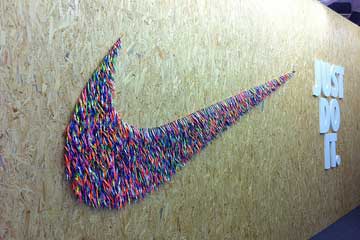
Positioning Nike claims values as its own unique selling proposition
One of the most appealing brands in the world is undoubtedly Nike. Everyone knows the famous slogan ‘Just Do It’ and the iconic swoosh logo, but do you know where the brand comes from? Or why it is so successful? We walk through the positioning of Nike over the years and explain how the positioning will look in the future. After reading, you will not only understand Nike’s strategy but also how you can apply it yourself.
Nike Positioning: podcast
In episode 5 of our podcast, we put two famous sports brands head-to-head. A fun way to look at the well-known Nike brand and a nice addition to this article.
The company started as Blue Ribbon Sports in 1964 and was a distributor of the Japanese brand Onitsuka Tiger. For the first two years, employees sold shoes from the trunk of their car, but the company grew so fast that it soon opened two stores. Only in 1971, when the relationship with Onitsuka Tiger ended and the company started selling its own shoes, did BRS launch the Nike brand and the Swoosh logo. From 1976, things really took off; the company launched its first ‘brand advertisement,’ a message that showed no product. Four years later, Nike held 50% of the American sports shoe market! In the following years, the company grew into the huge multinational it is today.
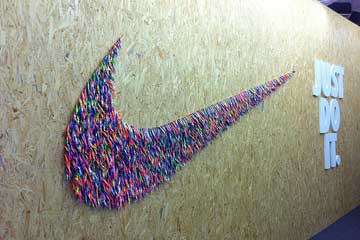
Photo by Achim Hepp
Nike’s positioning has actually always been fairly simple. By sponsoring the most famous and appealing athletes and communicating exclusively at the brand level, Nike manages to associate its brand with the concepts of talent, perseverance (just do it), and excellence. An additional advantage of communicating at the brand level is that it can encompass a wide range of products under the brand, as long as the brand values remain consistent. Besides all imaginable sports equipment, Nike also sells so-called ‘urban fashion’ and even electronics thanks to its collaboration with Apple. The consistent and clear marketing and communication approach has paid off. With a turnover of $24 billion, a profit of $3 billion, and 44,000 employees, the company is one of the largest in the world.
Nike Positioning at Risk
It wasn’t until around 1990 that the company ran into trouble. There was a lot of attention on the terrible working conditions of production workers, and the company was forced to publicly address this. In 1998, CEO Phil Knight even concluded that: “The Nike product has become synonymous with slave wages, forced overtime, and arbitrary abuse.” This severely damaged the brand’s image and had a huge impact on sales results. Only in 2005 did the real turnaround begin, and today the company is even seen as a pioneer in transparency and corporate governance. It now even wins awards for its climate friendliness.
The secret behind this success is the brand’s tough learning curve during the difficult years. Nike had to embrace every opportunity it got to influence public opinion; the brand was an early adopter of internet marketing, narrowcasting, multimedia campaigns, and community building. As early as 1997, Nike started data-mining customer feedback via email, at a time when ‘the internet’ was still unknown to many. The company was forced to reclaim its place with its customers and is still working on this today. However, this strategy proved so successful that it is now the main pillar of its positioning. In recent years, it has become much less about the Nike brand itself and much more about the customer or community Nike connects with. Instead of talking about its own brand, Nike nowadays mainly talks about the values its community stands for.
The conclusion of this story is that a strong positioning ensures recognizable brand values. Brand values that change little over the years. But that does not mean that the tools used and the way of communicating do not change. Nike’s story proves that positioning at the execution level must evolve with the times for a company to remain successful. We find Nike a great example of how a company uses the available tools at the time to strengthen its positioning over the years. Without really compromising what it has stood for since the early years.
Although Nike is one of the world’s largest consumer brands, you can apply the above lessons directly to your B2B organization. First, you need the right foundation, your corporate story/positioning; then you can use the positioning to determine which tools are most suitable to reinforce it. Avoid the pitfall of doing what you’ve always done; the trade fair has changed drastically, and advertising is no longer the most effective form of promotion. “If you do what you always did, you get what you always got.”
Want to learn more about positioning and how to get started yourself? Read our page positioning and find, besides in-depth articles, dozens of examples and models for every possible positioning challenge.