10 Surprising Alternatives to a Functional Positioning in B2B
Does your brand dare to position itself truly differently? Most B2B companies, especially industrial companies, prefer to stay safe with a functional positioning. But it can be different, and this article is full of examples of industrial and other B2B companies that have successfully positioned themselves with other concepts.
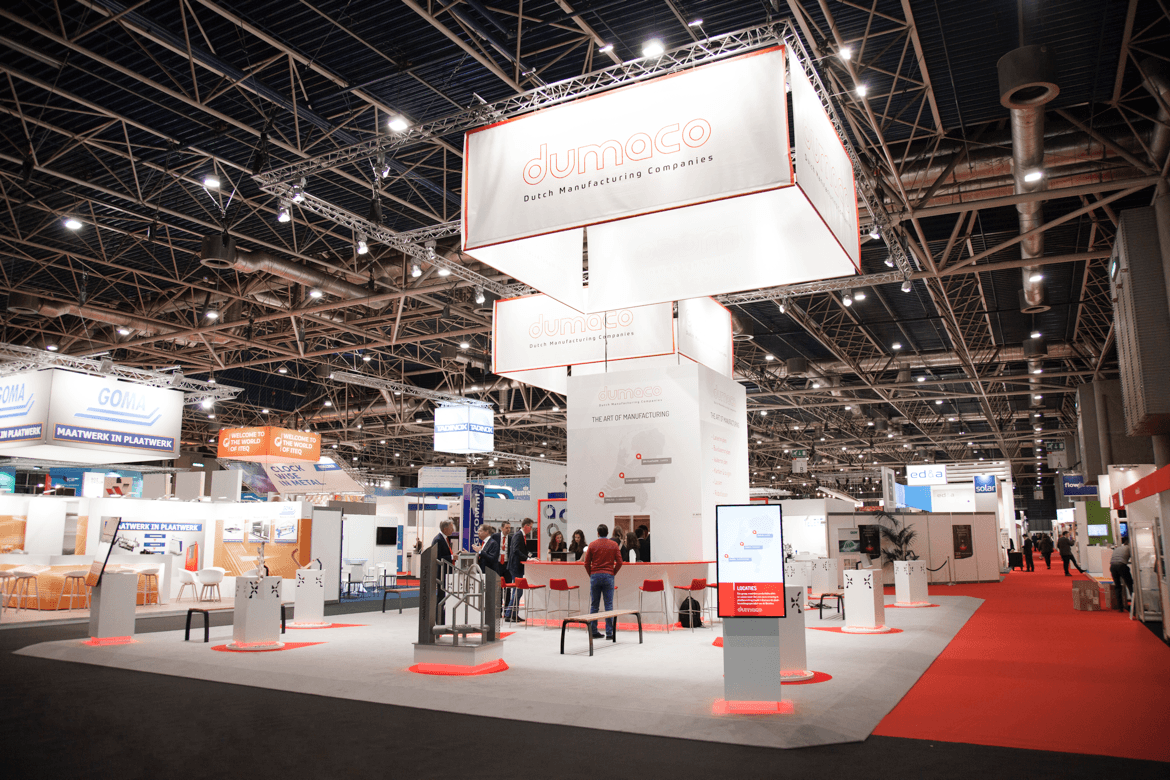
Merkelijkheid positioned sheet metal specialist Dumaco, leading to a unique trade show concept.
Besides functional positioning, we discuss the two other basic concepts of positioning; symbolic and experiential positioning.
Functional positioning
What is functional positioning:
Functional positioning revolves around solving a specific problem or offering an advantage to customers. This basic concept usually has a very practical approach and seems straightforward due to its no-nonsense approach.
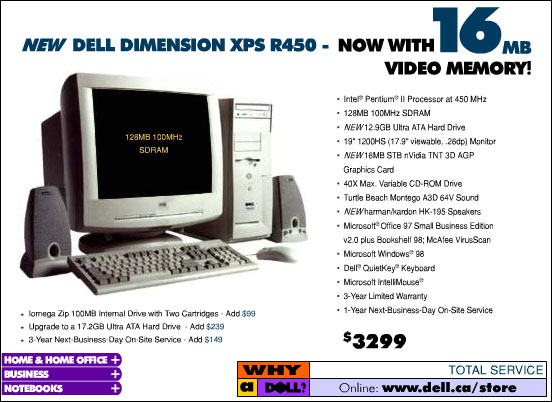 Yet a good functional positioning can indeed make a difference. Dell’s positioning around the best price-quality ratio was spot on in every respect and generated $1 million in revenue within 6 months (source). The company was the first to sell directly (without retail intermediaries) to consumers and kept no inventory, all to keep prices low.
Functional positioning therefore requires focus, a determination to optimize one aspect at all costs. This is also the biggest pitfall; many brands get distracted too quickly.
Functional positioning industrial company
Industrial companies usually apply a functional positioning. Many only make the mistake of not focusing on one solution or benefit. They sell “the drill instead of the hole.” They get bogged down in lists; innovative, customer-oriented, quality, delivery reliability, and so on. Existing customers and prospects therefore have no idea what the company stands for and get a too complex story or a list of buzzwords.

Running faster than the competition is of course for Apex Dynamics
With our long-term client Apex Dynamics, supplier of planetary gearboxes, we, for example, centered the concept ‘running faster.’ This elevated the conversation beyond torque, price/quality, and material and successfully put the customer’s importance front and center.
Of course, it is harder to distinguish your brand in a field where everyone uses the same positioning concept. Want to really stand out? Then also consider a symbolic or even experiential positioning.
Symbolic positioning
What is symbolic positioning:
Symbolic positioning appeals to self-image or social identity and the urge to enhance or improve it. Practical utility is given little value in this positioning.
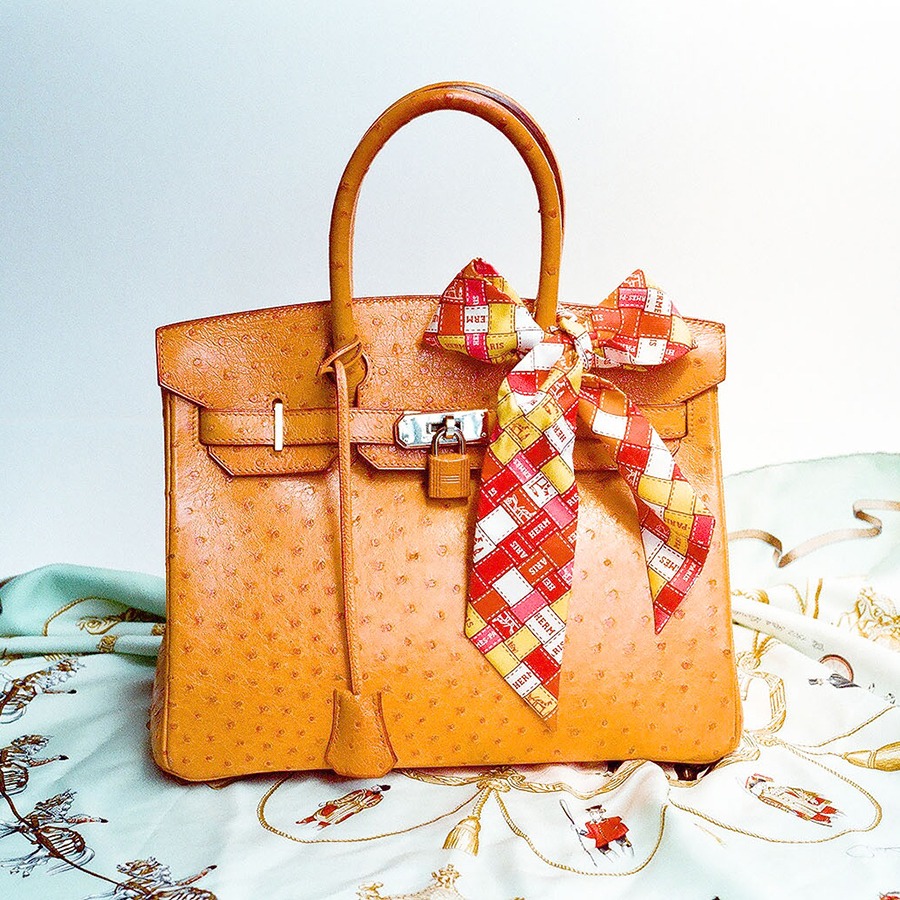
Birkin bag made of ostrich leather
The most recognizable examples of symbolic positioning are often seen in luxury brands. For example, Hermès with its Birkin bag, an iconic (and much copied) bag that literally symbolizes wealth and status. The bags, costing between $15,000 and $300,000, are only occasionally delivered to Hermès boutiques and then in very limited quantities. Naturally, this only adds to the scarcity and exclusivity of the bag; some people MUST have it.
Handbag too feminine? What about cars; a Rolls Royce, Ferrari, or Bentley is the ultimate status symbol for someone who wants to flaunt their money.

Work boots by Caterpillar
But before you dismiss this concept as a B2B’er, we ask you to think of the manufacturer of heavy towing and excavation machines, Caterpillar. With slogans like ‘Built for it,’ the company also positions itself symbolically and connects with the identity of the men and women who operate the heavy machinery. The ultimate proof? Caterpillar jackets, t-shirts, shoes, and even electronics are not promotional gifts but are paid for extensively with money.
An additional advantage of symbolic positioning is that, unlike good functional positioning, it can carry multiple factors. The Mercedes-Benz positioning not only makes it a brand that communicates status but also stands for (German) quality, comfort, and driving pleasure, for example.
Symbolic positioning industrial company
Symbolic positioning seems far away for manufacturing companies, where management is often strongly represented by technicians. The feeling that symbolic positioning would negate all technology prevails.
In any case, symbolic positioning is rare in B2B, although there are indeed successful examples:
- Management consultant McKinsey has successfully positioned itself as the advisor for large companies. At McKinsey, you buy authority, status, and expertise, which also reflects on you and your plans.
- A similar feeling applies to Goldman Sachs, the investment bank that will do everything to be successful. A signal to executives or shareholders that you do everything possible.
But how do you approach this for an industrial company? Caterpillar shows a good possibility where the company chooses a higher level of abstraction, but tractor and combine manufacturer John Deere also focuses on the identity of its target group:

Getting more done also means more free time for its customers, which is why John Deere, for example, also discusses fishing spots and techniques. Everything to make the target group feel at home and show that John Deere understands them.
Especially among farmers, we know from our experience in that sector, the brand of tractor or combine is very important. A Case lover really cannot get along with a John Deere fan. The ultimate sign that they have successfully positioned themselves symbolically.
An additional advantage of symbolic positioning is that due to a certain degree of intangibility of the complete value proposition, the customer switches brands much less easily. It thus helps with customer retention!
Experiential positioning
What is experiential positioning:
Experiential positioning places sensory interaction with the customer at the center of all aspects of the brand. This allows a brand to emotionally influence the preferences of the target group and how they experience the brand.

Butterflies as Felix steps out of his shuttle at 39km altitude
Feeling is clearly the key word. Experiential positioning uses touch, smell, color and shape, sound or taste to evoke feelings and connect them to the brand. The Red Bull Stratos event where Felix Baumgartner parachuted from the stratosphere is a great example of the brand’s experiential positioning. Red Bull likes to connect the butterflies in your stomach to its brand that ‘gives people wings.’
Or have you ever gotten goosebumps from a piece of music? Link that feeling to a brand and you know exactly what we mean by experiential positioning.
Experiential positioning industrial company
At first, it was a bit of a shock, which industrial company uses experiential positioning? Fortunately, we quickly found the answer in the Dutch Philips, which with Innovation and you in 2013 went a step further than Sense and simplicity. Innovation and you refers to Philips’ ambition to improve the world with its innovations, and the company tells stories about that.
On the innovation and you page, the company tells stories such as ‘The core of family-oriented care,’ ‘Sleeping well naturally,’ and ‘Repairing a broken heart.’ Topics that evoke warm feelings in all of us and to which Philips can contribute.
Experiential positioning is of the highest level of abstraction and therefore requires a crystal-clear idea of what your brand stands for. By translating this into feelings or experiences, you can map out the overarching feeling you want to convey to your target audience.
Basic concepts of positioning as an exercise
You will probably reject one or more of the above options beforehand. Out of fear of the unknown, many companies will want to stick to functional positioning. That is why we discussed brands that you will agree with us have managed to position themselves distinctively. To show you that it is really possible.
The challenge is yours to come up with a symbolic and experiential positioning for your brand as well; for example, use the following questions:
- What must we do to ensure that our customers see our brand as something that strengthens their social identity and self-image?
- What experience can we offer our customers that will make them associate a feeling with our brand?
We look forward to the results!
Want to know more about positioning and how you can get started yourself? Read our page positioning and find there, besides in-depth articles, also dozens of examples and models for every possible positioning challenge.