High in the search engine, how does SEO actually work?
High in Google, how does SEO actually work? Most companies we work for realize this is important. Being in the top 3 for the right keywords is often seen as the most important online marketing goal. This brings visitors and – if done well – new leads. And new leads are what we care about. We are happy to allocate budget for this, although we don’t fully understand how it works yet. SEO is not the same as paid Google Adwords; a high position in Google cannot be bought! So how does it work? In this article, we pause to look at the basics and explain what this means for you.
High in Google
 Search engines use programs to map the web. The so-called crawlers or bots. These visit and index websites to then place them in the search engine. The distinction between websites – whether you appear at the top or on page 2 – is made by the program based on a secret formula. And this secret formula is why it is often unclear. In the early days of search engines, it was only about keywords such as mortgage or insurance. If your site had the right density according to the formula (percentage of keywords in a text), you ranked at the top. It hasn’t been that simple for some time. But how does it work then? We briefly discuss different terms:
(In)Links – The number of links to your website once determined how high you ranked in Google. The more, the better. Nowadays, it’s more about Google’s valuation of the site linking to you than the quantity. Link exchange programs and other techniques are increasingly punished rather than rewarded by Google.
PageRank – The name is derived from Google founder Larry Page and refers to Google’s rough valuation of a website. Think Google.com as a 10 and Telegraaf.nl as a 7 or 8. The first version of Google used only this valuation; over time, several others were added, making PageRank less ‘hot’.
Reputation / Trust – How many people share a site and do they visit the site to read something or leave immediately? This assessment is still in its infancy. The expectation is that search engines will increasingly determine relevant results based on your (indirect) network in the future. Think of the relationship of a relationship. If this person shared an article on social media, it is likely that Google will show this to you directly in a search query.
Content – The actual content of your site. Google is increasingly able to assess whether your page or article contains valuable information and will adjust its valuation accordingly. A content strategy therefore refers to producing unique and relevant content about a specific topic or area, causing Google to see your site as an expert. Consider what value and knowledge you can put online that benefits your target audience; don’t think from your own perspective.
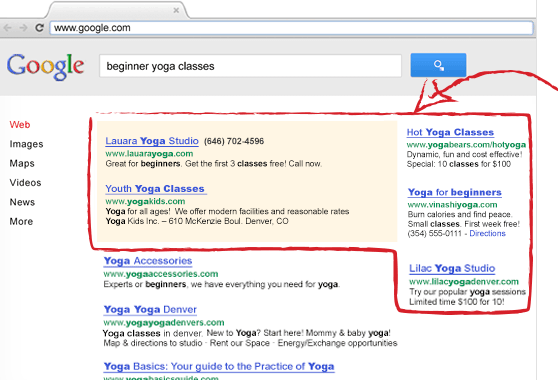 Google Adwords / SEA – The only paid term in the list. Besides the organic search results – the well-known first 10 – Google also shows several ads next to the search results. This is by definition a form of advertising, but for a change, one where we still see a lot of potential in many markets.
User-centered in search engine optimization
Too much information and terms? Let’s make it even simpler. When you search in Google and land on a new page, how long does it take before you know if this page is what you’re looking for? Exactly, you know almost immediately. Search engines are getting better at this every time, so if we have to summarize the core of SEO and search engine optimization, it is this:
Put the user’s experience and trust at the center!
That’s strange, that sounds like customer-centric. We’ve heard that before. And that’s exactly what it’s about. If your page loads quickly, is easy to read, and contains relevant and unique content, the visitor will stay on the website and may even share it with their contacts. Google tracks all these actions and will, simply put, rank your page higher next time because the next searcher will likely appreciate the page as well!
Top of Google with SEO and content
What exactly do all those SEO specialists sell? This can be divided into two camps. One camp is the ‘black hatters’ who specialize in tricks to unfairly get a high rating from Google. Think of buying links and social media shares or certain software that normal visitors will never see. This can yield strong results, but if Google finds out, you can be sure no one will find you anymore. ‘White hat’ is the other camp and uses only ‘legal’ methods. In our experience, this mainly involves programmers and other specialists who take care of the basics, such as a site that is well indexable by Google and fast. What do we think? We always advise our clients against black hat and believe white hat methods are important and worthwhile.
In short, using the right techniques and methods is important, but your actual content is essential.
Just as a distinctive positioning starts with a good story, a good position in Google starts with the right content. Especially in B2B, it is essential that a visitor immediately feels you know what you’re talking about and that they are in the right place with you. So forget the idea that SEO is something someone can do entirely unseen for you; the expertise of your organization is essential for creating content that Google values highly. The choice you have to make is whether it’s worth investing in a good search engine position or if you can achieve the same with paid Adwords.
Getting started with search engine optimization
Want to take immediate steps yourself? Keep the following basics in mind:
1. Every page of your site links purposefully to another page on your own site
2. Link often to your most important pages
3. Don’t link in your navigation, but mainly from the actual text
4. Make each part as unique as possible
5. Make your site as visitor-friendly as possible; you might even sell something through it
6. Think about keywords that are important for your market and write about them
7. Also link to other pages
8. Find some sites you trust and find out what you can do to get on them
9. Keep an eye on your statistics and look for trends
Want to know more about online marketing? Read more on our online marketing page.