Online Marketing success depends entirely on Content Distribution
Does your message actually reach your entire target audience or is there more to gain? A Content Distribution Strategy is essential for Online Marketing success. In this article, we explain what a Content Distribution Strategy is and how to work with it. We also look at the opportunities and how you can take your existing Content Distribution Strategy to the next level.
Your target audience uses different media, is your content everywhere to be found?
You have been working on it for two months, the whitepaper with which you will put that new product on the map. Head of Sales and the CEO have approved and can’t wait to show off the result. At 9:30 on Thursday, you hit ‘publish’, now it’s time to wait.
After a week, the results are in and they’re not bad, 16,000 views and 400 requests for the whitepaper. It gets its place in the report and you move on to the next action or campaign.
Did you get everything out of it that’s in it?
With a solid Content Distribution Strategy (CDS), you not only ensure a higher return (ROI) on your Online Marketing efforts, your colleagues can also better appreciate your work due to increased visibility!
What is a Content Distribution Strategy?
A Content Distribution Strategy is a plan for widely spreading a brand’s messages to achieve maximum return.
In your Content Distribution Strategy (CDS), it is specified per message how you will distribute it and, of course, why. Many companies initially benefit most from one approach per channel, which is decisive and prevents reinventing the wheel each time. For example:
Distribution of a Blog or Article in B2B
The CDS for a new blog or article might be as follows:
- Publishing the article on our own website
- Sharing the article on LinkedIn Company Page
- Promoting the article to colleagues on LinkedIn
- Sharing the article on Twitter, Facebook
- Including the article in the periodic newsletter
- Paid promotion on LinkedIn to a fixed target audience (budget € 200)
- Scheduling (in 2 weeks) sharing the article with a second title and description on LI, FB, TW
- Scheduling (in 3 months) re-sharing the article with the first title and description on LI, FB, TW
- Submitting or posting the article on industry sites/trade magazines
When should I publish my content?
The ideal time to publish your message depends on the medium. Below are, based on our experience, the moments when your content stands out the most:
When should I post content on LinkedIn?
Publish content on LinkedIn on Thursday or Tuesday, at the start of the workday (before 9 am) or just after lunch (12-1 pm). Saturday and Sunday are almost never worthwhile because few people are on LinkedIn during the weekend.
When should I post content on Facebook?
Facebook is a personal channel and therefore posts published late afternoon (after about 3:30 pm) perform best, as they appear near the top of the feed after work. There is little to say about the days; many people use Facebook daily.
 When should I post content on Twitter?
 When should I post content on Twitter?
Twitter is mainly used as a news source and its usage resembles LinkedIn somewhat, although the time you post matters less. Use it on weekdays, preferably midweek, and remember that after a few hours you no longer appear in someone’s feed. On Twitter, you can therefore repeat a post more often.
When should I post content on Instagram?
As Facebook’s little brother, Instagram is also used throughout the week. The audience is younger and for many of our clients less relevant except for recruitment purposes. The time of publishing seems to matter little.
Opportunities in Content Distribution Strategy
Especially repeatedly sharing the article, and scheduling it directly, ensures that a larger part of the target audience sees the message. At the same time, it costs you little extra time and reduces pressure on the content production schedule. This allows you to invest more time in those channels that will make a difference in the long term.
A solid CDS also ensures that during an evaluation you can precisely explain how the results were achieved. That is always better than sharing an Excel sheet with numbers or a boring report.
Advanced Content Distribution Strategy
Do you already have a basic Content Distribution Strategy and are you looking for the next step? We discuss three possibilities to expand your Content Distribution Strategy:
- Diversification of content
- Campaign or target audience
- Conversion optimization
Do you have an aspect or question that we should discuss in the context of the Content Distribution Strategy? Let us know and we will gladly add the answer.
Ideas for diversifying your messages
Your article is making the rounds and doing very well; good conversion rate, right target audience, and enough buying points for sales colleagues. Your work is done.
Until you realize that some people prefer not to read but to listen or watch. What do you do then?

Publish your latest article as a Video
You can also transform or expand an article into a:
- Video
- Slideshare presentation
- Infographic or model
- Webinar
- Series of tweets
- Pinterest collection
- Podcast
- Event
- Training
Enough ideas to get more out of your already delivered work. If the article or video is already done, the hardest work is done; the rest is execution.
Campaign or target audience central in Content Distribution Strategy
A basic CDS has an overview per type of message you publish of how the message should reach the target audience. But you can also take it a step further by creating a strategy per target audience or per campaign.
Content Distribution Strategy based on campaign
A campaign often has a specific goal, usually to bring a certain product or service to attention, but sometimes it is also a job profile or event that deserves attention. By determining the CDS separately for this, you can greatly improve ROI.
For example, we think of promoting the message on specific industry websites, in relevant LinkedIn groups, or through Remarketing to visitors of certain website pages that match the campaign’s goal. An additional advantage is that the irrelevant or less relevant part of your target audience does not see the message, leaving room for other messages.
Content Distribution Strategy based on target audience
Sometimes it is simply clear, that message is relevant for this target audience. A junior engineer never decides on the purchase of a new, advanced machine and a CEO is not involved in finding new cleaning staff. By focusing your Content Distribution Strategy on reaching a specific target audience, the plan of approach probably looks completely different.
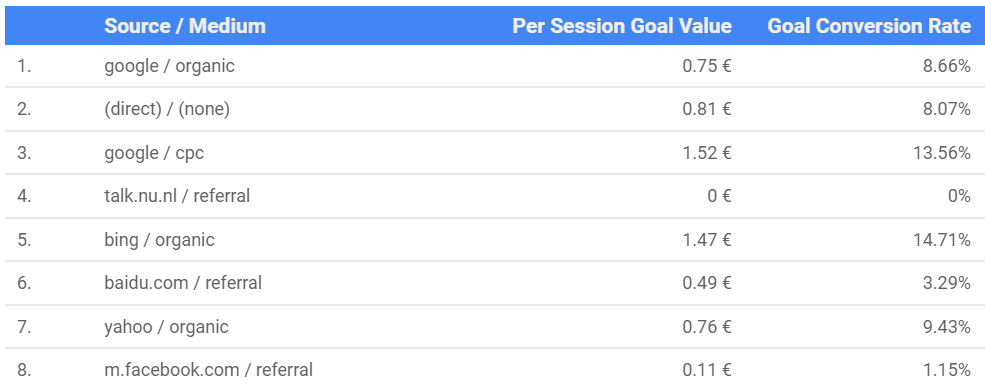
Conversion optimization of your Content Distribution Strategy
Once established, your CDS does not have to be set in stone. Through conversion optimization, you can further improve your CDS.
That means you can experiment, for example with:
- What time you publish a message
- With which title
- Which ‘read more’ text
- How much explanation is included
- How often you publish
- How often you post a (variant of) a message
And there are probably 10 more we forgot. But the conclusion should be: look for the factors that make your message even more successful. And success depends, in almost every case, on conversion: how many leads or contacts does content generate. So put that at the center of your evolving CDS.
That’s the basics of a Content Distribution Strategy, enough to get started we would say. Curious about the ideal CDS for your brand? We are happy to help you further.