Impact of internal links on SEO
When we talk about SEO and links, we quickly talk about link building and backlinks. But what influence do internal links have on your SEO, and how do you best approach the internal link structure? In this article, we outline three reasons to work on your internal link structure and explain the strategy we recommend for internal links, the Hub-and-Spoke strategy.
Earlier, we explained that backlinks give authority to your website. Essential for building Domain Authority and greater visibility in search results. But don’t underestimate the effect of internal links!
Definition of internal link
An internal link is a link from one specific page on your website to another page on your website.
No, an internal link does not have the same value for Domain Authority as a backlink from another website. Still, a clear and logical internal link structure is indispensable when aiming for SEO success.
- Internal links make crawling your website easier
- Internal links also pass authority
- Internal links make it easier for users to navigate
Time to get started! We briefly explain these points, then tell you which internal structure we recommend.
Better crawling thanks to internal links
You want to make it as easy as possible for search engine crawlers to crawl and index as many of your pages as possible. But have you also thought about how the crawler reaches your pages? Internal links help crawlers find their way on your website, so the pages get indexed.
You can create the best content, but without a good link structure, the chance of being indexed is low. An additional advantage is that you show Google how your pages are connected. For example, do you sell online barbecues, various types of charcoal, and barbecue accessories? With internal links, you show Google that these products are connected and that you are an authority in this field with knowledge about everything related to barbecues.

What does your internal link structure look like?
Authority of internal links
An external link has much more influence on your Domain Authority than an internal link. But when you organize the internal link structure correctly, you can also assign authority to specific pages with internal links.
Think of internal links as a way to pass authority. For example, do you have a page with high Page Authority – authority of an individual page on your website – thanks to some good backlinks? With an internal link, you can show how this page is connected to other pages on your website and assign part of the Page Authority to them.
Easier navigation with internal links
Not only do search engine crawlers discover more pages on your website through internal links, but human visitors also reach other pages faster through internal links. You not only score points in terms of user experience, but you also make it easier to discover new content and more attractive to stay on your website. The latter results in a lower bounce rate and also has a significant impact on findability.
Internal links: what to watch out for?
Just like with backlinks, various factors play a role when you use internal links, namely:
- Page Authority
- Anchor text
- Relevant connection between the linking pages
Page Authority is by far the most important factor for passing authority to another page. The higher the Page Authority, the more authority the page can share. Unfortunately, we do not know exactly how much authority a page passes on. The generally shared opinion is that Page Authority is distributed proportionally over the number of internally linked pages from that page. A page with Page Authority 22 and 4 links will also pass more authority to other pages than if you place, for example, 6 links on the page.
Just like with backlinks, optimized anchor text contributes to the connection with keywords and, of course, to the user experience. Research by MOZ shows that especially the anchor text of the first link to a page has an influence. So think carefully about the anchor text you use for each link.
With a relevant connection between the linking pages, we come to the point, just like with external link building, that Google wants as many authentic results as possible. A link from your page about inflatable pools to a page about lawn mowers does not seem like a very logical and thus valuable link. Besides not being very relevant for your visitors, Google will also value this less because there is no (logical) connection between the information on both pages. This harms the individual authority of the page.
Link structure and SEO: Hub-and-Spoke strategy
Do you immediately think of a bicycle wheel when you hear hub and spoke? Great! That is exactly the image that helps you understand this strategy. The hub is the center of the wheel; on your website, this is a page about one of your core topics. It is a very extensive article but does not go very deep into the different subjects. The spokes of a bicycle run from the hub outward and support the rim. The rim symbolizes the overall authority of your website.
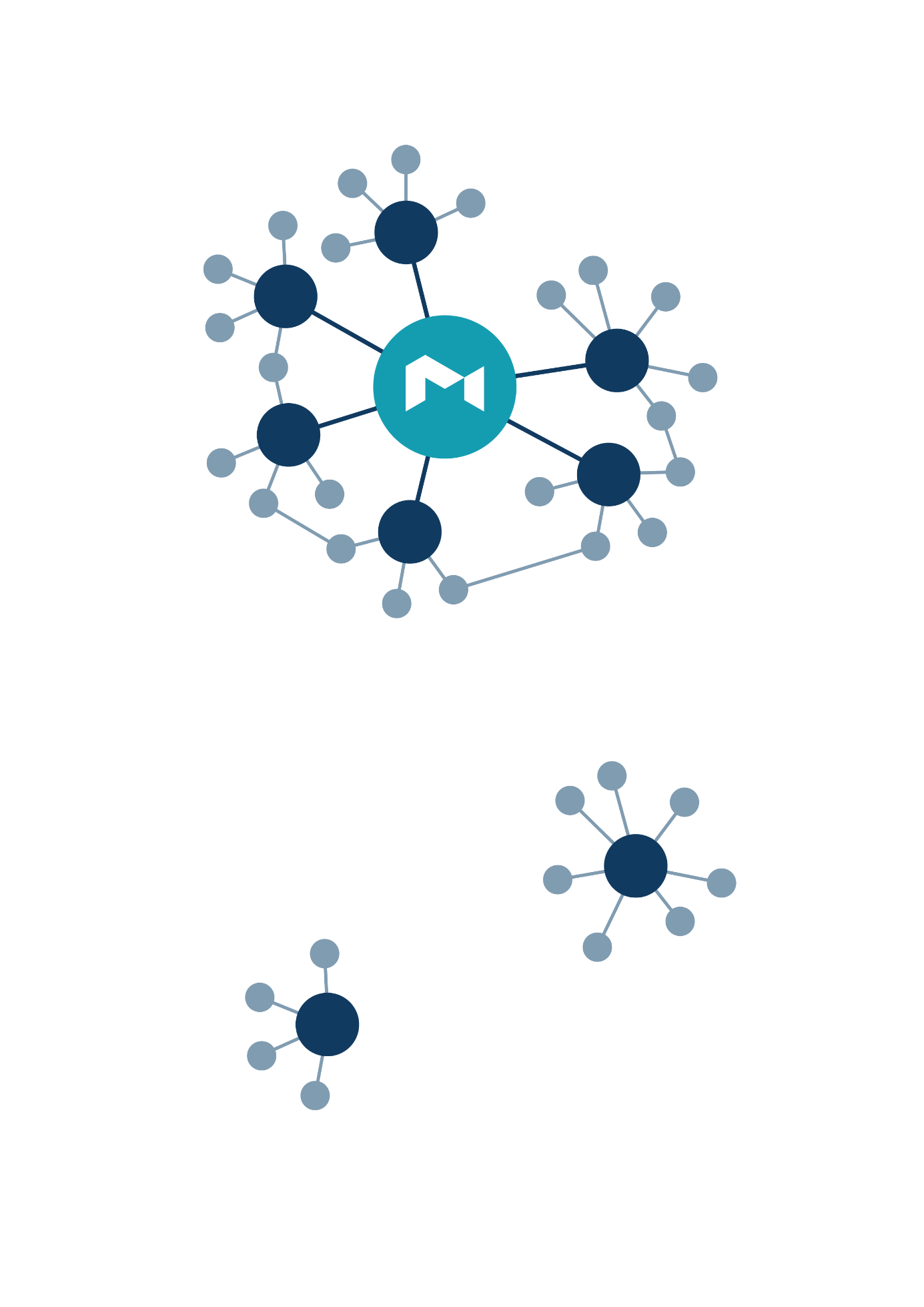
From the hub, you link to the more in-depth articles, the spokes, where you place an internal link back to the hub. Google recognizes that you link from various articles to one page, the hub, and sees this as the main article. The result is a high Page Authority on your hub and a better position in Google.
The spokes focus on more specific, sometimes long-tail, search queries. Also, the chance is greater that you get a backlink to such a specific article (spoke) than to the general main article (hub). The authority that the spokes collect partly passes on to the hub. But because all spokes exclusively assign authority to the hub, the Page Authority of the hub increases.
You mainly place internal links on the hub. This way, you distribute your authority as clearly as possible. An additional advantage is that the Hub-and-Spoke strategy also directly simplifies your website structure and exposes gaps in your content offering.
Want to see an example of the Hub-and-Spoke strategy? Then continue reading on our online marketing page. Here we collect all our online marketing tips and articles.