Is there still a difference between craft and industry?
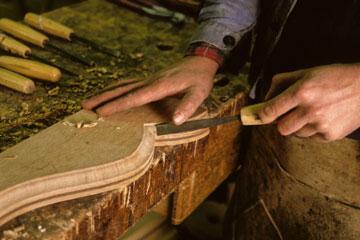
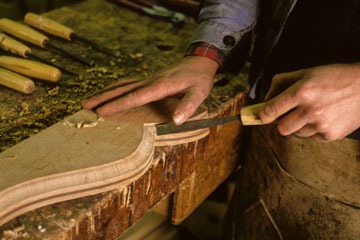
The word ‘industrie’ comes from the Latin word ‘industria’ which means diligence or activity. When we think of industry, we often picture tall smoking chimneys rising above flat-roofed buildings, but when we talk about craftsmanship, we imagine very different scenes. For example, we think of a furniture maker in a backstreet with an Italian vibe, working with his hammer, chisel, and sandpaper to create a ‘one of a kind’ piece of furniture. But is the difference between industry and craftsmanship really that big?
 In many cases, we see in our work for industrial companies that the difference is not as big as the image suggests. Of course, a large part of the global industry is still focused on producing goods as cheaply as possible, but this is gradually disappearing from high-wage countries like the Netherlands. Competition from countries like China is fierce, and Dutch companies that want to compete on price have only one option left: further optimize the process. But price competition, the so-called ‘race to the bottom,’ only has losers in the long run.
That is why we like to use the term ‘artisan industry’ when we encounter such companies in practice. But what does this term mean to us? By artisan industry, we simply mean industrial companies where quality, not quantity, truly takes precedence. (They must not just say it) These companies are capable not only of accepting and executing an order but also think along and constantly seek new possibilities to improve the final product. In turn, such possibilities—usually as part of something bigger—lead to innovations on a global scale. The ‘can’t be done’ does not exist mentality prevails and makes the individual price of the product much less relevant.
A striking example:
A while ago, Felix Baumgartner jumped from 39 kilometers high with his parachute from a hot air balloon towards the earth. It was an unparalleled achievement and the attempt was followed live by millions of people. But just think about what preceded it. The hot air balloon alone is an impressive feat of engineering! This balloon—the largest ever!—is made of a special kind of plastic and only 0.02 millimeters thick. That is 10 times thinner than a sandwich bag! Felix Baumgartner had to rely on the unique properties of the material, because without it, the whole project probably wouldn’t have been possible. Let’s assume this material was not developed in a backstreet but in a high-tech industrial company. Perhaps with fewer chimneys, but certainly industrial, isn’t it then an artisan masterpiece? We think so.
Many of our industrial clients are constantly innovating and, for example, as producers of semi-finished products, create new possibilities that lead to major innovations. These are innovations in the medical field, in the energy sector, or in aerospace! We see companies capable of this as the ultimate artisans of the 21st century!