Writing website text that contributes to your findability (SEO)?
Writing website text has succeeded, but how do you get people to read it? How do you ensure that your texts are found? This concept is called findability, and working on it is called search engine optimization (SEO). This discipline emerged alongside search engines and has become increasingly important over the past 20 years. But search engines have not stood still; techniques from 3 years ago are already outdated, and they keep getting smarter. How do you ensure that your website texts are found? And which myths or sales tricks should you definitely not believe? After reading this article, you will have a good idea of the current reality of SEO and how to deal with it.
 What is the goal of a search engine? To help a visitor find what he or she is looking for as quickly as possible, whether that is a product, an answer to a question, or a how-to video. A cynic might immediately say ‘making money,’ which is of course true, but the two go hand in hand. A visitor who finds what they are looking for will return with their next question, so more ads can be shown. The most visited search engine is therefore the most successful. This is also the core of findability and SEO: content that the search engine believes has the greatest chance of success ranks highest. Want your content to be found? Then make sure the search engine has reasons to do so.
The building blocks of good findability / SEO for your website text
 Longer content – The ideal length of a piece of text has changed a lot. Where it used to be between 200 and 300 words, it now seems to be more like 400 to 500 words. We wrote a separate piece about How many words does a good website text have?
Images – A picture says more than 1,000 words, so an image with an article results in a higher rating. Search engines can’t really ‘see’ images yet, so for now your title and alt tags are essential. Give it a few years and Google will know exactly what is on your image.
Correct spelling and grammar – Search engines may have every sentence in their database a thousand times over, so make sure they don’t see your text full of errors.
Well-readable formatting – Readability seems very human, but computers can easily determine how readable something is. White text on a white background? The search engine thinks you have something to hide!
Links – Google PageRank is what made the search engine famous. The algorithm uses the number of links to your page and the rating of the page (rank) placing the link to assign a rank to your page as well. If other authorities on a topic link to your page, the search engine knows you have credibility.
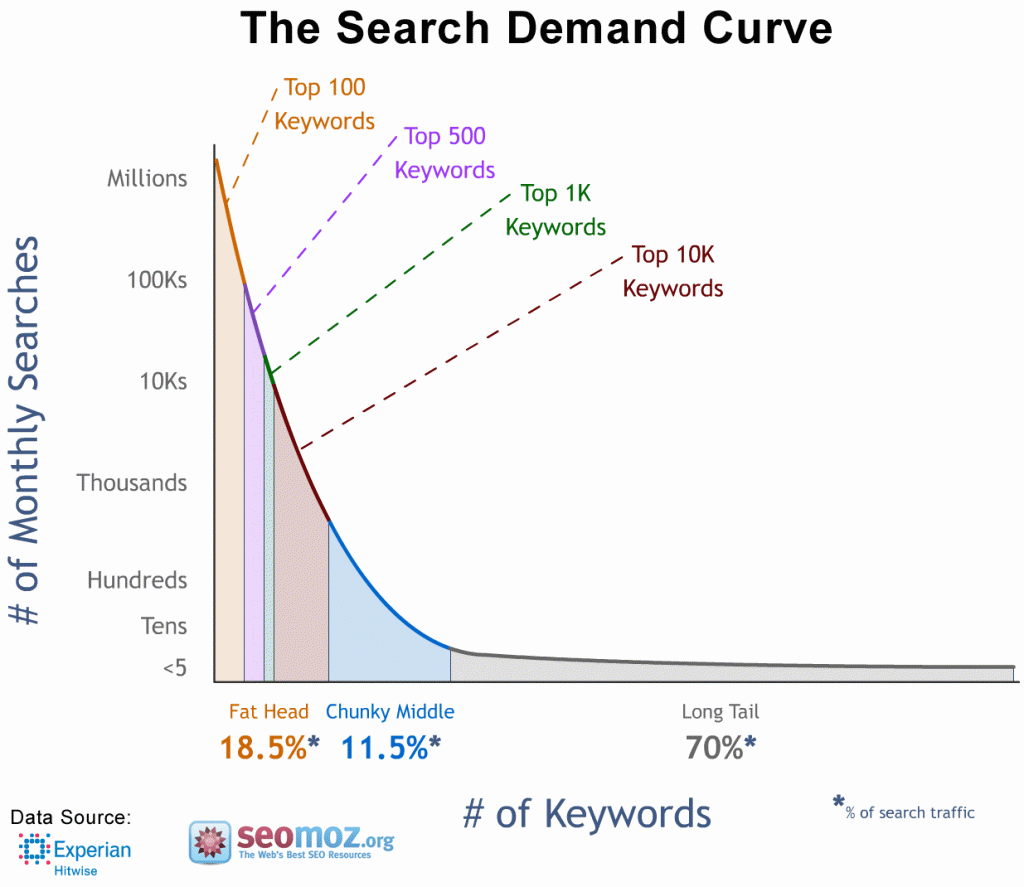
Focus – In the past, we searched for ‘shoes’ or ‘mortgage,’ but nowadays we ask entire questions to search engines. That’s why it’s important that your piece focuses on a specific question or need. This also includes the so-called keywords. In short, the title, headings, and content of your text should all focus on the same thing; the more focus, the better. You may attract fewer people because of this focus, but the quality (and thus conversion/sales) of that smaller group is much better. See also the image about search engine traffic.
Writing findable website text, the myths and lies
Not a handful but a country full of SEO experts and webpage optimizers. On the one hand caused by the complexity and all the rules you supposedly have to follow, on the other hand it’s fearmongering, because that sells well. What are some well-known myths or lies many people encounter?
Keyword density is number 1
A link from a reliable source is worth more than any number of keywords. In the past, you could stuff a page with meaningless sentences containing one keyword to rank at the top; this no longer works. Keywords nowadays are more about focus and consistent terminology use; choose a concept or question you use and don’t vary too much in wording. Dumb repetition of keywords will get you ranked lower rather than higher!
Paid advertising in search engines leads to a higher ranking
Absolutely not true. The biggest advertisers on Google publicly complain that despite spending millions with the giant, they don’t have an inch of advantage over unpaid hobbyists. The reason you’re told this? Paid advertising / AdWords is a separate profession, and you can (rightly) earn from it, but in many markets you can rank relatively high without paying.
Optimizing meta tags
Yes, meta tags are still looked at by search engines. No, they don’t affect your ranking. It sounds technical, and if ‘they are not set correctly,’ you might lose visitors, but it’s just a sales trick from a time when meta tags were important.
You have to submit pages or a sitemap to Google
Not true for a long time. In the past, you invited a search engine to index your page; nowadays the internet is indexed organically and a robot only comes to your site if someone links to you. This has no influence on your position in the search engine. Note, however, if your site is not accessible to search engines, you won’t be indexed, and a sitemap helps you check whether all your pages are indexed.
Looking back on this article, we hope you have one thought: It’s not complicated at all! Search engines prefer to get as close as possible to how a real person reads and views a page, and the more advanced they become, the more emphasis is placed on the quality of the content. So it is the quality of the information and the focus with which it is presented that determines the rating, just like any other piece of text. So don’t believe in tricks or ‘hacks’; the few who manage to fool the system are harshly punished the following year.
In the main article In practice: writing website text you will find the other topics we have already covered. Next week our final article in this series will follow, and we will write about translating website text. If you want to talk to us after reading this piece, we would love to hear from you.