Brand archetype Ally: stronger together
The brand archetype Ally always puts the success of its clients above its own honor and glory and excels during uncertain times.
Lees meerDoes your brand care for and protect people? Perhaps the Caregiver brand archetype suits your organization. Read our explanation.

Here is the idiomatic English translation. I have shifted the tone to be warmer and more reassuring—fitting for the Caregiver—while using punchy, professional marketing terminology to ensure it sounds like a native English brand strategist wrote it.
Are you naturally nurturing and protective, even when your customers don’t ask for it? The Caregiver brand archetype consistently puts the client’s needs first, often prioritizing their well-being over short-term profit. While this archetype is a natural fit for nonprofits like the Red Cross, it is equally powerful for commercial brands. In this blog, we explore the identity of the Caregiver, how they behave, and the unique advantages and pitfalls they face. We’ll also look at three stellar examples: Volvo, Nationale Nederlanden, and Danone.
Treat others as you would like to be treated.
Volvo is the definitive Caregiver of the automotive industry.
Think of a mother, a dedicated teacher, or the Good Samaritan. These are the classic personas that embody the Caregiver brand archetype. The Caregiver lives to protect others, offering support and making sacrifices whenever necessary. For this brand, personal gain always takes a back seat to the welfare of others. It is one of the most resonant archetypes because it mirrors the foundational relationships we have with our own primary caregivers.
A Caregiver’s greatest fears are instability and hardship—especially when it affects others. Their ultimate goal is a safe, orderly world where everyone looks out for one another. They lead by example; the Caregiver nurtures everyone in their orbit, from employees and prospects to stakeholders and the wider community. They find deep fulfillment in making a positive impact, no matter how small, and serve as a pillar of stability. You can always count on a Caregiver.
However, there is a distinct power dynamic at play. The Caregiver provides what is needed, whether it was requested or not. Much like a parent making a tough call, the Caregiver’s decisions aren’t always what the recipient wants to hear, but they are what the recipient needs to hear. They act with total integrity, even if it hurts their own bottom line. The conventional “me-first” economic mindset simply doesn’t apply to this archetype.
Because of this selflessness, the Caregiver is often associated with charities and NGOs. But don’t be fooled—it is an incredibly effective archetype for commercial businesses too. Like any archetype, the Caregiver manifests in different styles. The key is to align your brand’s core mission with this nurturing spirit, even if the fit isn’t a 1:1 match in every detail.
When we talk about the Caregiver, Volvo is always our go-to example. As the brand that practically invented automotive safety, they famously developed the three-point seatbelt in 1959. What we now consider a standard feature was born from Volvo’s drive to slash traffic fatalities. Realizing the belt reduced impact by 50%, Volvo did something very “Caregiver”: they opened up the patent, sharing the life-saving technology with all their competitors for the greater good.
Fast forward to 2020, and Volvo’s mission remains unchanged. They continue to share safety data with the entire industry. This is the hallmark of the Caregiver: placing the safety of the general public above proprietary economic advantage. In recent campaigns for their hybrid SUVs, Volvo has expanded this protective umbrella to include ecological safety, focusing on the well-being of future generations.
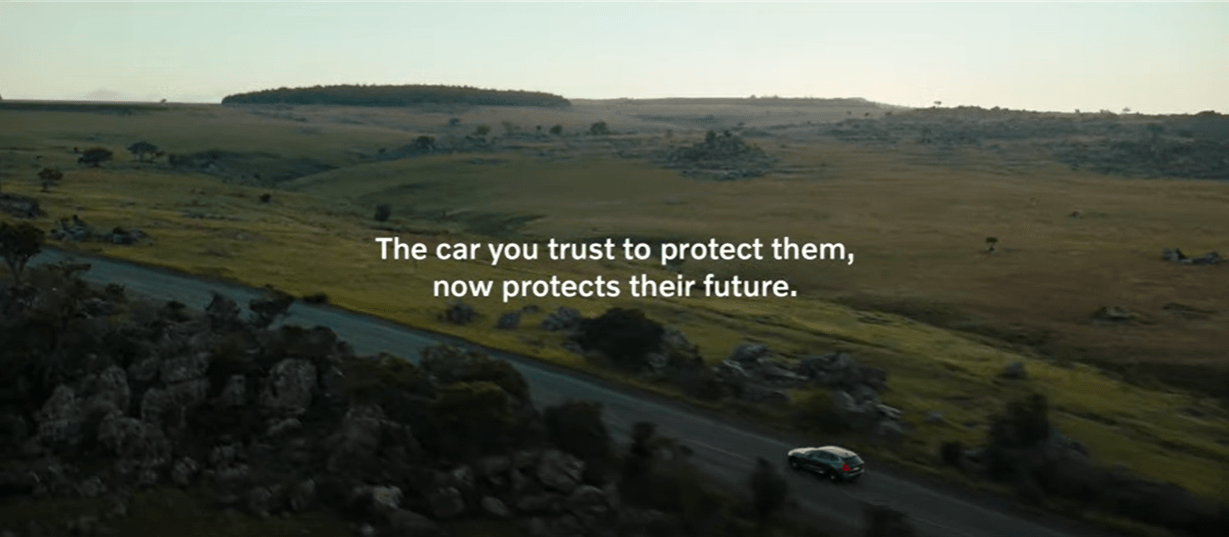
For Volvo, protection extends far beyond the driver or the passenger. They’ve evolved the Caregiver core into a mission for a safer, more sustainable world.
Just like people, organizations express their archetypal traits in different ways. The Caregiver operates on three distinct levels:
These brands focus on caring for their immediate community—”our people.” Their primary concern is the well-being of their customers and employees, with less focus on the world at large.
These brands find the sweet spot between caring for others and maintaining their own health. Volvo operates here: they make life safer for their own drivers while simultaneously striving to make the roads safer for everyone.
Driven by total selflessness, the Level 3 Caregiver focuses entirely on the big picture. They act as guardians of the planet or society, often with zero regard for personal or corporate gain. This is the standard for major nonprofits dedicated to humanitarian causes.
Consider this mission statement from the ultimate Caregiver brand, the Red Cross:
To prevent and alleviate human suffering wherever it may be found, to protect life and health, and to ensure respect for the human being.
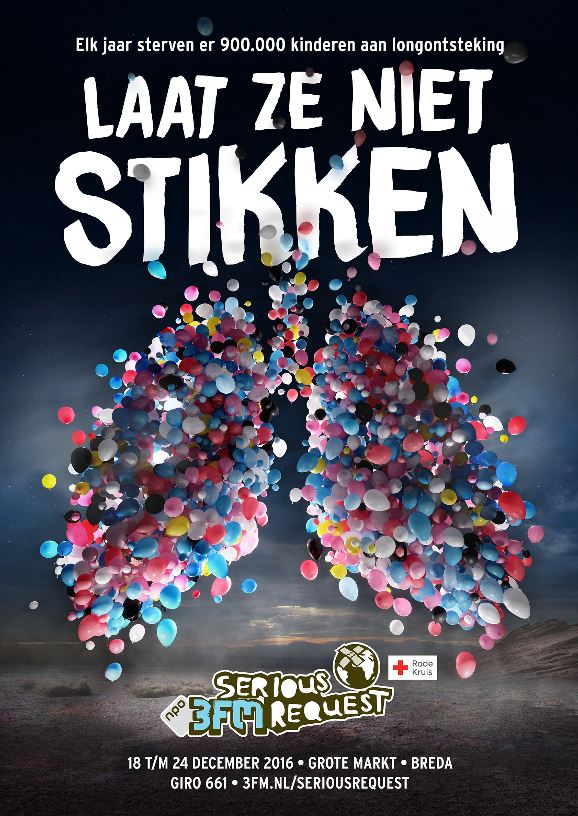 This mission gets straight to the heart of the Caregiver: preventing instability and healing pain. As an organization with zero economic self-interest, the Red Cross is the gold standard for this archetype. If your brand is a foundation, an association, or a nonprofit, the Caregiver is likely your most powerful positioning tool.
Another key Caregiver trait seen in the Red Cross is the drive to create a community of care. They describe themselves as the “world’s largest humanitarian network.” Look at initiatives like Serious Request: a recurring event that mobilizes the public to care for one another. It’s not about the organization’s ego; it’s about collective action. The Caregiver doesn’t believe in “I,” they believe in “we.”

The Red Cross puts its mission above all else. Their messaging promotes a world where everyone looks out for each other, often keeping their own branding subtle to let the cause take center stage.
Does the Caregiver archetype resonate with your brand? Look for these key indicators:
Nationale Nederlanden (NN) is a household name, but few know its origins. Founded as a fire insurer in 1845—when fire was a constant threat—the founders didn’t just sell policies; they helped establish fire brigades and educated the public on prevention. This proactive protection—solving the problem before it starts—is quintessential Caregiver behavior. NN prioritized the safety of society over simply collecting premiums.
They were also the first to use actuarial mathematics to calculate life insurance risks, making coverage affordable for the masses for the first time.
Today, NN offers a wide range of financial products, from mortgages to pensions. Their current messaging centers on “helping people secure their financial future” and “protecting what matters most.” A perfect example of this is their From Debt to Opportunity foundation, which has been promoting financial self-reliance in the Netherlands since 2008.
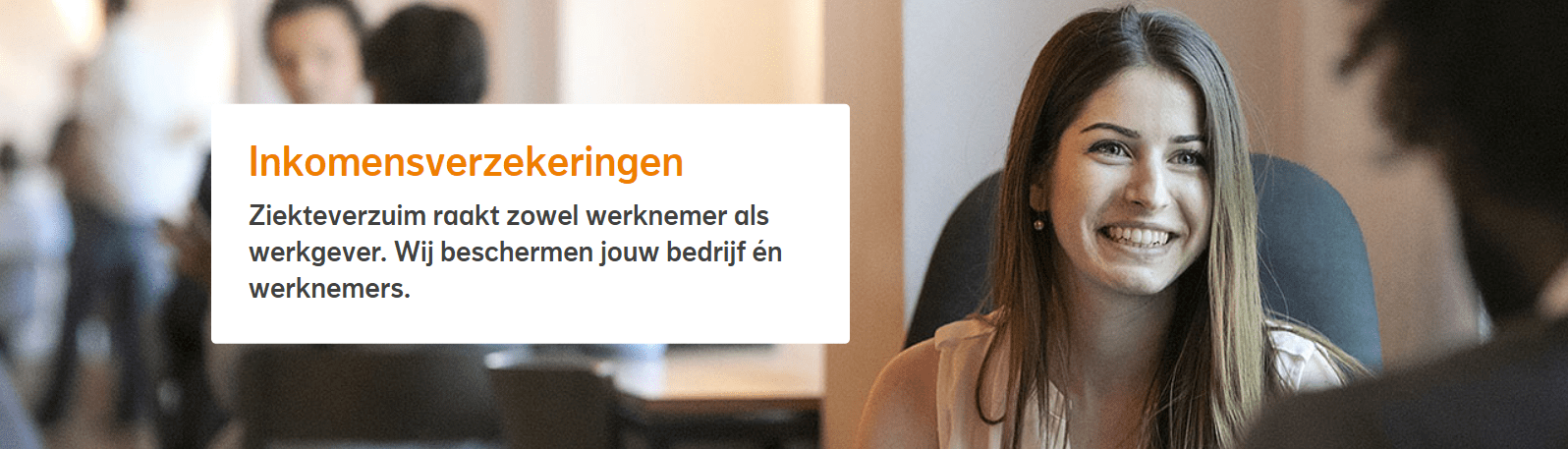
NN protects employers and employees alike through a wide array of financial safeguards.
Their “There is only one Dutchman like you” campaign might seem individualistic at first, but it is deeply Caregiver. The tagline “What matters to you, matters to us” combined with personal stories of support reinforces the brand’s role as the silent, supportive partner in the background.
As a Caregiver, you provide peace of mind. You are the brand that actively looks out for the customer. Because of this, customers trust that your innovations are designed for their benefit. This creates a “halo effect”: whether it’s a new type of yogurt or a safety-enhancing vehicle technology, customers are much more likely to adopt your new products because they trust your motives.
The danger for the Caregiver is self-evident: if you always put others first, who looks after you? Caregivers often become so focused on their audience that they neglect their own needs. At what point does the sacrifice become too great? Furthermore, if you become too codependent on your audience, you may lose the objective distance needed to actually protect them.
Caregivers must set clear boundaries and goals to ensure they don’t lose themselves in their desire to keep everyone safe and sound.
Feeding the world is the ultimate Caregiver mission. French food giant Danone is a staple in households worldwide through brands like Activia, Alpro, and Nutricia. Interestingly, the company was founded in 1919 specifically to combat intestinal infections in children using specialized yogurt cultures.
Danone remains laser-focused on health, emphasizing responsibly produced dairy and plant-based products for every life stage. Their mission—”Bringing health through food to as many people as possible”—and their slogan “One Planet. One Health.” connect human wellness with planetary health.
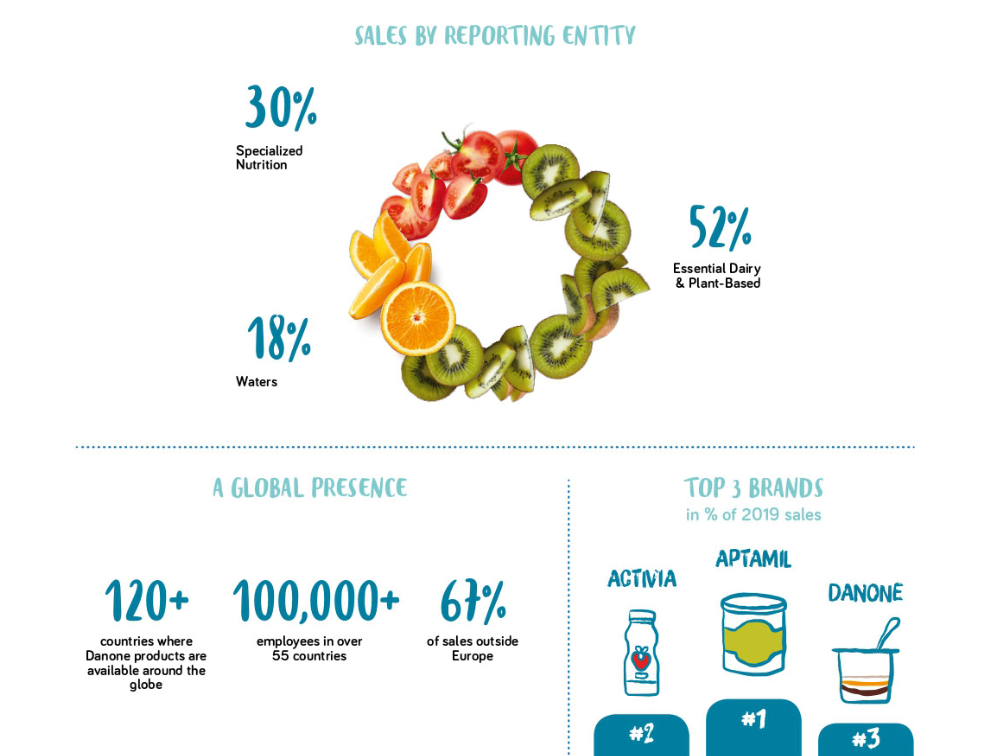
Even in their corporate reporting, Danone prioritizes health and simplicity—the visual language of a true Caregiver.
Danone protects our health and our environment simultaneously. We see this across their portfolio: Activia focuses on “feeling good from the inside out,” while Alpro encourages a sustainable, plant-based lifestyle. Nutricia provides a healthy start for infants while offering vital support for parents. In all three cases, the brand acts as a supportive guide, helping you solve health challenges before they even arise.
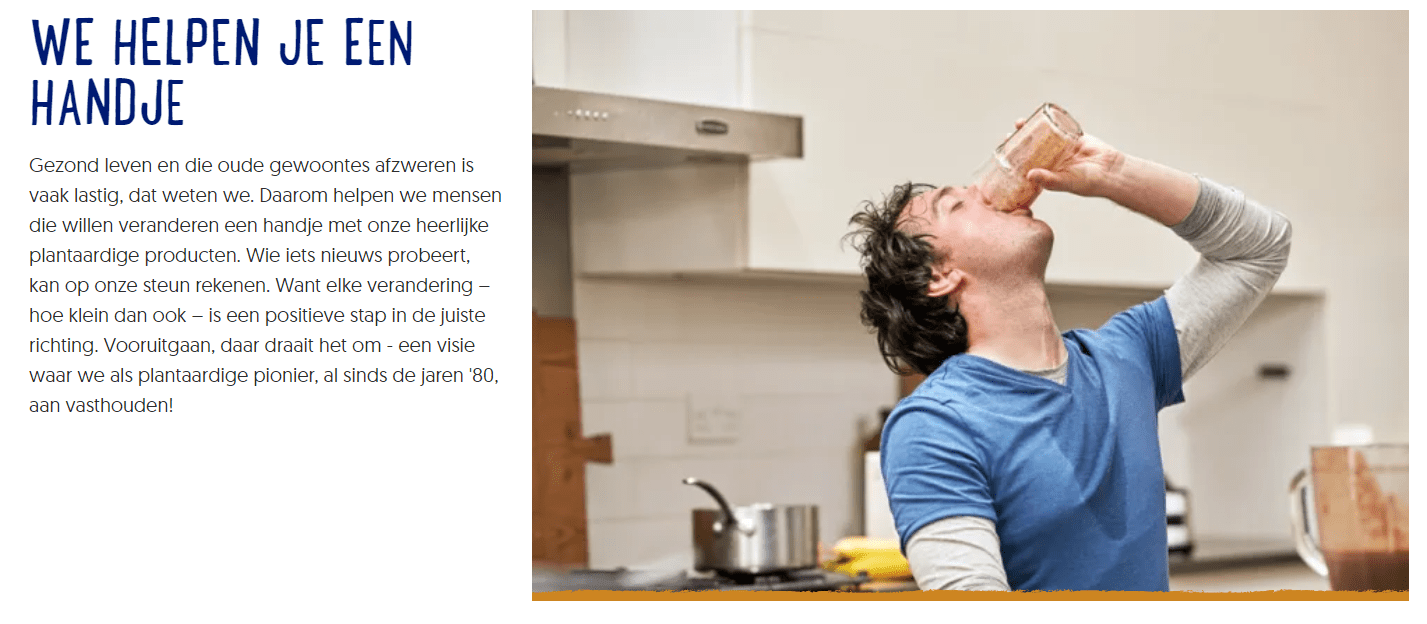
Alpro nudges customers toward healthier choices. This “gentle guidance” is classic Caregiver behavior: offering the advice needed to make the “right” choice for one’s well-being.
The quintessential Caregiver image is a father leaning in to explain something to his child. Visually, the Caregiver is conservative and understated, favoring primary colors and human-centric imagery. They don’t just say they care; they show it by providing value. Their marketing is filled with “how-to” guides, tips, and expert advice. They want you to be prepared for a problem before it even happens.
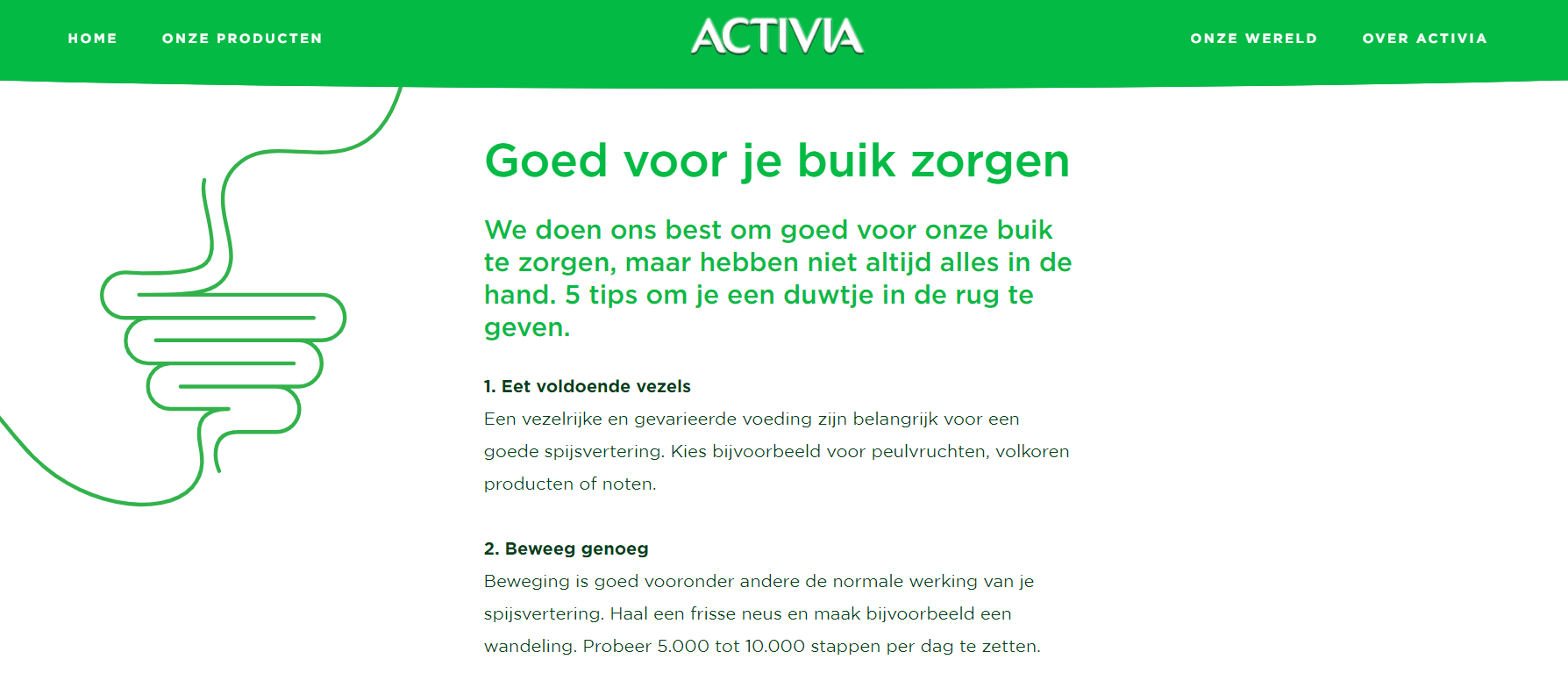
Activia’s lifestyle tips are a prime example of Caregiver marketing. By offering advice that isn’t always tied to a sale, they prove they are genuinely invested in the customer’s goals.
If the Caregiver feels close but not quite right, you might resonate more with one of these related archetypes:
The Ally (or Everyman) also seeks security, but their primary driver is belonging. While the Caregiver focuses on nurturing others, the Ally focuses on fitting in and building a community of equals.
The Innocent shares the Caregiver’s gentle aesthetic but is motivated by an internal compass of values and a quest for a perfect, harmonious world. The Caregiver is reactive to the needs of others; the Innocent is proactive in pursuing an ideal.
The Lover is also a reliable partner, but they focus on building deep, intimate connections through pleasure, quality, and beauty. While the Caregiver “looks after” you, the Lover wants to “be with” you, pursuing a shared experience of comfort and joy.
Verder lezen

The brand archetype Ally always puts the success of its clients above its own honor and glory and excels during uncertain times.
Lees meer
Are emotions or relationship building central to your brand? We outline the characteristics, advantages, and disadvantages of the lover brand archetype.
Lees meer
Does a customer become a hero with your help, or does your brand have a strong sense of duty or need for proof? Then you must be a hero!
Lees meer