Developing a brand’s visual identity: photography and video
When I say “a painting of a melting clock,” you immediately shout “Salvador Dali!”. And with a commercial featuring a shark behind breaking glass of an aquarium, we know it’s an ad for the “Even Apeldoorn bellen” campaign. Or an explicit, sexually charged photo of a (nearly) naked woman with a man in a suit? Suitsupply, of course. You flawlessly associate these images with the right brand. This makes film and photography important components of a visual identity. In this article, I discuss how you can ensure that imagery strengthens your brand.
Definition of visual identity
The visual identity combines all visual aspects of the brand identity and communicates the feeling and experience that fits the positioning of a brand. Visual aspects include logo, font, color, design, photography, video.
Brand identity versus visual identity
The terms brand identity and visual identity are often confused, so I will briefly explain both terms and then tell you more about what to pay attention to when selecting or creating images for your brand. Because that is something many companies can greatly improve and where much can be gained.
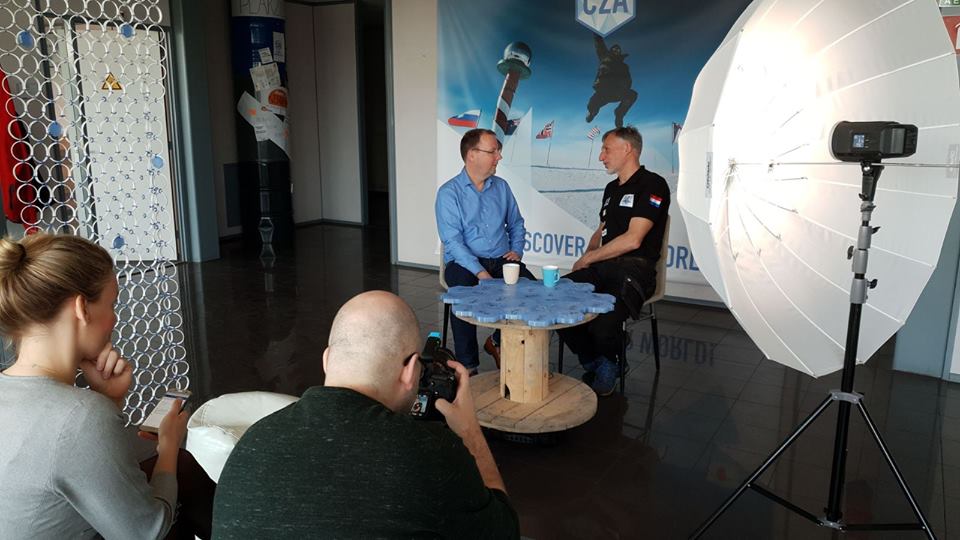
We filmed a conversation between Edwin ter Velde, Clean2Antarctica, and Thom van Oss from Apex Dynamics
The visual identity is an important part of the brand identity. Brand identity is how you present your brand, the story, and the underlying idea (mission, promise, core values) through, among other things, text, tone of voice, visual identity, campaigns, strategy, and more.
When people think of visual identity, many primarily think of the logo and the colors or the design of a product. The corporate identity, so to speak. But photography and video are also essential for a brand’s visual identity. In this article, I discuss the images you use to present your brand and with which you can emphasize your brand image or communicate your message more clearly.
[merkelijkheidcta tag_id=’merkidentiteit-1′]
Visual language, visual identity, and corporate identity
Visual language includes all aspects that ensure you immediately recognize something or someone. The fact that you know which ad is from Hema, Coolblue, Suitsupply, Apple, or Centraal Beheer Achmea without seeing the brand name indicates they have a strong visual language. Just like you immediately recognize a painting by, for example, Karel Appel, Salvador Dali, or Keith Haring. This is all about the interplay of individual elements; color usage, technique, repetition/rhythm, the emotion a brand evokes, and the style it radiates (optimistic, humorous, surreal, fresh, simple, etc.).
Visual identity is a part of brand identity and is essentially the same as visual language. It concerns the recognizability of a brand based on multiple visual aspects and the feeling it evokes, the association with a brand. Ideally, the visual identity and corporate identity are closely aligned.
Image as a building block for visual identity
How do you build your visual identity as a brand? Of course, there are many aspects that make up the visual identity or visual language, such as:
- Photography and video
- Stock images
- Image archive
- Budget
The role of photography and video in visual identity

Campaign by Suitsupply
Photography and video determine the association and emotion you have with a brand. When you see images, even without knowing the brand name, and immediately recognize which brand it is, it means you are doing something right. An example is the controversial campaigns of clothing brand Suitsupply. Often, these are clear, high-contrast, and colorful images.
We all know the “sex sells” concept. Some companies try to apply it subtly, while with other brands you simply cannot ignore it. The subtlety where it’s not entirely clear, I find a bit weak. Either you sell your product/service in a way that clearly shows what it entails, what the message is, and what you offer, or if you want to apply the sex sells principle, you might as well lay it on thick, with a big wink.
Suitsupply does the latter. They are not afraid of a little provocation. This also contributes to the recognizability of the campaign images. Often, these are sexist images, female or male nudity combined with another model in a suit next to them. Sometimes the models are portrayed submissively; the images are always erotically tinted. The campaign series that appeared in early 2018 showed a series of homosexual men, this time not naked but neatly dressed. Only one couple was photographed kissing. Yet they managed to appear worldwide in the media again. Many unfollowed Suitsupply, and the posters were covered with duct tape. Unfortunately, this remains difficult for many.
You can debate good taste or bad taste, there are pros and cons, but one thing is indisputable: you immediately recognize that these are Suitsupply campaigns. They get, whether positive or negative, a lot of media attention and (free) publicity. They are innovative, young, controversial, clear, colorful, high-contrast, provocative, often humorous, socially engaged, rebellious, and more. All these things together make you know: that’s Suitsupply.
[merkelijkheidcta tag_id=’merkidentiteit-2′]
Stock photography

Ariane, the stock photo model</caption]
The list of disadvantages of using stock images is much longer than the list of advantages. The disadvantages? They are meaningless and undistinctive, clichéd and stigmatizing, often too polished, too posed, and impersonal. You don’t show your company and employees, and they are not targeted at your (potential) customers and audience. The only advantages I can think of: it’s cheap (sometimes even free) and works quickly.
If you really have no time and no budget and still choose stock photography (a combination of self-generated images and stock photography is still recommended), be aware that the images you choose can also be purchased by thousands of others with perhaps a completely different proposition or market.
Recently, I read an article about a woman who had a free portrait taken years ago, quickly signed (most would say foolishly) a form, and found herself years later through various contacts in various guises and names, used in various campaigns of many different companies. One time Phoebe B. was looking for love, another time Carolyn had acne skin problems, then she was promoting immigration. It’s terrible that through deception (and also a bit of naivety) you can be stuck with that for so long, but on the other hand, it also shows that many images are so general, interchangeable, and meaningless that they can be used in completely different situations.
Another piece I read was about Ariane (that’s her middle name; her real name is Rebecca Givens). Ariane is the world’s most famous stock photo model. Also called the stock photo woman. She is a Canadian model who at her peak made about 200 new stock photos per month possible. In a very short time, she was spotted in 43 different Dutch commercials. She appears in campaigns for Durex, Nationale Nederlanden, Vodafone, Cheaptickets, Kruidvat, Action, Ekoplaza, KLM, and Syntus, among others.
Developing and expanding an image bank
An image bank, also called an image archive, is a secure (often online) environment where you have direct access to a collection of visual material such as photography and videos, often in high resolution and web format. The image bank is used by publishers, journalists, website builders, but we as a marketing agency also gratefully use it.
The advantages of an image bank include that you can carry your corporate identity through all communication expressions. You have documented how something should look and what quality it must have to comply with the corporate identity. Additionally, it is cost-effective. If you ask a photographer to shoot all the necessary images at once, that works better than asking a photographer every time for a separate, small job. It also becomes easier to post news and updates; after all, there is sufficient visual material available. With a proper organization of the image bank, you have a good overview of what images are available and what is still missing.
Depending on the company, you can easily and quickly find files in an image bank if it is well organized and ordered. For example, you can ‘tag’ images and organize them by year, category, location, and creator. You can also extract various data; which files are often used and popular, how much space is used, what the agreements are regarding the use of images and copyright, and more.
Maintaining an image bank is incredibly useful. Even if you don’t immediately see the benefit, it is a resource you can draw from in many situations: when giving presentations, creating a whitepaper, report, or whatever, you can use the images on your website but also in ads and campaigns. Posting content on the internet and in printed media contributes to increasing your brand awareness and the number of conversions.
Because photography and image selection are often neglected, the budget and attention do not go to them. Within the available budget and also for time savings, people then choose stock photography. I say okay in some cases, but really only in some cases.
[caption id="attachment_2614" align="alignright" width="300"]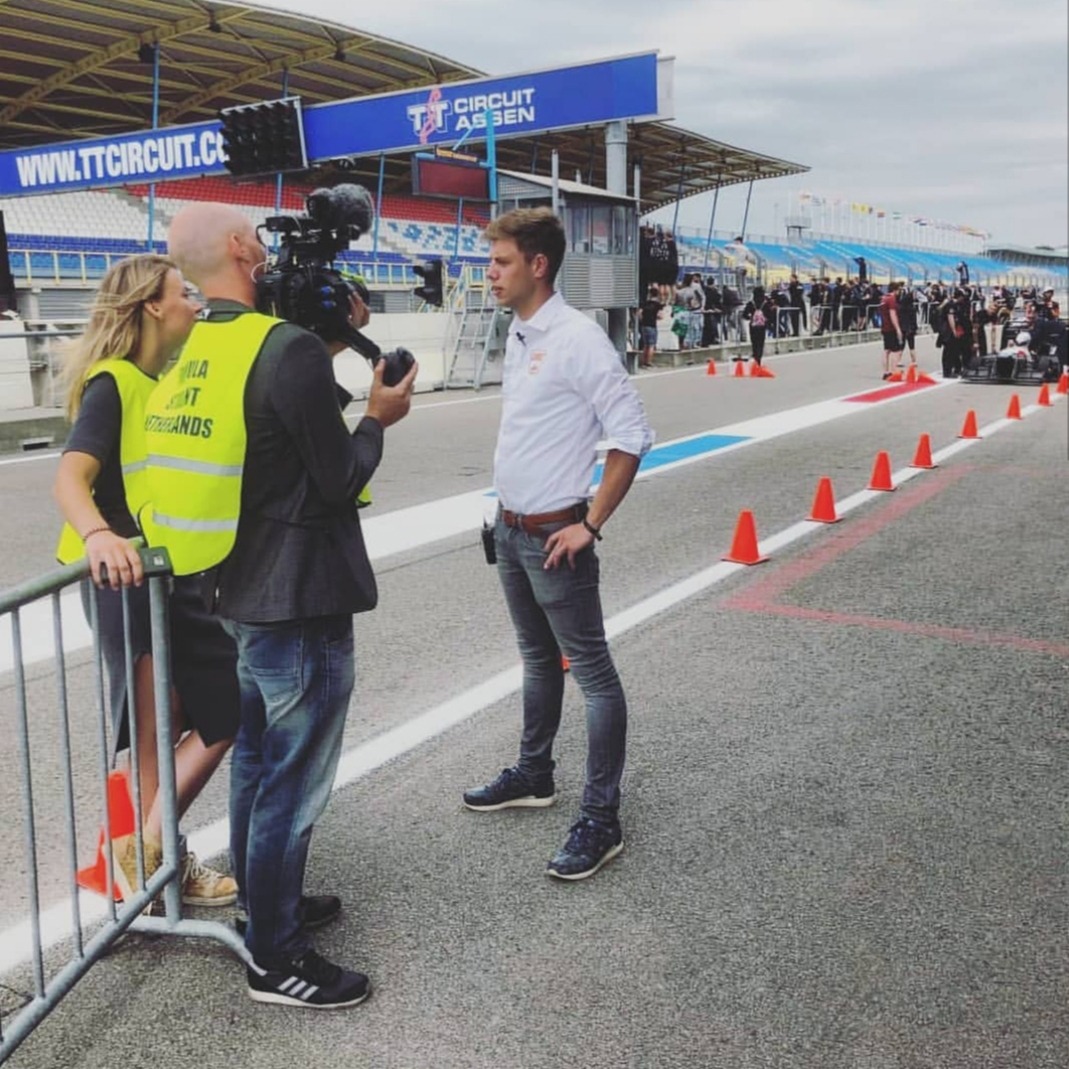 Filming at the TT Circuit Assen for our client Apex Dynamics
It’s also a bit of a case of pick your battles. As a company, you simply cannot hire or send a photographer everywhere. Consider what important events are for your brand or which images are still missing in the image bank, and who knows, you might kill two birds with one stone (you have images for the website, possibly annual report, and could also use them for advertising and social media attention). Think of important collaborations or sponsorships, high-profile projects that perfectly show the core of your business, etc.
It’s always useful to have an image archive you can draw from more often and that you actively supplement and expand. Companies really have no good excuse not to do this: with the increased quality of smartphone cameras and the rise of various photo and image apps, it’s quite easy and accessible to actively maintain and supplement your image archive.
Additionally, it’s easier to reach your target audience in a creative and low-budget way. Think of Snapchat, Instagram, podcasts, live broadcasting, etc. Due to all developments, the path is clear to create better and more beautiful content and use the possibilities creatively. The art, of course, is to determine what you want to communicate, how you will communicate it, and which channels you will use for that.
If there is a budget for photography but we see no distinctive images (many images of KPN are interchangeable with images from, for example, UPC), it could also be due to the briefing you write. Writing a good briefing for a photographer or advertising agency is also a challenge.
[merkelijkheidcta tag_id=’merkidentiteit-3′]
Alternative solutions in case of a limited or insufficient budget
Budget often plays an important role in photography and video and determines whether you have the freedom to spend a lot of time and attention on it. Do you choose stock images or develop new visual material yourself? And what do you do with all the images, where do you store them? How do you handle content creation? How actively do you maintain and supplement it?
If there is no budget, there is always a fairly important aspect left; your creativity. Consider whether you know people who can help, are there photographers/filmmakers/graphic designers in your network? If not, you can always come up with an action or contest to collect images. Many companies do that. An example of a social media campaign: if you sell running shoes, you can ask people to submit images of their running moments; the makers of the 3 most beautiful images get a well-organized weekend away (flight, hotel stay, participation in a sports event or attending a competition).
Collaborate with art academies and film schools, write a tender, come up with a stunt or guerrilla action in public spaces that earns goodwill.
There are also initiatives where, for a certain amount based on your briefing, you get, for example, 30 designs (depending on your budget, you get more or fewer) from beginner designers; you then choose the most suitable design. For a relatively small amount, you have plenty to choose from and support beginner designers, some of whom may not deliver what you are looking for, but the other designs have potential. Photographers, designers, and other creatives will probably not thank me for the last tip.
And now?
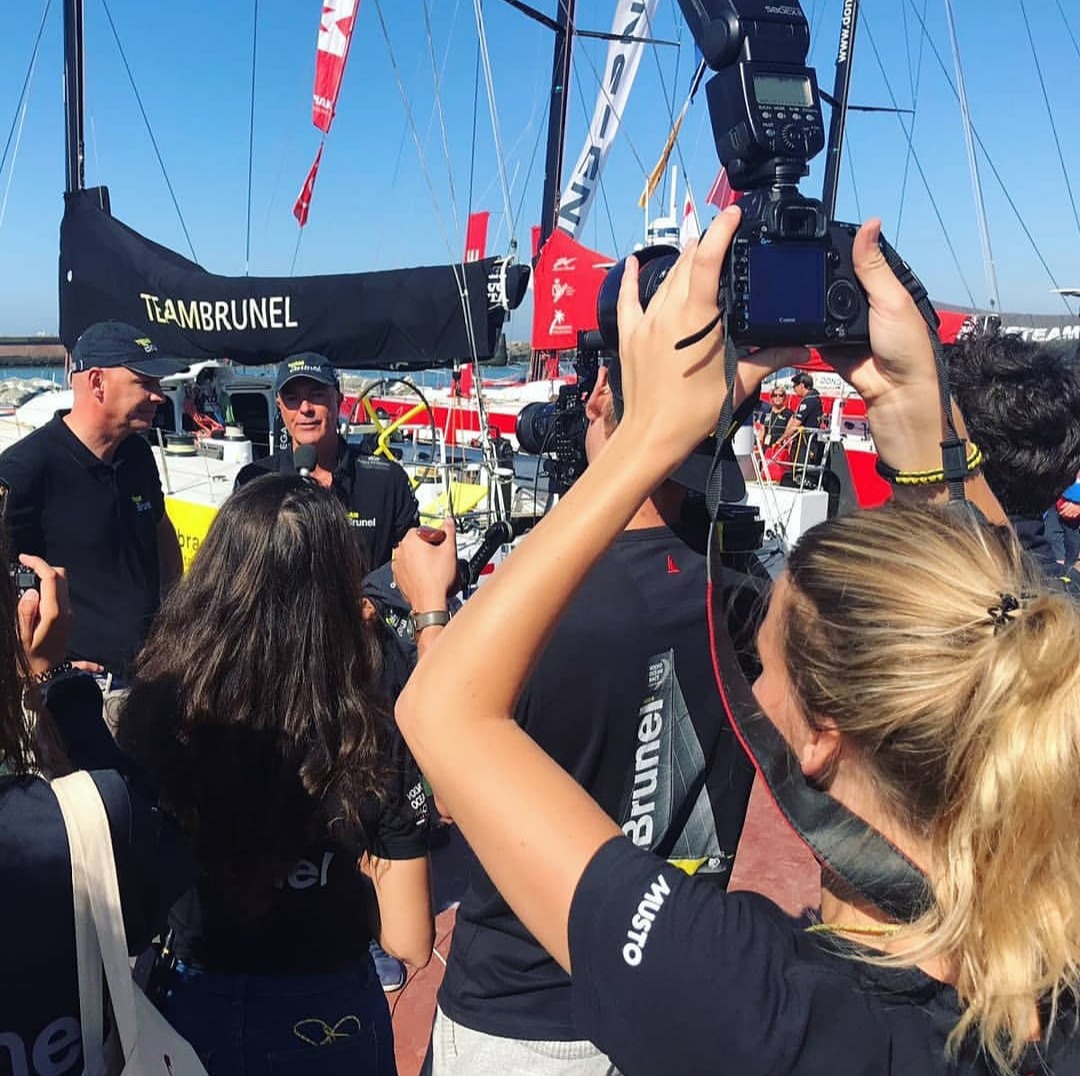
The above text already contains quite a few tips and tricks. It comes down to the following:
- Pick your battles. Not everything deserves the same amount of attention; consider what speaks most for your business and decide what you want to highlight extra. Allocate your available budget well and consciously.
- Encourage colleagues to take photos, videos, and create content of everything happening in and around your company. Or something related to your business. Once posted, it certainly doesn’t hurt if the content is liked and shared; this way, you increase attention.
- Continuously expand your image archive. Even if there is no immediate reason, you can always use it later.
- Think about your existing network. Who is good at what, what can they do for you, what can you do for them.
- If your budget is limited, use your creativity to get nice content. Organize a photo contest or collaborate with relevant studies, initiatives, photography schools, etc.
- Come up with low-budget ideas, for example in public spaces, that earn you goodwill.
- Consider which image apps and channels exist right now, follow trends, determine what fits your target audience, and publish your content there.
Whatever approach you take, always keep your brand message and target audience in mind, and ensure the quality of the images. Ask yourself if your target audience recognizes your brand based on the visual characteristics. If they see certain photos, products, fonts, use of colors, do they recognize your brand/company without seeing the name?
To return to the importance of a recognizable visual language: a company with a world-famous logo, part of the company’s visual identity, changed that logo. As a result, within two months, sales plummeted so dramatically that the company didn’t know how quickly to change it back, and after 2 months, everything was back to the old. This shows how important visual language and its recognizability are.
And yes, there are stock photos on our site too. But in this blog, you will find only unique content (okay, except for the example in the section specifically about Stock photography). Let’s say that’s a start.
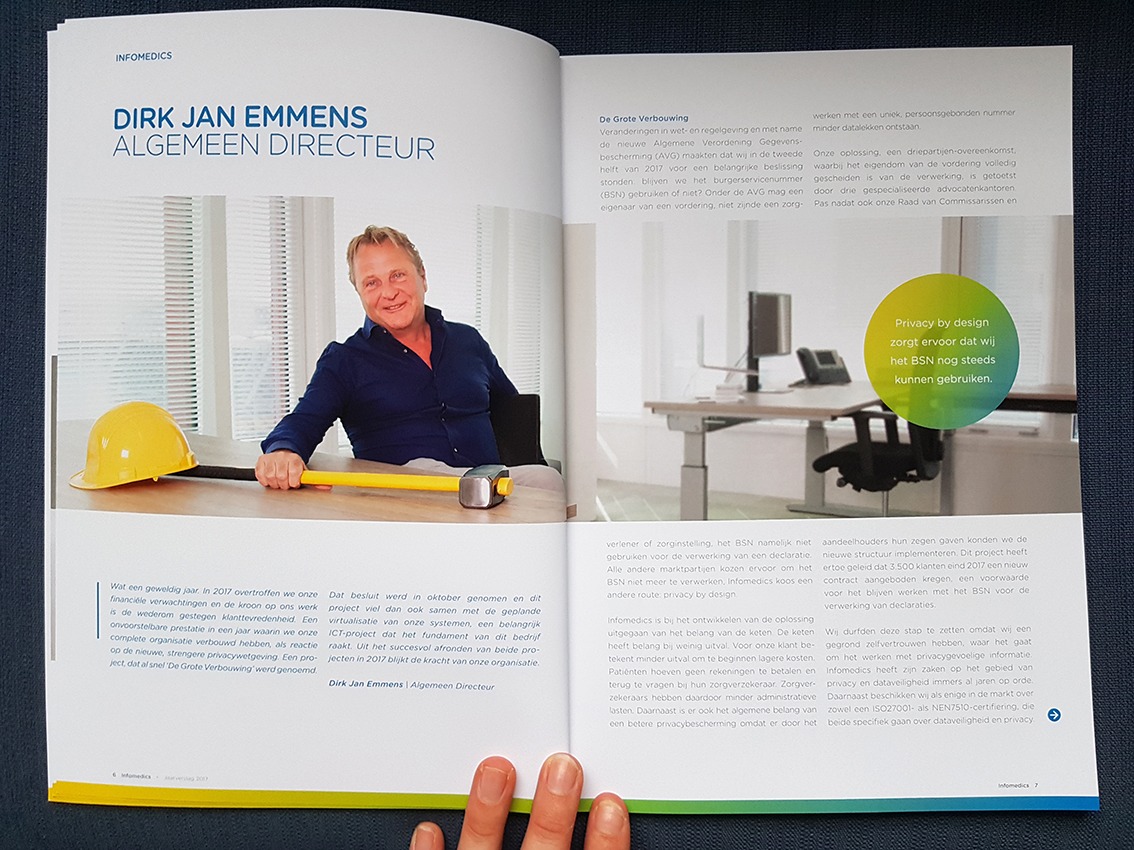
This is a spread from the annual report we developed for our client Infomedics. The photography in this report was also provided by us and gives it a unique look.