LinkedIn Advertising Strategy
Which LinkedIn advertising strategy ensures maximum results? In this article, we show you how to develop a LinkedIn advertising strategy that hits your marketing and sales targets. We start with the key drivers: objectives and audience. Furthermore, we outline the various campaign types LinkedIn offers, how to match them to your customer journey, how to choose your budget, and which creative assets you can deploy.
LinkedIn advertising strategy
What do you want to achieve with LinkedIn advertising? Are your campaigns supporting a specific product, do you want to build brand awareness, provide new leads for your sales team, or share insights with your target audience? It is all possible with LinkedIn Advertising. This article guides you through the following steps:
- LinkedIn advertising campaigns: phases and goals
- LinkedIn advertising budget
- Campaign assets
Before you begin, clearly define the goal and target audience of your campaign. Once that is set, you can easily determine how many phases your campaign requires, which campaign objectives will get you there, the budget needed, and which creative assets to use.

LinkedIn advertising strategy: phases and goals
Now that you know what you want to achieve, the question is: how will you get there? LinkedIn offers several campaign objectives, each focusing on a specific result:
- Brand awareness – ad impressions
- Website visits – website traffic
- Engagement – social interaction with ads
- Video views – video views (minimum 2 seconds)
- Lead generation – number of leads
- Talent leads – applications (Recruiter accounts only)
- Website conversions – specific goal completions
- Job applicants – job applications
The difference between lead generation and website conversions is that lead generation uses a native LinkedIn lead form. If your goal is strictly volume, this removes a click from the process, which typically results in more leads. However, it also means you aren’t sending people to your own landing page, which might remove part of the brand experience. Do you have a high-converting landing page that truly adds value for your potential leads? Then website conversions is also a suitable objective for lead acquisition.
LinkedIn advertising strategy: don’t forget your customer journey!
What does your target audience’s customer journey look like? And which phase does your LinkedIn campaign address? For example, if you want to distribute a series of videos to generate brand awareness, you are at the very beginning of the journey. But if you want to collect leads, you are much further along. We believe that effective LinkedIn campaigns must fit the customer journey, which is why we almost always work with multiple campaign phases and different objectives. How many phases and which objectives you use depends entirely on your goals and audience.
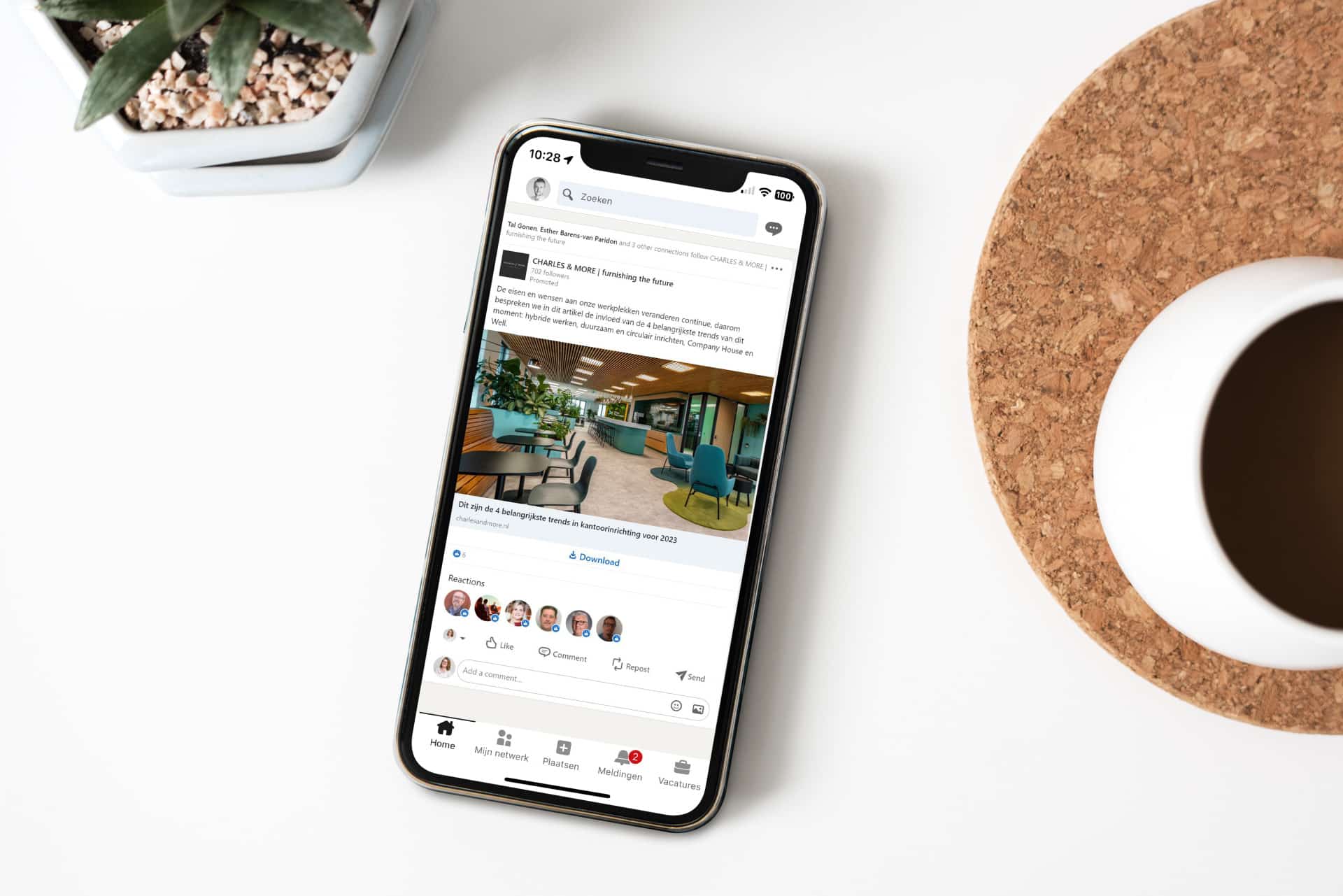
A common goal for our clients is getting a white paper download in exchange for contact details—a lead generation campaign. Often, the target audience is relatively unfamiliar with the brand and its products or services at the start. In practice, we find the best results come from the following LinkedIn advertising strategy:
- Brand awareness
- Website traffic
- Lead generation
Sometimes this is supplemented with a video views campaign. By first showing the target audience an awareness ad (and potentially a video) several times at relatively low cost, we build recognition. Next, we share a piece of expert knowledge or a strong case study via a website traffic campaign. By running these awareness and traffic phases first, we significantly increase the lead volume in the final phase because there is already an established level of trust and brand recall.
Budgeting for LinkedIn
There are two ways to determine your budget:
- How much do you need to reach your entire target audience?
- How much can you afford to pay for a new (potential) lead?
If you start with your audience size, you can use average CPMs to estimate the budget needed to show your campaign to (nearly) the entire group. Our benchmark shows that the average CPM for a brand awareness campaign is €15.01, while website traffic averages €26.21. But beware: a thousand impressions does not equal a reach of a thousand unique members! It is wise to pad your budget (we suggest +25%) if you want to ensure the entire group is reached.
If you determine the budget internally, you evaluate what a new lead is worth to you. If you don’t yet know what a lead should cost, collect the following data:
- What is the average first-year revenue of a new customer?
- What is the average customer lifetime value (CLV)?
- How many leads do you typically need to close one new customer?
Based on this information, you can determine the value of a new lead—both in the short and long term—and set your maximum cost per lead accordingly.
Campaign assets
Now that you know your budget and the campaign phases needed to reach your goal, you can select and produce your creative assets. LinkedIn supports the following ad formats:
- Images (single and carousel)
- Video
- Text
- Document
- Event
Additionally, you can advertise using personalized messages and conversation ads. Note that not every ad format is available for every campaign objective.
Want to know more about using LinkedIn for your business? We would love to start a conversation about the organic and paid opportunities on LinkedIn! Want to read more? We have gathered all our insights on our LinkedIn advertising page.