Brand positioning, the source of differentiation
A strong brand positioning model, a clear definition, and compelling brand positioning examples all in one comprehensive article.
Read moreA concrete example of the added value of a clear positioning from the battle between Microsoft, Sony, and Nintendo's latest video game consoles.
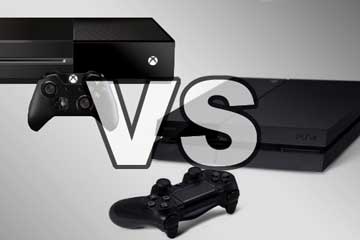
I used to be a hardcore gamer and worked in gaming, now I still play a game occasionally but nowhere near as intensively as before. But secretly, I am still fascinated by developments in gaming and I closely follow the news.
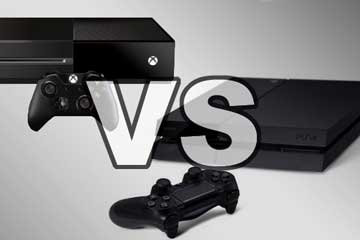
The last time a ‘console war’ broke out was 8 years ago and it led to Nintendo’s Wii capturing the casual gamers while Microsoft’s Xbox 360 and Sony’s Playstation 3 fought over the more hardcore audience. This battle continues now: Nintendo’s Wii U plays its own game while Microsoft with the Xbox One and Sony with the Playstation 4 are rolling around with each other. We look at the positioning of the 3 brands because the saying goes: when two dogs fight over one bone, (often) the third one takes it away.
 A situational sketch: Nintendo with its Wii sold 100 million units in recent years. They are therefore market leader since Sony or Microsoft did not manage to sell more than 78 million consoles. How can that Wii success be explained? Making choices: they did not choose the fastest processor, not Blu-Ray or the very best or most realistic graphics. They chose a target audience. The target audience that just wants to play fun games, together and from young to old. A clear positioning that has certainly paid off for Nintendo.
What have Sony and Microsoft learned from this? Actually, not too much in our opinion. Their game offerings are still largely identical. The new consoles, presented with much fanfare, differ very little from each other in terms of hardware and performance. Even worse, the announcement of Microsoft’s Xbox One was followed by a wave of outrage! It seems that partly because of this Sony is now taking the upper hand, at least if we believe the forums. The Playstation seems to be stepping out of the first round as the winner. But why? Not because they really dare to choose, but simply because they make slightly fewer mistakes than competitor Microsoft. But making fewer mistakes is not a starting point for unique positioning. It would be unique if one of the brands fully focused on a specific target group or segment. Just like Nintendo did with great success back then.
Conclusion: if you want to please everyone, you are not able to differentiate yourself. You have to choose to appeal to one specific group with a clear positioning. You make this choice based on your own strength and it must fit your own identity. Once the positioning is finally clear, your communication becomes almost child’s play.
The comparative review of the Playstation 4 and the Xbox One
Want to know more about positioning and how you can get started yourself? Read our page positioning and find there, besides in-depth articles, also dozens of examples and models for every possible positioning challenge.
More like this

A strong brand positioning model, a clear definition, and compelling brand positioning examples all in one comprehensive article.
Read more
One brand is efficient and easy, but the right brand strategy during acquisition is sometimes a completely different brand architecture or brand structure.
Read more
By focusing on value, a brand can sustainably differentiate itself, retain customers, and lay the foundation for a unique positioning.
Read more